Your complete destination for Penlink training, with live sessions, on-demand modules, and certifications designed to give professionals the tools and confidence to succeed in real investigations.
How Investigators Connect Organized Retail Crime Networks Through Shared Data
Date Posted: January 13th, 2026
Organized retail crime is designed to scale. Crews operate across jurisdictions, reuse the same logistics, and rely on fencing operations to quickly convert stolen goods into cash. What may appear as isolated thefts are often connected through shared people, processes, and infrastructure.
The challenge for investigators is not access to information. It is fragmentation.
When incidents, identifiers, and intelligence remain siloed across agencies or systems, networks remain hidden. Shared data allows investigators to connect activity, deconflict cases, and expose organized retail crime for what it is: coordinated, repeatable, and intentional. This type of approach aligns with how modern investigators are increasingly supported by digital intelligence tools built for law enforcement.
Why ORC investigations stall
Many organized retail crime cases slow down for the same reasons:
Activity crosses city, county, or state lines
Critical identifiers are spread across reports, tips, and evidence systems
Boosters rotate frequently while organizers and fences remain consistent
Online resale accelerates how quickly stolen goods move
Each of these conditions favors the offenders. Networks thrive when investigators are forced to work independently.
How shared data changes the investigation
Shared data does not mean unrestricted access or centralized control. In practice, it allows investigators to answer a foundational question early:
Has this activity been seen before?
When teams can securely compare identifiers across cases, several things happen:
Separate incidents begin to form a single narrative
This is often the point where a series of thefts becomes an organized crime case. Platforms designed for digital evidence analysis help investigators consolidate these signals and move faster without sacrificing investigative integrity.
The identifiers that connect ORC networks
Most ORC networks surface through a small set of recurring data points. The strongest connections emerge when multiple categories overlap.
People and communications: Phone numbers, email addresses, social media accounts, and messaging handles used to coordinate theft or resale.
Vehicles and movement: License plates, vehicle descriptions, recurring routes, and consistent staging locations.
Monetization activity: Online seller profiles, shipping patterns, payment methods, and bulk resale behavior. Open-source intelligence often plays a key role in identifying resale activity tied to organized retail theft.
Locations and logistics: Storage units, short-term rentals, repeated meetup points, and shipping or return addresses.
Commodity patterns: Consistent targeting of high-demand products, quantities aligned with resale, and repeat methods of concealment or tag removal.
Individually, these indicators may seem minor. Together, they reveal structure.
Moving from incidents to networks
Investigators connecting ORC activity often follow a similar progression:
Normalize case data early: Consistent formatting for names, locations, and stolen items prevents missed connections later.
Deconflict before theorizing: Identifying overlap across cases often reshapes investigative direction and priorities.
Focus on the fence: Boosters are replaceable. Fences and resellers are not. Following monetization exposes recruitment and logistics.
Use online resale as corroboration: Marketplace activity becomes meaningful when it aligns with physical theft, movement, and communications.
Stack independent evidence: Strong ORC cases rely on corroboration across reports, surveillance, transactions, and digital records.
This approach turns recurring theft into repeatable proof and supports broader criminal investigations that span jurisdictions and data sources.
Recognizing ORC indicators early
An incident is more likely part of organized retail crime when investigators observe:
Coordinated roles such as booster, driver, and receiver
Rapid repeat hits across multiple locations
Product selection aligned with resale demand
Evidence of fencing or online resale activity
Identifiers repeating across jurisdictions
Early recognition allows cases to move into a network-focused workflow instead of remaining isolated.
Learn more about secure data sharing for ORC investigations
Connecting organized retail crime networks requires more than individual case files. It requires a way for authorized teams to securely share data, deconflict activity, and uncover patterns across jurisdictions.
Penlink Connect supports this type of collaboration by enabling participating investigators to discover overlaps and build stronger cases without sacrificing control, security, or investigative integrity.
If your team is working organized retail crime cases that cross boundaries, learn more about how Penlink Connect helps investigators see the full picture.
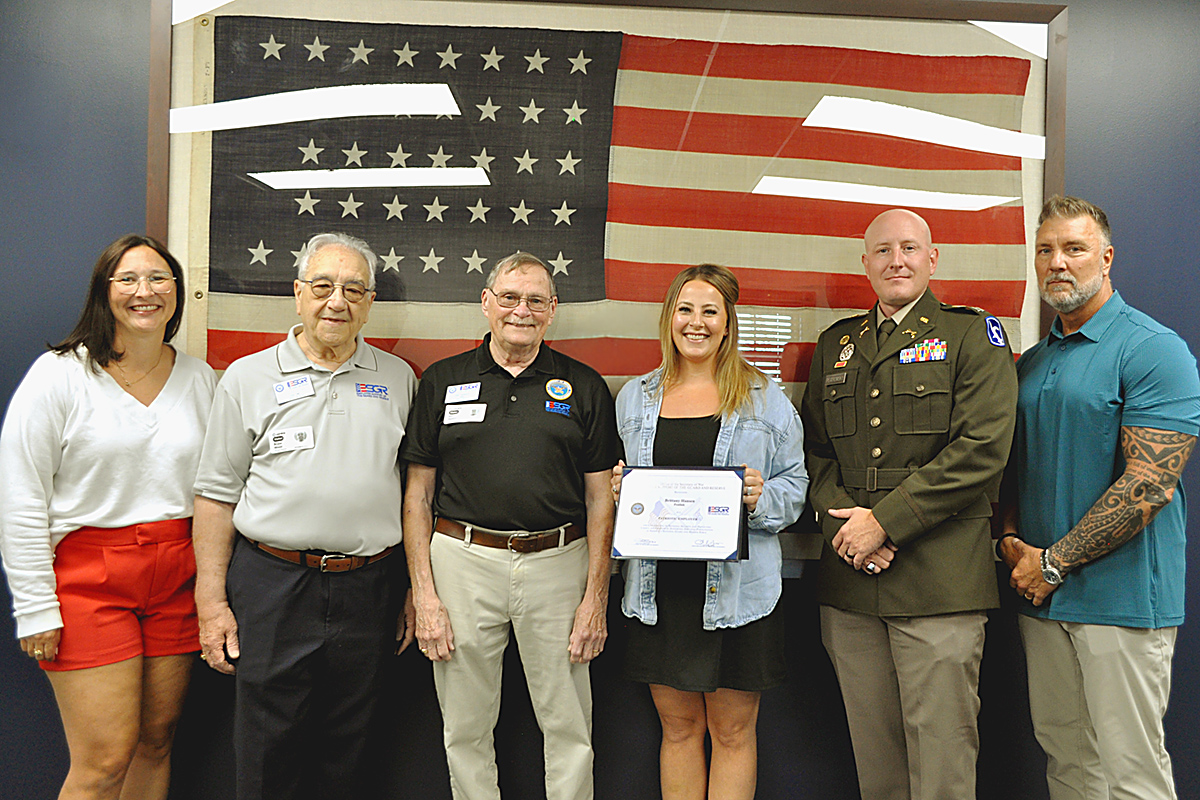
Penlink, a leading provider of digital intelligence solutions for law enforcement, national security, defense and enterprise organizations, announced today that Training Manager Brittany Hansen was presented with the Patriot Award from the Employer Support of the Guard and Reserve (ESGR), a Department of War program.
The Department of Homeland Security announced the results of a nationwide crackdown on human trafficking coordinated around the 2026 FIFA World Cup. Homeland Security Investigations (HSI), the DHS Center for Countering Human Trafficking, and federal, state, and local partners arrested 905 suspects and rescued 180 victims — 150 adults and 30 juveniles — across World Cup host cities.
The U.S. Marshals Service announced the conclusion of Operation Meridian, a month-long, multi-agency effort that located and recovered 79 reported missing and endangered children across Ohio, ranging in age from 6 to 17. Officials described it as the largest missing child operation in the state’s history.
A multi-agency investigation in Volusia County, Florida, has led to the dismantling of a major fentanyl and methamphetamine trafficking network, with 49 people arrested and hundreds of grams of narcotics seized.
The Nebraska State Patrol says a routine traffic stop earlier this month led to what investigators believe is the largest drug seizure in the agency’s history. Governor Jim Pillen joined NSP to detail the case, along with a second, unrelated stop that turned up stolen commercial equipment.
Foreign influence campaigns increasingly pair disinformation with cyber intrusion. This post looks at what that convergence means for investigators tracking coordinated state-linked activity.