Your complete destination for Penlink training, with live sessions, on-demand modules, and certifications designed to give professionals the tools and confidence to succeed in real investigations.
When a Rumor Moves Faster Than Your Security Team Can React
Date Posted: July 15th, 2026
Rumor propagation at live events is one of the most underestimated threats in event security planning. When unverified information spreads rapidly across social media platforms, it doesn’t stay online. It reaches attendees, shapes crowd behavior, and can trigger secondary incidents before security teams have any awareness it is happening.
The challenge isn’t that false information exists. It always has. The challenge is the speed at which it now travels and the operational pressure it creates. At large-scale events, security teams are already managing crowd density, access control, medical response, and coordination across multiple agencies. A viral rumor adds a new layer of urgency, often with no warning and no clear source.
When a Rumor Becomes an Operational Problem
Not every piece of misinformation causes harm, but those that do often follow a predictable pattern. An unverified claim emerges on a single platform, typically from one account. It is then reshared and repeated across multiple accounts, creating the appearance of legitimacy. By the time security teams or event organizers become aware of the claim, it has often already reached a substantial audience.
Consider what happened at a large music festival in 2024. During a high-profile performance, false claims began circulating across multiple platforms alleging a crowd crush had occurred and that organizers were actively covering it up. The claims were unfounded. They spread quickly because the fear behind them was grounded in real history: a fatal crowd crush at a major concert just a few years earlier was still vivid in the minds of many attendees. That kind of rumor, one that attaches to legitimate collective memory, is among the hardest to contain and the most operationally disruptive.
The consequences can vary. In some instances, attendees alter their behavior based on inaccurate information. In others, concern and uncertainty spread through a crowd before official communications can address the situation. In a worst-case scenario, a false claim triggers a physical response, creating a real incident out of a false one. Crowd behavior at large events is already influenced by factors that are difficult to predict. Introducing unverified information into that environment compounds the risk in ways that are hard to model in advance.
The Conditions That Accelerate Spread
Certain conditions make rumor propagation more likely and faster moving. Events with a history of incidents carry heightened anxiety among attendees. When that anxiety is present, people are more likely to share unverified information quickly, often because it feels like a warning others need to hear.
Gaps in official communication create space for rumors to fill. When an event organization makes a policy decision without a public statement, attendees speculate. That speculation becomes its own content stream, and it can move in directions that are difficult to predict or correct.
High-profile performers and large crowds can significantly amplify the challenge. More attendees means more people posting, sharing, and engaging online, increasing the likelihood that a single claim can spread to a large audience within minutes. The size of the event matters less than the speed of the spread. A false claim at a mid-size event can move just as fast as one at a stadium.
Social media platforms differ in how quickly content moves and how anonymously it can be shared. Some platforms allow users to post without clear identity, making it easier to share unverified information even more quickly. Security teams need visibility across multiple platforms simultaneously, not just the ones with the highest traffic.
Why It Belongs in Pre-Event Planning
The time to build a rumor monitoring strategy is before the event begins. By the time a false claim is spreading, the window for early intervention is already closing. Pre-event planning allows teams to identify the categories of misinformation most likely to emerge, based on the event type, the performers or participants involved, recent news events, and any policy decisions that may generate public concern.
Building out keyword lists and thematic categories in advance means that when content starts appearing, teams are not starting from scratch. They have a framework for identifying what matters and filtering out the noise. That preparation is the difference between catching a rumor early and reacting to it after it has already caused disruption.
Pre-event social media monitoring also surfaces early signals. People talk about their concerns before they arrive. They share posts, ask questions, and sometimes repeat claims they have already seen elsewhere. That content is visible, and it provides context that informs how security teams approach the event itself.
Responding Without Amplifying
Identifying a rumor is only the first step. How teams respond matters just as much as whether they respond at all. Publicly acknowledging a false claim without sufficient context can inadvertently increase its visibility. The response strategy needs to be coordinated between security teams, event organizers, and communications staff.
In many cases, the most effective response is a proactive, clear statement from the event organization, issued before the rumor has time to fully establish itself. That requires awareness early enough to act. It also depends on a strong partnership between intelligence and communications teams, ensuring that critical information can be shared quickly and acted upon effectively.
When responses are delayed or absent, the rumor continues to spread and takes on additional detail. Corrections rarely travel as far as the original claim. Early intervention, before a claim has embedded itself in the conversation, gives organizations a real opportunity to contain the spread and address attendee concern directly.
What the Post-Event Record Shows
After an event concludes, the social media record of a rumor provides valuable intelligence for future planning. Analysts can review how a claim originated, how quickly it spread, which accounts drove the most reach, and what the response looked like in real time. That analysis informs both communication strategy and monitoring protocols for the next event.
Identifying the accounts responsible for the greatest amplification, whether through intentional effort or organic sharing, is worth the work. Some will be ordinary attendees. Others may have a pattern of spreading unverified claims. Understanding their behavior is part of building a more complete intelligence picture ahead of future events.
Misinformation doesn’t wait for a briefing. The teams that catch it earliest are the ones watching before the gates open.
See how PLX Connect gives event security teams real-time visibility into rumor propagation before it becomes a physical threat. Request a demo.
A Placer County prosecutor and crime analyst walk through a fentanyl murder case and show how 1.2 terabytes of warrant returns became the exhibits that sent a dealer to prison for life.
The Penlink Training Summit returns to Omaha, Nebraska, March 8–10, 2027, bringing together investigators, analysts, agency leaders and security professionals for two and a half days of training, learning and collaboration.
Europol brought together investigators, analysts and open-source intelligence specialists from 12 countries for a four-day operation targeting human trafficking networks exploiting Ukrainian nationals online.
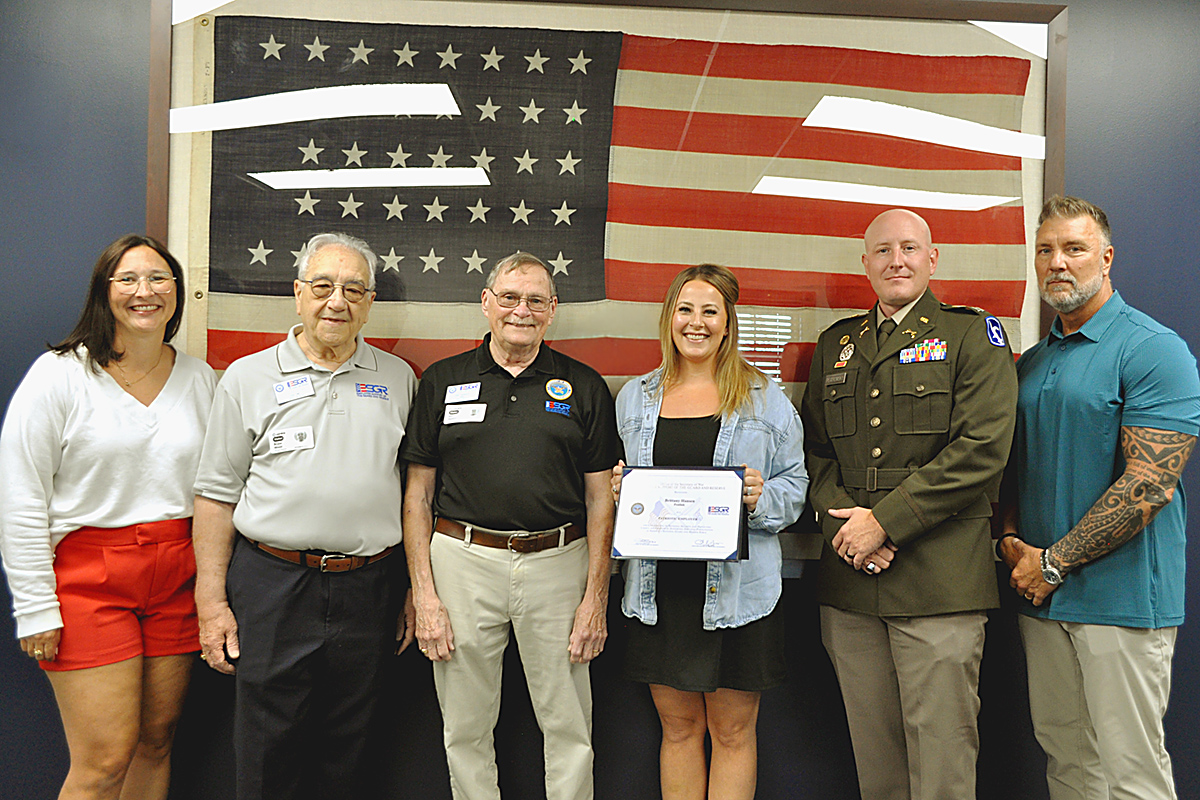
Penlink, a leading provider of digital intelligence solutions for law enforcement, national security, defense and enterprise organizations, announced today that Training Manager Brittany Hansen was presented with the Patriot Award from the Employer Support of the Guard and Reserve (ESGR), a Department of War program.
Chicago police and the U.S. Marshals Service teamed up this spring. Their goal: find missing juveniles fast. Over ten days in May, Operation Safe Return Chicago located 30 missing kids across the city.
A Lake County, Florida jury found two men guilty on drug trafficking and related charges tied to a 2022 investigation into narcotics sales across the Leesburg, Mount Dora, and Fruitland Park area.