Your complete destination for Penlink training, with live sessions, on-demand modules, and certifications designed to give professionals the tools and confidence to succeed in real investigations.
Top Reasons to Use Facebook Data with PLX in Your Investigations
Date Posted: January 11th, 2022
Navigating the amount of data in today’s world—even just its social media data—can be overwhelming. To break some of that data down in an easy-to-understand way, this article will take a closer look at Facebook.
Whether you’re investigating a homicide, a drug case, the sexual assault of a minor, or any other type of case, uploading your target’s Facebook data into the PLX platform can significantly impact the success of your investigation. With 2.6 billion users on Facebook, most potential targets have a Facebook account. Facebook shares all of these users’ data with advertisers, and it’s lucrative: in 2019 alone, Facebook accumulated a whopping $70 billion in advertising revenue.
But why should advertisers get all the good information? The information you can glean from Facebook could prove the smoking gun for your investigation—and the ability to compare your Facebook data with other CDRs and information you have collected on the PLX platform makes it easier to track your target. Once a warrant is approved, Facebook provides more than 70 types of data, all free for investigators, and the PLX platform can make it easy to find what you need within it to make an arrest.
Much of the data you receive will be exactly what you expect—conversations, status updates, images, and check-ins. However, there is a wealth of other information available through Facebook that can be extremely useful too.
Verified email and/or phone number—Even if an account holder’s vanity name and other identifying information is bogus, they’ll typically have a verified email address and/or phone number associated with their account.
IP address—Facebook will provide each account owner’s login information, including their IP address, and via PLX and a third-party add-on, those IP addresses can be automatically identified. No more manual processing of IP addresses!
Deleted or blocked content—Facebook has the ability to provide you with information on blocked contacts, deleted friends, and contacts blocking the target, including the date and time that the blocking or deleting action occurred.
Name and relationship changes—Screen-name or relationship changes are shown in the Facebook data provided to you, with time stamps for when each change happened. These red flags can help you build your case.
Events and group memberships—Facebook will provide you with a target’s events and group memberships. This can help you place a target at a specific location at a specific time.
Browser cookies—Brower cookies are tracked by Facebook. By using this information, you can see other accounts being accessed with the same device. Many times, a target will login to a bogus account and a legitimate account from the same device.
Facebook Marketplace data—Facebook shares Marketplace information, which can be evidentiary in stolen-goods cases. Images shared on Facebook via Marketplace or on a target’s personal profile contain the exact location a photo was taken—which might be the target’s home or the place from which the item was stolen.
Location history—Your target’s last location and location history are included in Facebook’s provided data, and can help you place a target or victim in a precise location at a certain time.
Latitude and longitude—Photos requested with EXIF data show the longitude and latitude of where each photo was taken.
Mobile device information—Facebook shares mobile device information that can indicate other devices owned by a target—each of which may also contain incriminating information.
Conversations—Facebook shows all conversations, unless the content has been deleted. (And if a conversation has been deleted, the sender and recipient will still be indicated, along with a time stamp.)
As you can see, though the amount of data provided by social media platforms like Facebook might seem overwhelming to parse, the wealth of information that you can gather from it is enough to make the task worthwhile—and utilizing a platform to help you sort through the data could be the key to helping you solve your cases faster.
For more information on this topic, check out our On Demand webinar at penlink.com/latest.
A Detroit man awaiting trial for murder in the Na’Ziyah Harris case now faces additional charges involving a second child, showing how connected investigations can uncover patterns that extend well beyond the original case.
A Memphis jury convicted Justin Johnson of first-degree murder in the 2021 murder-for-hire killing of rapper Young Dolph, showing how digital evidence can close cases where physical evidence falls short.
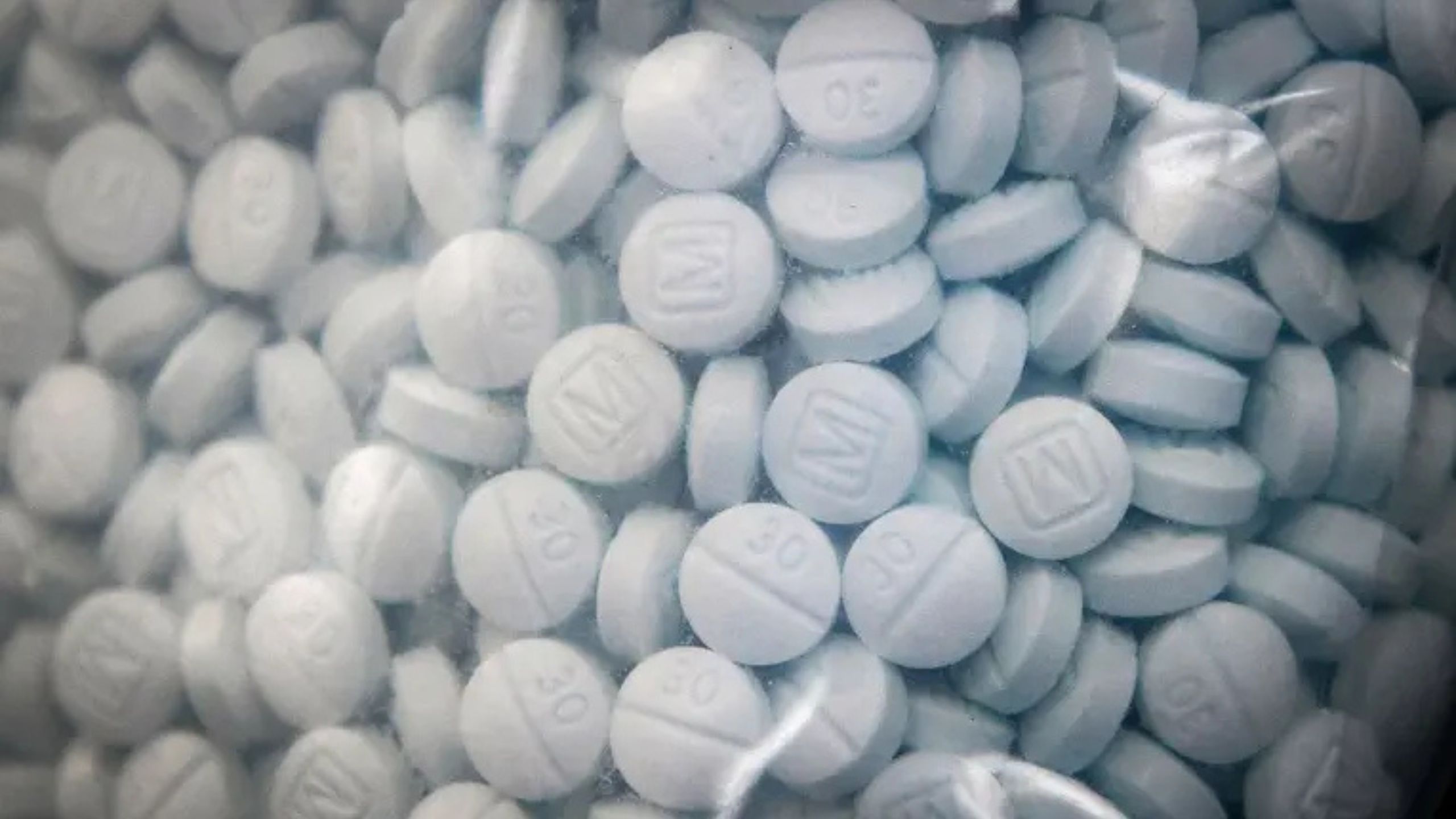
Fentanyl’s designation as a weapon of mass destruction is more than a policy headline. Here is what it means in practice for investigators and agencies on the front lines.
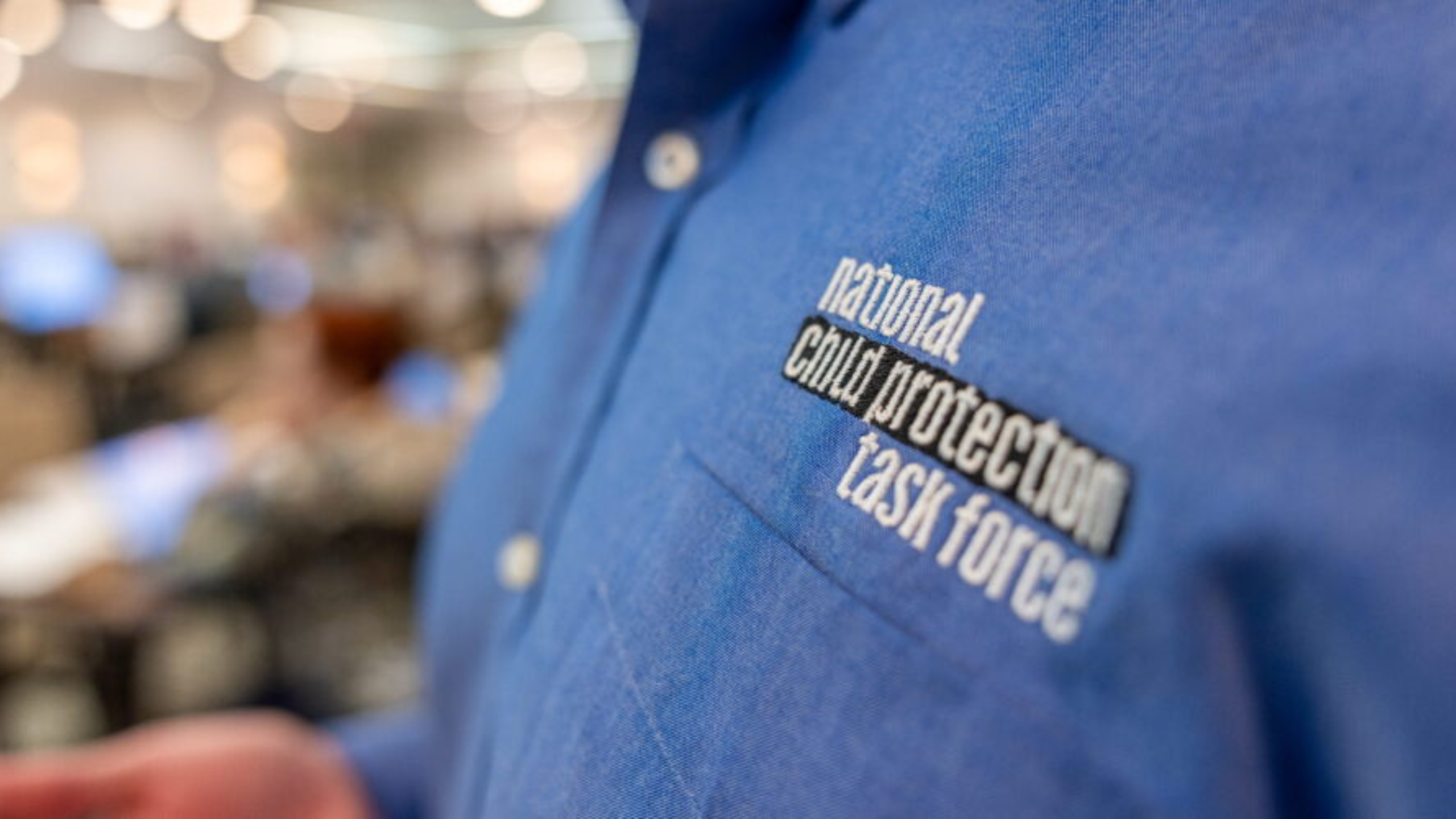
44 missing and endangered children and teens were located during a focused, three-day operation in Westchester County, bringing together more than 70 agencies united by one goal.
Retired NYPD intelligence expert Darryl Valinchus breaks down key concepts, workflows, and best practices for working with digital communications evidence, plus a live Q&A session.
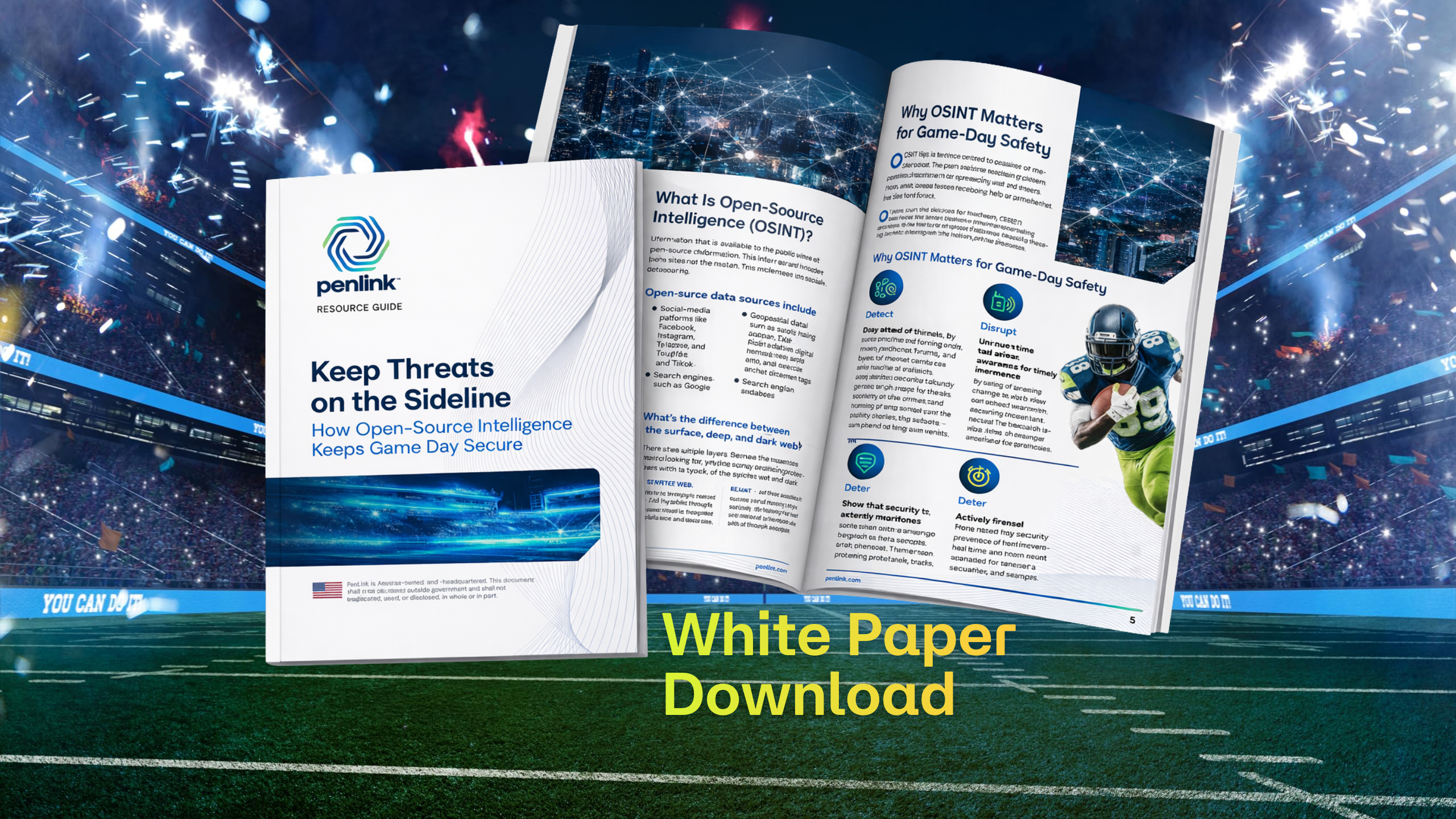
Game day security goes beyond the field. This white paper explores how OSINT helps campus security teams identify and disrupt threats early, keeping athletes, fans, and high-profile attendees safe.