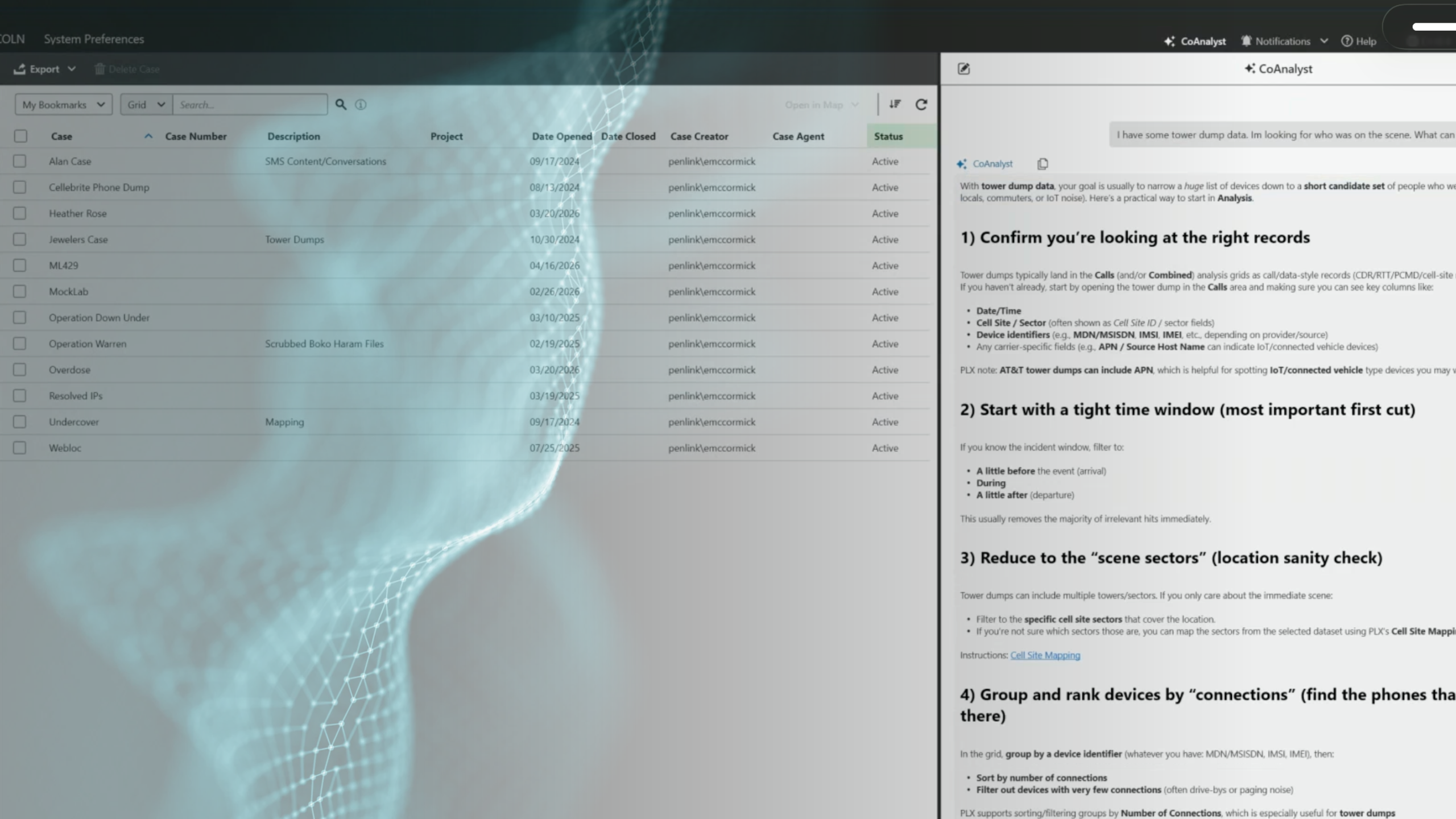
CoAnalyst for PLX: Turning Digital Evidence into Decisive Action
Investigators face more data than ever. CoAnalyst for PLX brings generative AI directly into PLX, helping agencies move faster from raw data to actionable insight.
Platform Overview
See why Penlink is the global leader in AI-powered digital intelligence and investigations


Penlink Academy
Your complete destination for Penlink training, with live sessions, on-demand modules, and certifications designed to give professionals the tools and confidence to succeed in real investigations.





There are a few persistent myths in law enforcement today: that social-media data isn’t useful for investigations, that it is too expensive to gather and analyze, and that working with social media companies is too difficult to be practical. This article will help you debunk these myths and explore how, when properly dealt with, social-media data can actually help investigators uncover behavior patterns, establish communication networks, and zero in on locations quickly and easily. Further details on these myths and more can be found in the newly released white paper Busting Myths About Collecting Social-media Data for Criminal Investigations. Ready to start the myth-busting process?
Some of the types of evidence that can be gathered from Internet or social‑media interception include:
The amount of social‑media data that can be collected is impressive. In addition to calls and chats, images and videos from Internet usage can provide valuable information. Depending on the service provider, usable data can include information such as IP address (which can often be used to find a location), time, and action—e.g., uploading a video.
A target’s Google searches can provide extremely valuable information as well. For example, in an ICAC case, a target may be searching for videos of children of a certain age, which may become key evidence or provide the investigators with their next lead.
Below are some examples of the types of data you can get from social-media collection.
Facebook and Google are just two examples of data sources. There are also Instagram, WhatsApp, Apple iCloud, and many more. And as in many areas of today’s rapidly changing technological landscape, there is a lot of myth and speculation surrounding social‑media usage, which law enforcement organizations would be wise to cut through. The truth is, social‑media data collection is far more useful to law enforcement than many would assume. Investigators can use social-media data collection to build patterns of activity for targets, identify others with whom those targets are communicating, access specific content in conversations, and more.
Learn more about the information you can access through social media, the costs of collecting social-media data, what’s involved with setup and monitoring, and more in Busting Myths About Collecting Social‑media Data for Criminal Investigations. This white paper also answers common questions about data disappearance, data quality, and working with social-media companies.
Download Busting Myths About Collecting Social‑media Data for Criminal Investigations now at https://go.penlink.com/wp-socialmediamyths
Investigators face more data than ever. CoAnalyst for PLX brings generative AI directly into PLX, helping agencies move faster from raw data to actionable insight.
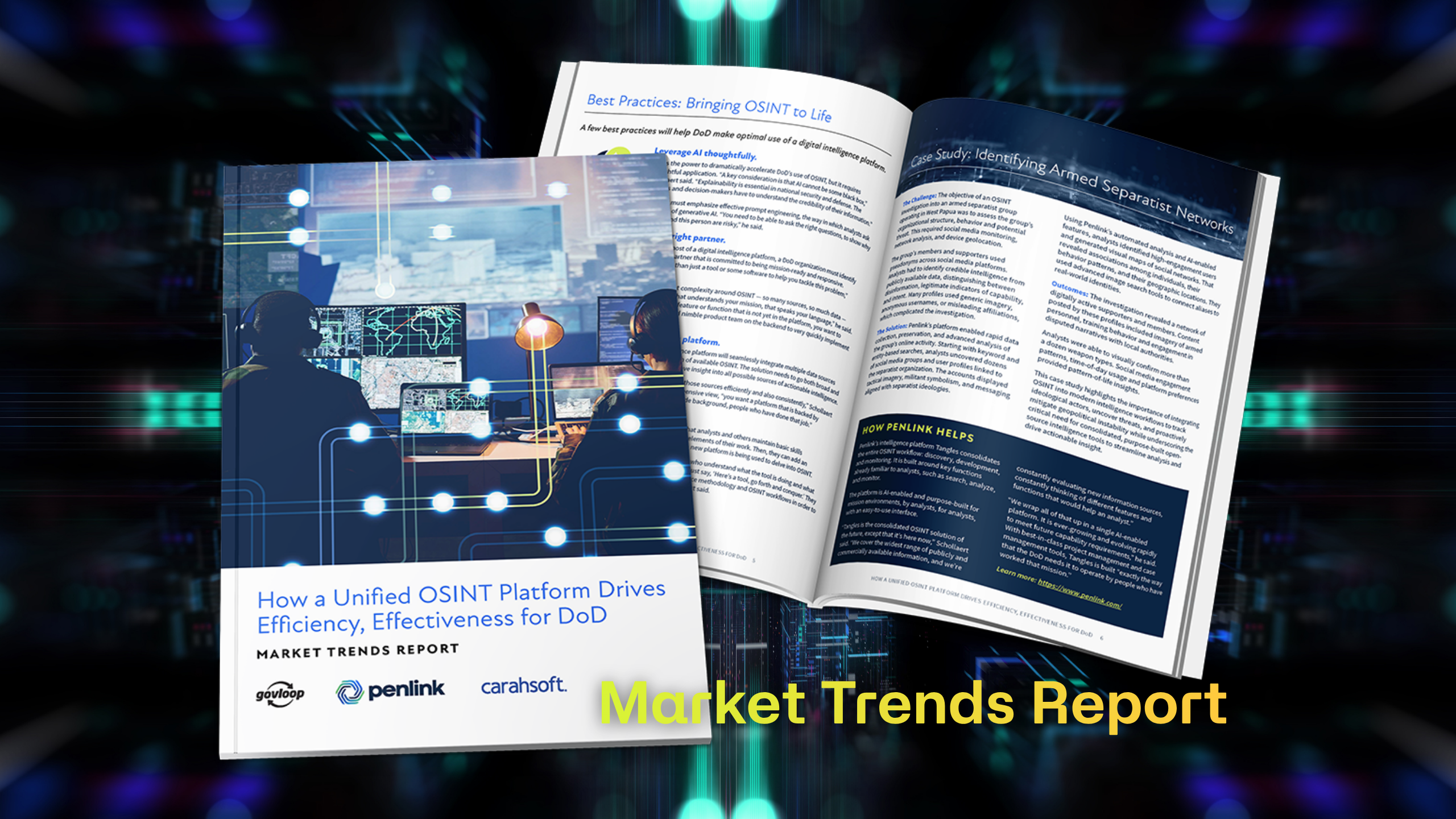
The Department of Defense is facing more data, more tools, and more complexity. This report shows how a unified OSINT platform delivers faster, smarter defense intelligence.

Penlink was recently featured on Fed Gov Today’s The OSINT Edge to discuss how open source intelligence is changing the way agencies detect and respond to cyber threats. Here is what that conversation covered.
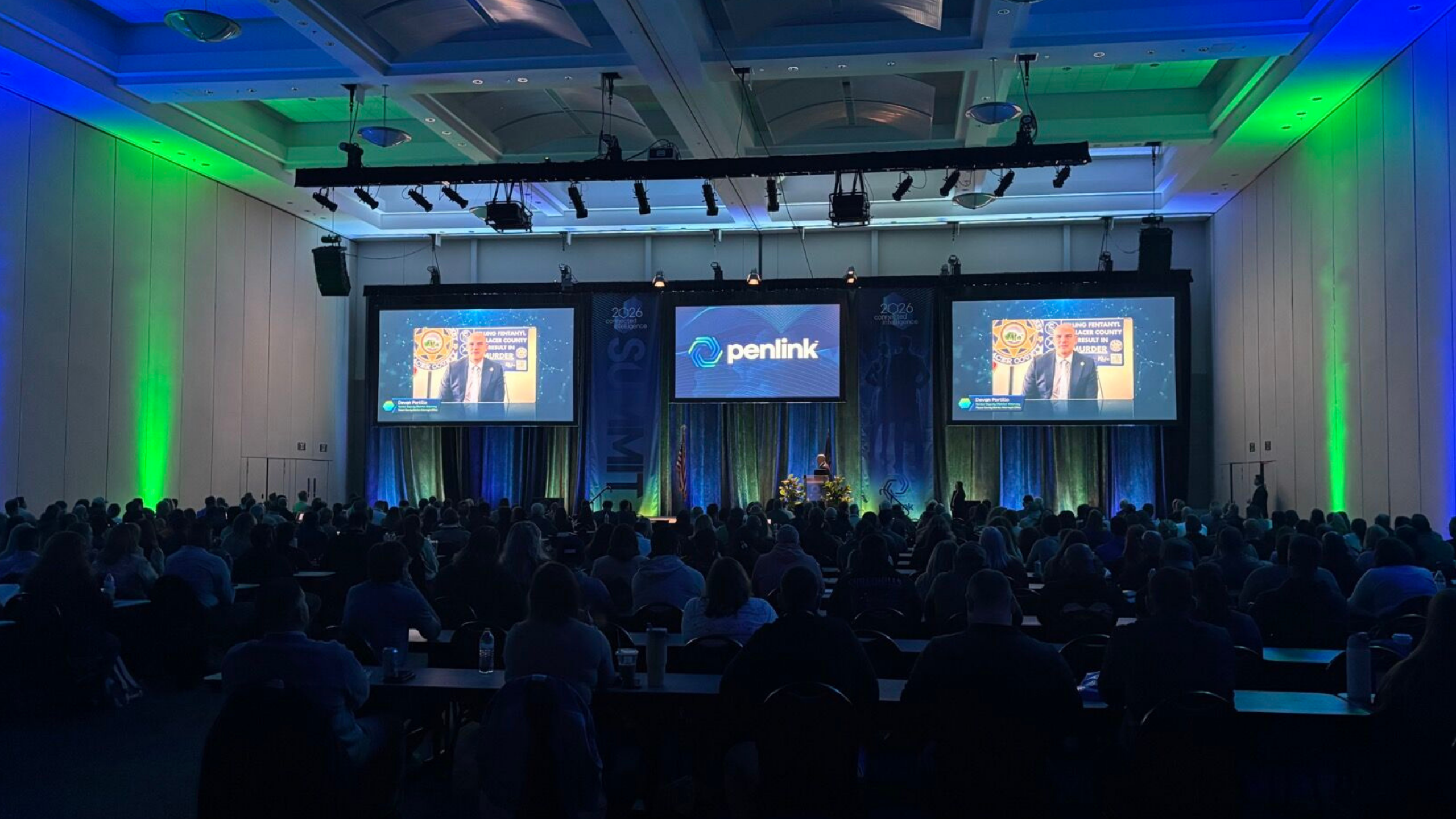
Couldn’t make it to the Penlink Training Summit? Here are the five takeaways that defined the event and what they mean for investigators right now.
Fentanyl task force coordination requires the right data and tools. Join intelligence analyst Ryan Croghan to learn how PLX supports multi-agency investigations.
Effective major event security starts months before game day and continues long after the final whistle. Here is how agencies structure the work across all three phases.