
OSINT for GSOC Teams: Seeing Threats Before They Arrive
Most threats to executives and sites take shape in public first. Here is how GSOC teams can read that trail early and act on it.
Aperçu de la plate-forme
Découvrez pourquoi Penlink est le leader mondial de l'intelligence numérique et des enquêtes alimentées par l'IA.





Penlink Academy
Your complete destination for Penlink training, with live sessions, on-demand modules, and certifications designed to give professionals the tools and confidence to succeed in real investigations.



In this conversation, Penlink Chief Product and Strategy Officer Udi Levy and Chief Technology Officer Shay Attias discuss how AI is changing investigative workflows across public safety. Drawing on more than two decades in the industry, they look at how investigations have moved from managing simple signals to working through massive volumes of data, from social media to cryptocurrency.
Watch the full discussion to see how Penlink built CoAnalyst360 to support investigators with automated workflows, real-time reporting, and human-in-the-loop oversight that keeps accountability where it belongs.
Most threats to executives and sites take shape in public first. Here is how GSOC teams can read that trail early and act on it.
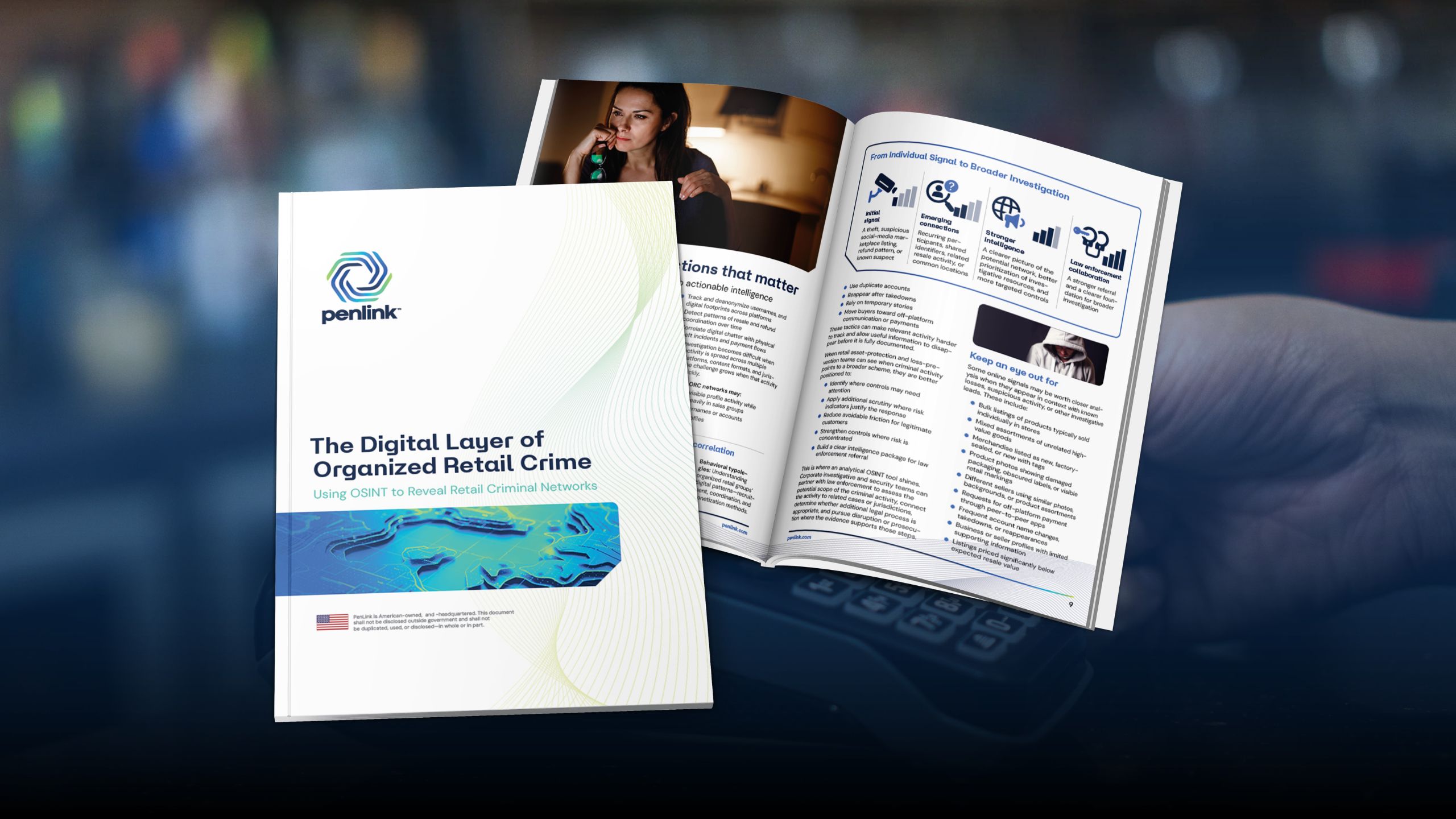
Organized retail crime networks move stolen goods and scale fraud through online marketplaces and messaging channels. This white paper shows how loss-prevention teams can connect individual incidents to the networks behind them.

Small boat crossings are the visible end of a much larger trade. This post looks at how open-source intelligence helps investigators see the networks behind them.

A single theft can be a one-off or the visible edge of an organized network. Retail and law enforcement teams need to know which one they are facing.
A coordinated operation across Volusia County targeted an alleged gang linked to shootings and overdose deaths, with more than 50 arrests expected.

Pen registers and live content intercepts operate under different legal authority. This post explains why getting the terminology right protects the collection and the case.