





Explore Cases Law Enforcement Gangs Investigations
Gunfire Series Ballistics Linkage
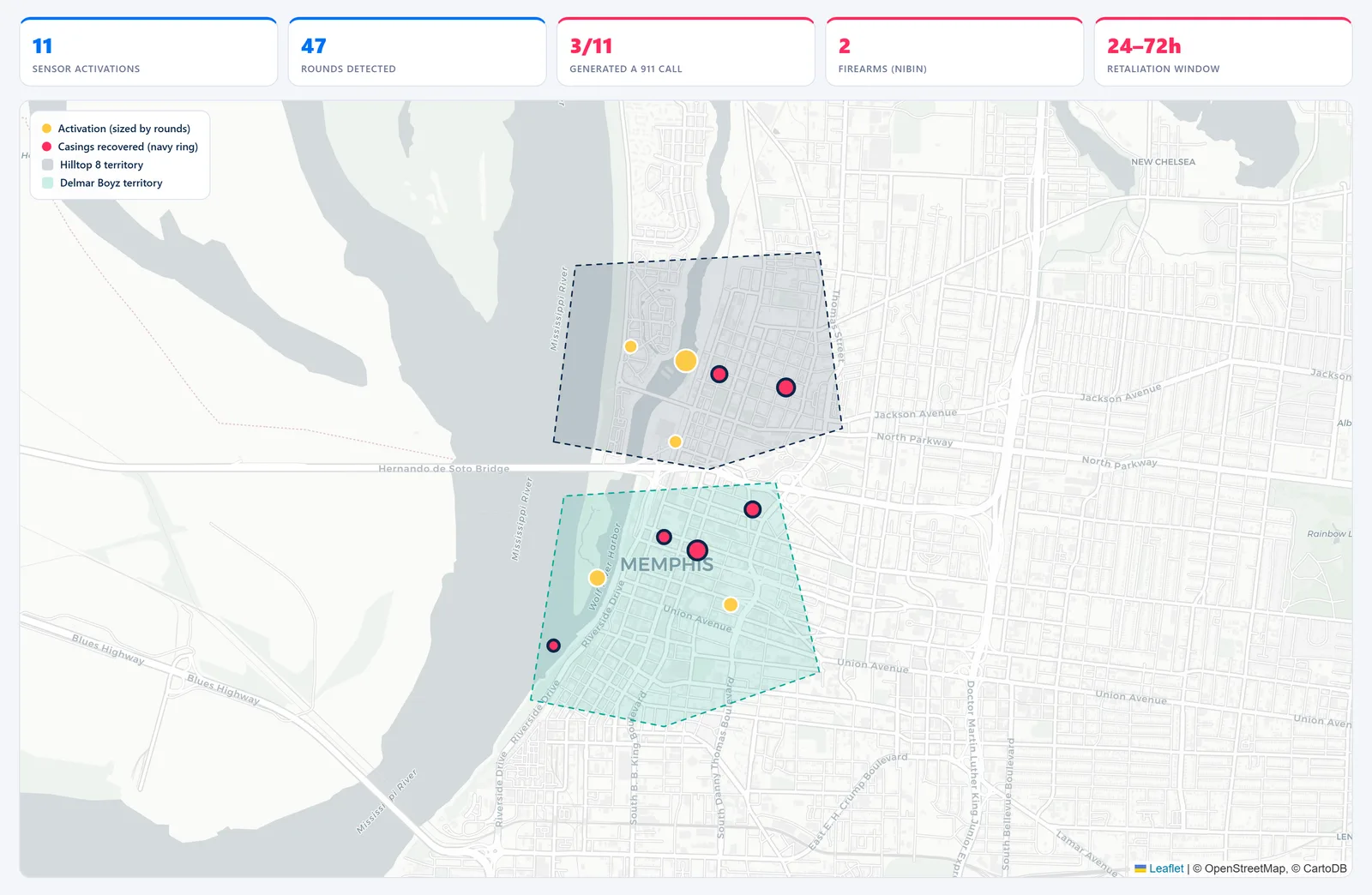
Several gunfire alerts, calls for service and recovered casings may describe separate incidents—or a single conflict that is accelerating. Linking the scenes requires bringing sensor data, dispatch records and ballistic evidence together, then asking whether the same firearms, locations and associated people keep reappearing.
Capabilities
Overview
Repeated gunfire produces records in several systems, but the pattern across incidents is often what matters most. Acoustic activations, calls for service, recovered evidence and ballistic correlations may each describe only part of the event. Viewed separately, they make it difficult to tell whether incidents are connected or whether the pace of violence is changing.
In CoAnalyst360, those records can be aligned by time and place, scenes connected through ballistic evidence, and relevant records or association context added alongside them. The resulting timeline can show which incidents appear linked, which firearms recur and how the intervals between events are changing. That gives investigators a more defensible basis for prioritizing follow-up and preventive resources.
Key features
- Sensor and dispatch fusion Match acoustic gunfire activations to calls for service and field reports within a tolerance window, separating corroborated incidents from unverified activations.
- Evidence correlation Geocode recovered casings to activation scenes so physical evidence, sensor data and dispatch records describe the same set of events.
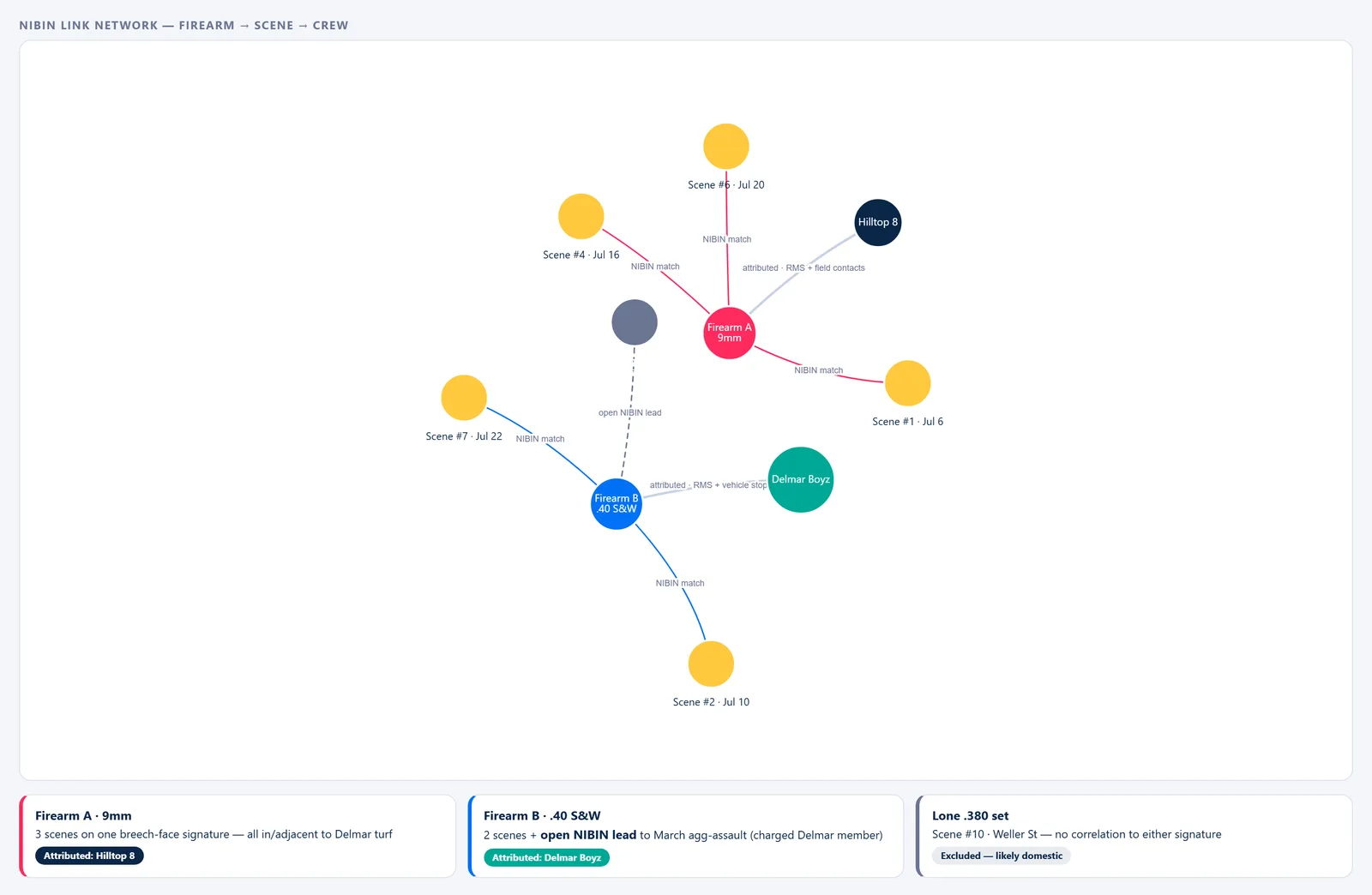
- Ballistic linkage Bring ballistic correlation results across scenes into the case, showing how many firearms are in circulation and which incidents share one.
- Records and association pivots Pivot from scene locations into records, field contacts and association files to attach known groups and individuals to a linked series.
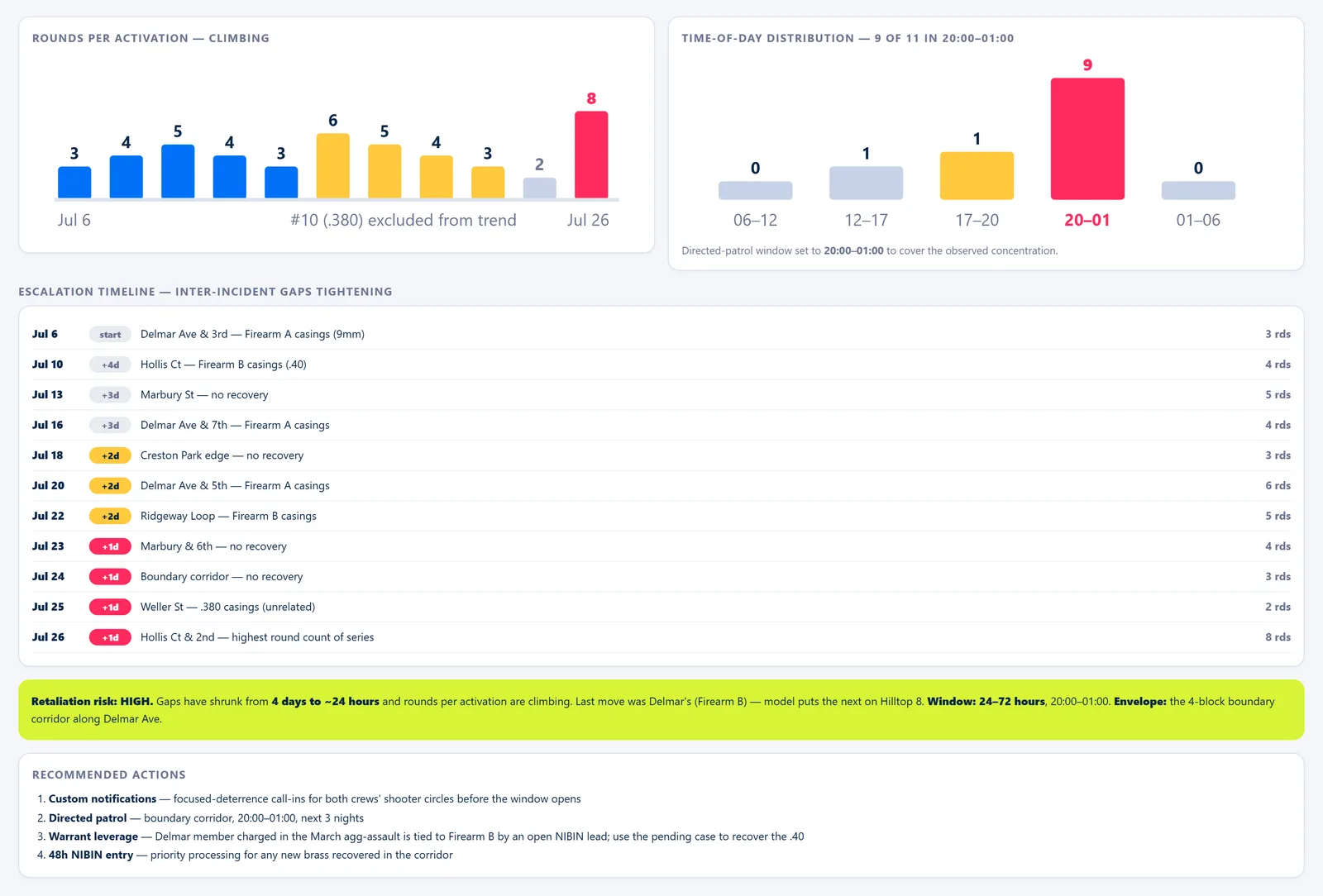
- Escalation-interval analysis Fit the intervals between linked incidents to a trend, turning a sense that things are accelerating into a measured rate.
- Risk-informed tasking Bring interval trend, territorial geometry and prior-conflict base rates together so commanders can schedule notifications, outreach and patrol coverage on evidence rather than instinct.
See CoAnalyst360 on your own data
Bring your existing data sources into a coordinated investigative workflow. See how CoAnalyst360 can help your team move from a question to evidence-backed findings faster.
Illustrative scenario. The incidents, investigations, individuals, organizations, communications, identifiers, and investigative findings depicted here are fictional and created for demonstration purposes. Real-world locations, geographic features, public infrastructure, and other contextual references may be used to make the scenario realistic. Their inclusion does not indicate that the events shown actually occurred or that any real person or organization was involved.