Your complete destination for Penlink training, with live sessions, on-demand modules, and certifications designed to give professionals the tools and confidence to succeed in real investigations.
Penlink Spotlighted in Nextgov/FCW Digital Edition: Leading Open-Source Intelligence Innovation
Date Posted: October 18th, 2024
Penlink Spotlighted in Nextgov/FCW Digital Edition: Leading Open-Source Intelligence Innovation
Penlink has recently been featured in Nextgov/FCW Digital Edition for its transformative work in open-source intelligence (OSINT), positioning itself as a key player in helping defense, law enforcement, and corporate sectors manage data more efficiently. The article highlights how Penlink’s platform supports users in gathering and analyzing publicly available data, leading to faster, more precise decision-making in critical environments.
By focusing on streamlining data collection and using advanced tools, including AI, PenLink offers solutions that reduce the time and resources required to process large amounts of information. With this technology, analysts can access key insights faster and with greater ease, helping organizations meet the demands of today’s complex intelligence landscape.
Penlink’s platform also stands out for its ability to evolve alongside the needs of its users. With constant feedback from professionals in the field, including military personnel and law enforcement officers, Penlink has refined its tools to provide highly targeted, actionable intelligence. The platform’s adaptive technology is crucial in helping analysts navigate emerging threats, from global power competition to counterterrorism, in a timely manner.
A key point of the feature was Penlink’s integration of generative AI into their platform. This innovation allows analysts to extract hidden insights from large amounts of data without spending hours on manual searches. The AI assists in creating workflows that are tailored to specific investigative needs, ensuring that analysts can focus on what matters most. This kind of AI-driven analysis helps identify illicit activities on social media, for instance, providing vital information in contexts where traditional methods fall short.
Additionally, PenLink’s strong focus on collaboration and user-driven improvements was noted. The company has built a robust community of seasoned professionals who contribute to the platform’s ongoing development, ensuring that it remains practical, adaptable, and highly effective across various sectors. Whether it’s military, law enforcement, or corporate security applications, PenLink’s solutions continue to meet the high-stakes demands of intelligence work.
PenLink is highlighted in Nextgov/FCW for transforming open-source intelligence, enabling faster data collection and decision-making for defense and law enforcement.
Read the Full Article To learn more about how Penlink is changing the way intelligence is gathered and analyzed, check out the full article in Nextgov/FCW Digital Edition. You can view it here.
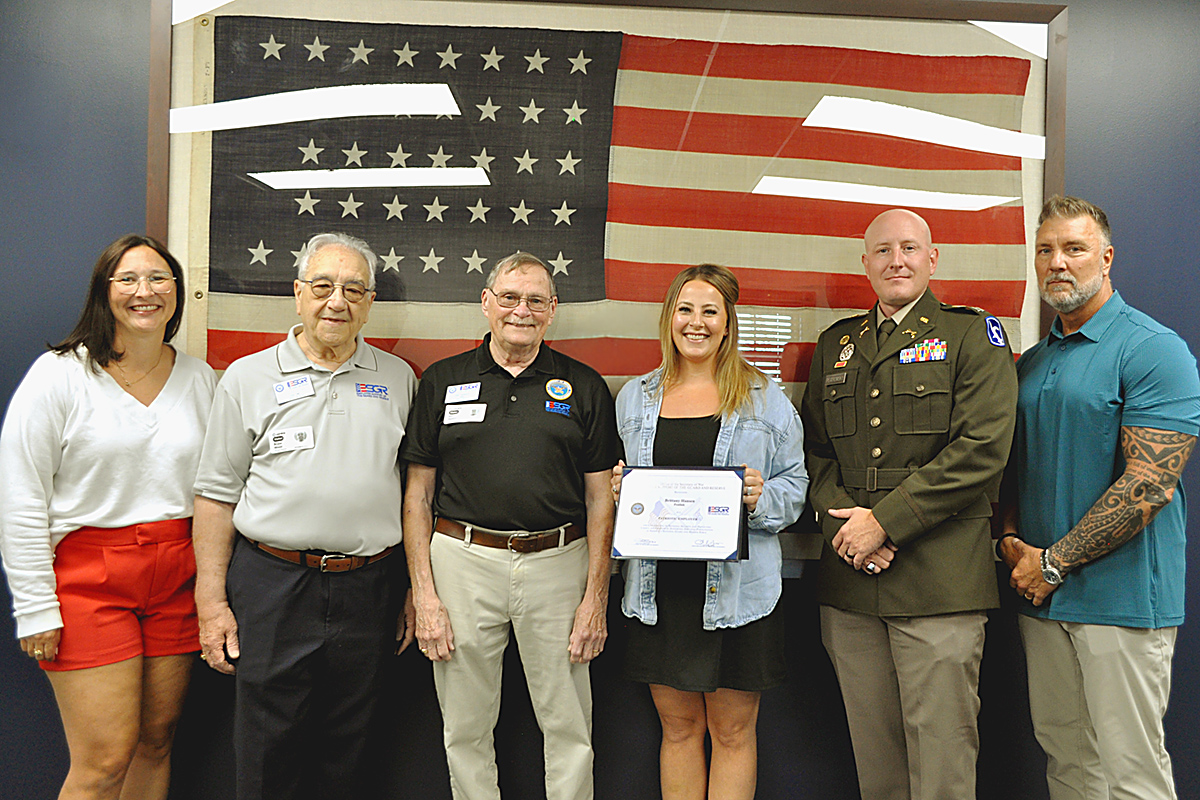
Penlink, a leading provider of digital intelligence solutions for law enforcement, national security, defense and enterprise organizations, announced today that Training Manager Brittany Hansen was presented with the Patriot Award from the Employer Support of the Guard and Reserve (ESGR), a Department of War program.
The Department of Homeland Security announced the results of a nationwide crackdown on human trafficking coordinated around the 2026 FIFA World Cup. Homeland Security Investigations (HSI), the DHS Center for Countering Human Trafficking, and federal, state, and local partners arrested 905 suspects and rescued 180 victims — 150 adults and 30 juveniles — across World Cup host cities.
The U.S. Marshals Service announced the conclusion of Operation Meridian, a month-long, multi-agency effort that located and recovered 79 reported missing and endangered children across Ohio, ranging in age from 6 to 17. Officials described it as the largest missing child operation in the state’s history.
A multi-agency investigation in Volusia County, Florida, has led to the dismantling of a major fentanyl and methamphetamine trafficking network, with 49 people arrested and hundreds of grams of narcotics seized.
The Nebraska State Patrol says a routine traffic stop earlier this month led to what investigators believe is the largest drug seizure in the agency’s history. Governor Jim Pillen joined NSP to detail the case, along with a second, unrelated stop that turned up stolen commercial equipment.
Foreign influence campaigns increasingly pair disinformation with cyber intrusion. This post looks at what that convergence means for investigators tracking coordinated state-linked activity.