Your complete destination for Penlink training, with live sessions, on-demand modules, and certifications designed to give professionals the tools and confidence to succeed in real investigations.
Using Precision Location Information To Track Targets
Date Posted: June 17th, 2022
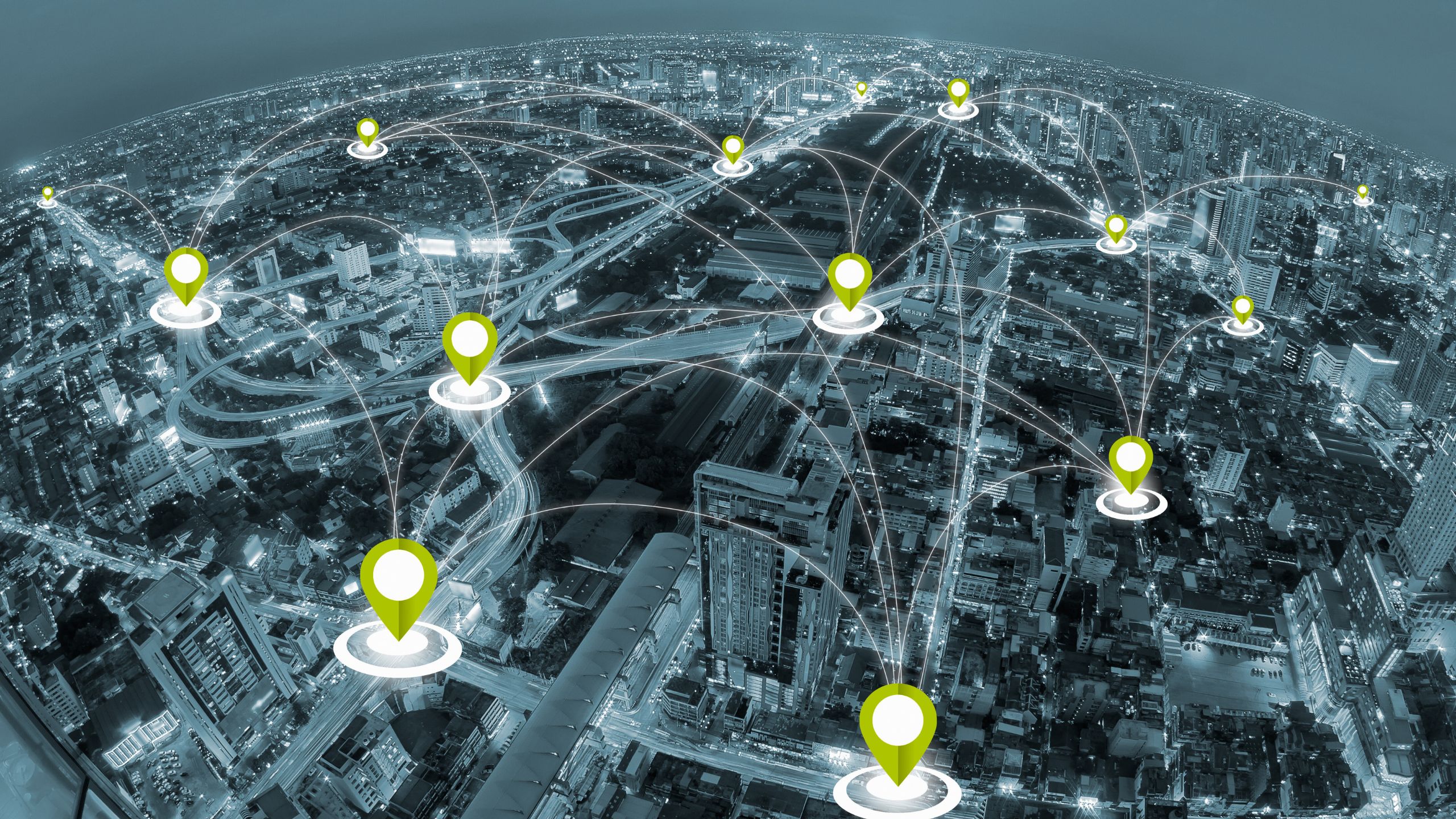
Typical forms of location information only provide so much to law enforcement working to track targets during an investigation. Cell towers, call-detail records, and pen-register data can provide great information on targets’ whereabouts, but the ranges can be vast and imprecise, and data dumps can lag. Moreprecise location information and mapping with the help of PLX can help pinpoint targets’ positions with extreme accuracy.
Plugging precise location information from Google, Snapchat, Facebook, and EXIF data into PLX can show law enforcement locations with accuracy at just a few meters, compared to up to 3000 meters with other traditional sources of location information, like cell tower pings. Combine that with the frequency at which this information is received—every few minutes or less—and law enforcement can map a target traveling down a highway.
“It’s pretty powerful,” said Sydney Wieseler, Senior Software Support Analyst at PenLink. “It’s hard to say that a target isn’t in a location when you’re getting their GPS coordinates multiple times a minute with this small a radius.”
This information, which requires a search warrant, contains dates, times, latitude, longitude, and other pertinent data. If a search warrant isn’t possible, law enforcement can obtain IP address information for phone numbers through Verizon and T-Mobile, and from Facebook, Google, and Snapchat accounts, with a subpoena.
Wieseler said that information from IP addresses can be invaluable to tracking a target.
“In conjunction with traditional forms, we need to broaden our minds a little bit when it comes to locations and start looking at emails, attachments, IP sessions, and messages for some of that location information,” she said.
The advantage of loading IP addresses into PLX is that it supports IP location databases like IP2Location and Net Acuity. This allows for the detailed mapping of a target’s exact location based on IP address information.
“We want to analyze the data we’ve collected, find answers, and make connections based on the location information that has been collected,” Wieseler said. “We’ll want to present those answers and connections in a meaningful and efficient way.”
That’s where PLX comes in, providing the user-friendly platform to track targets, stop criminal activity, and provide evidence for convictions with high-quality, accurate mapping technology.
A Detroit man awaiting trial for murder in the Na’Ziyah Harris case now faces additional charges involving a second child, showing how connected investigations can uncover patterns that extend well beyond the original case.
A Memphis jury convicted Justin Johnson of first-degree murder in the 2021 murder-for-hire killing of rapper Young Dolph, showing how digital evidence can close cases where physical evidence falls short.
Fentanyl’s designation as a weapon of mass destruction is more than a policy headline. Here is what it means in practice for investigators and agencies on the front lines.
44 missing and endangered children and teens were located during a focused, three-day operation in Westchester County, bringing together more than 70 agencies united by one goal.