Your complete destination for Penlink training, with live sessions, on-demand modules, and certifications designed to give professionals the tools and confidence to succeed in real investigations.
The Multi-Agent Investigation Stack: The Ultimate Intelligence Partner
Date Posted: December 9th, 2025
Udi Levy, Chief Product and Strategy Officer. Penlink.
The Challenge Facing Modern Investigative Teams
Investigative teams today face a challenge that is not going away. Analysts and investigators must handle more digital evidence, more fragmented datasets, and more complex behavioral patterns. Communications records, financial flows, device extractions, digital traces, and threat signals collide across domains. The cognitive load is surpassing what a single person can reasonably manage. The gap is not due to a lack of skill. It is due to the shape and scale of modern data.
Why a Multi-Agent Investigation Stack Matters
An AI-Powered Multi-Agent Investigation Stack offers a practical path forward. Parts of this architecture are already emerging in today’s systems: models that can call tools, retrieve data securely, maintain structured memory, and run reasoning chains. What is new is the idea of coordinating these capabilities through multiple specialized agents that work together like an investigative team. Instead of one agent trying to do everything, the workload is divided into well-defined components that can run in parallel and share data.
How Specialized Agents Mirror Investigative Reasoning
The core idea is straightforward. Different investigative tasks require different types of reasoning. Extracting entities from a messy report is not the same cognitive skill as evaluating movement consistency from CDRs. Detecting financial layering is not the same as interpreting OSINT signals. Analysts move through all these modes constantly. An AI-Powered multi-agent stack assigns each mode to an agent that is optimized for that specific type of analysis, orchestrated by a planner that understands how the pieces fit together.
What Multi-Agent Systems Can Already Do
This pattern is already taking shape in various systems. Agents can retrieve case data through RAG, call database queries, process signals, identify anomalies in structured data, reconstruct timelines, and draft coherent summaries. These components work today in isolation. When they are coordinated under a shared investigation plan, the system begins to behave less like a single process and more like a collaborative intelligence layer.
Immediate Impact on Public Safety Workflows
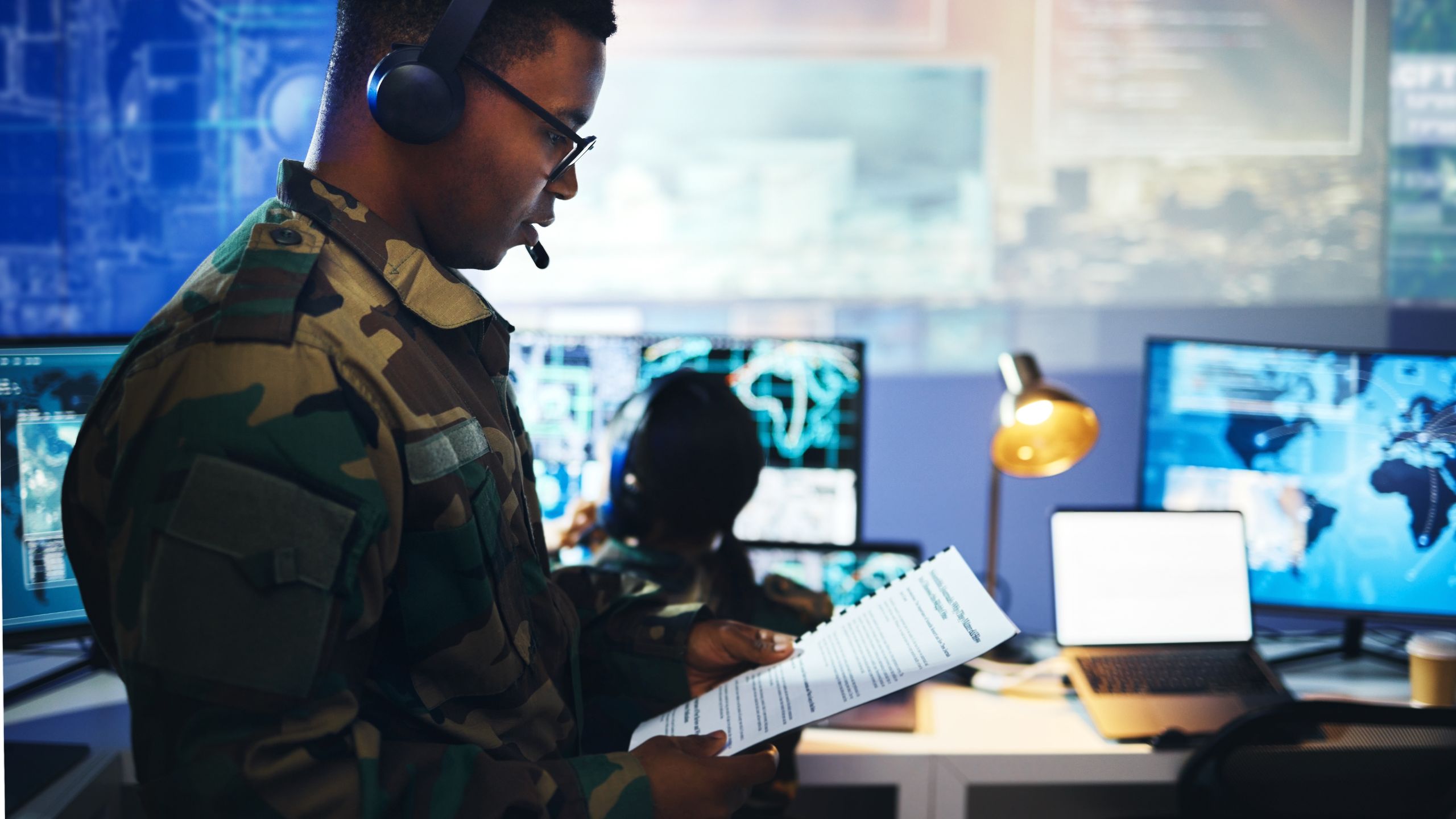
The impact on public safety workflows is immediate. Consider a criminal case that spans communications, location data, phones, and social networks. An analyst might spend hours moving between tools. A multi-agent system can run the same analytical steps in parallel: one agent reconstructing communication sequences, one interpreting tower movement, one linking persons of interest, and one pulling open-source context. The analyst supervises, validates, and directs, while the AI carries the operational load of assembling the data.
Benefits for AML and Financial Crime Teams
AML teams see similar benefits. Financial crime patterns often require cross-referencing accounts, devices, travel, communication, and behavioral signatures. A multi-agent system can evaluate each dimension with a focused analytical process rather than forcing everything through one large model or one static rule. This produces more consistent risk assessments and clearer investigative trails that analysts can review and challenge.
How Multi-Agent Systems Strengthen Threat Monitoring
Threat monitoring is an area where multi-agent behavior already looks natural. Modern monitoring systems need to continuously scan data compare activity to historical patterns, enrich signals with context, and generate alerts. Several organizations already use agent-like architecture to keep these checks running around the clock. The analyst steps in when the system identifies a meaningful deviation, and the system provides an audit trail of how it reached the conclusion.
Keeping Analysts in Control
These capabilities do not replace analysts. They support them by removing the mechanical work that slows investigations down. When AI components handle repeatable logic and data manipulation, analysts can focus on interpretation, prioritization, strategy, and judgment. The quality of the investigation improves because humans are working at the level where human skill matters most.
The Future of the Multi-Agent Investigation Stack
The Multi-Agent Investigation Stack is not a futuristic abstraction. It is a logical extension of what current AI systems can do and a blueprint for how those systems should be organized. The foundation exists in today’s technology. The opportunity is to connect these capabilities into a coherent investigative workflow that feels like an intelligence partner rather than another tool to operate.
What This Means for the Future of Investigations
Investigations are evolving. The Multi-Agent Investigation Stack strengthens that role by taking on the cognitive strain that machines handle better and leaving the human in full control of meaning, context, and truth. This is how modern investigative work can keep pace with modern data: not by replacing humans, but by surrounding them with an AI-driven team that amplifies their expertise and extends their capacity.
Penlink, a leading provider of digital intelligence solutions for law enforcement, national security, defense and enterprise organizations, announced today that Training Manager Brittany Hansen was presented with the Patriot Award from the Employer Support of the Guard and Reserve (ESGR), a Department of War program.
The Department of Homeland Security announced the results of a nationwide crackdown on human trafficking coordinated around the 2026 FIFA World Cup. Homeland Security Investigations (HSI), the DHS Center for Countering Human Trafficking, and federal, state, and local partners arrested 905 suspects and rescued 180 victims — 150 adults and 30 juveniles — across World Cup host cities.
The U.S. Marshals Service announced the conclusion of Operation Meridian, a month-long, multi-agency effort that located and recovered 79 reported missing and endangered children across Ohio, ranging in age from 6 to 17. Officials described it as the largest missing child operation in the state’s history.
A multi-agency investigation in Volusia County, Florida, has led to the dismantling of a major fentanyl and methamphetamine trafficking network, with 49 people arrested and hundreds of grams of narcotics seized.
The Nebraska State Patrol says a routine traffic stop earlier this month led to what investigators believe is the largest drug seizure in the agency’s history. Governor Jim Pillen joined NSP to detail the case, along with a second, unrelated stop that turned up stolen commercial equipment.
Foreign influence campaigns increasingly pair disinformation with cyber intrusion. This post looks at what that convergence means for investigators tracking coordinated state-linked activity.