Your complete destination for Penlink training, with live sessions, on-demand modules, and certifications designed to give professionals the tools and confidence to succeed in real investigations.
Strengthening Infrastructure Posture for Agencies Managing Sensitive Data
Date Posted: August 20th, 2026
By Terry Pell, Chief Customer Officer, Penlink
Every October, Cybersecurity Awareness Month gives the industry a reason to ask a simple question: are we doing everything we can to protect what we’ve built? For agencies and organizations managing large volumes of sensitive data, that question deserves more than a passing nod. Infrastructure protection isn’t a checkbox exercise — it’s the foundation everything else depends on, from operational continuity to public trust.
This is especially true for organizations managing evidentiary or investigative data, where materials sitting on a server may one day be scrutinized in a courtroom. Below are a few practices worth revisiting as we head into October — some familiar, some less commonly discussed, but all foundational to a strong security posture.
The widening gap between known and fixed
Organizations holding evidentiary or investigative materials face a heavier burden than most. Beyond the usual risks of unauthorized access or data loss, there are chain-of-custody expectations, audit trail integrity requirements, and often extended retention periods — all of which widen the window in which something can go wrong.
The numbers back this up. Verizon’s 2026 Data Breach Investigations Report found that exploiting known software vulnerabilities has overtaken stolen credentials as attackers’ top entry point, now behind roughly a third of breaches. Fewer than three in ten known critical vulnerabilities studied were fully patched, and typical patch times have stretched past six weeks. The gap between “we know about the weakness” and “we fixed it” is widening — and that’s the gap attackers exploit.
Narrow who can reach the most sensitive layers
Role-based access control and the principle of least privilege remain two of the most effective, least glamorous tools available. Not everyone who touches a platform needs — or should have — access to its most sensitive data layers. Taking access control to the next level, NIST’s Zero Trust Architecture guidance (SP 800-207) offers a solid framework, and it’s worth revisiting even for teams that feel they’ve already “done” access control once.
Rethink how you name your infrastructure
Here’s a recommendation that doesn’t get enough airtime: the names you give your servers, storage buckets, and folder structures matter more than most teams realize. A server labeled “evidence-server-01” or “case-files-prod” provides anyone conducting reconnaissance on your network a roadmap before they’ve breached anything.
We’re told not to make our bank password “Chase2026!” or our work login “AcmeCorp#1.”A password shouldn’t announce what it unlocks. The same logic applies to infrastructure. A server named “evidence-server-01” or a bucket named “case-files-prod” does exactly what “Chase2026!” does: it tells an attacker where to spend their time. Consider a non-attributable naming convention — sometimes called opaque asset labeling — so names reveal nothing about the provider, function, content, or sensitivity. This isn’t a replacement for access controls or encryption; it’s one overlooked layer in a defense-in-depth strategy. NIST SP 800-53/SC-38 and CISA guidance on reducing reconnaissance value are useful starting points.
Encryption at every layer
Encryption is the control that still works after the others have failed. Role-based access controls assume the attacker came through the front door; opaque naming assumes they’re still looking.
Encryption works best as a set of layers, each covering a failure the others don’t. Disk and volume encryption protects hardware that leaves your control — a drive pulled from a decommissioned server, a stolen workstation, and media disposed of without proper sanitization. It operates while the volume is unmounted; once the system boots, the disk decrypts transparently for everything running on it. Database-level encryption narrows the exposure further, protecting the data files themselves so that a data file copied out of the storage layer, or a file-level backup landing in unintended storage, is unreadable without the corresponding key. TLS 1.2 or higher covers the third exposure: data moving between systems, where interception, downgrade attacks, and man-in-the-middle positioning are the realistic threats. Together these three cover the drive, the file, and the wire. The gap they leave, data in use by an authenticated session, is the one that access controls, continuous monitoring, anomaly detection, and audit trail review exist to close.
Catch irregular activity in the moment
As just mentioned, continuous monitoring and real-time anomaly detection close the loop, catching unusual access as it happens rather than in a post-incident review weeks later. IBM’s 2026 Cost of a Data Breach Report found organizations still take an average of roughly eight months to identify and contain a breach — a pace that’s actually slowed even as breach costs hit a global record. Organizations using AI and automation for prevention and response closed breaches about two months faster and at nearly two million dollars less cost than those without. Detection speed is one of the biggest levers an organization has over what a breach ultimately costs. CISA’s incident response guidance is a strong reference point for building out this capability.
A timely reminder
As Cybersecurity Awareness Month approaches, we’d encourage every agency we work with to take a fresh look at their own posture. To make sure you’re doing everything you can to stay protected, reach out to your Penlink Customer Success Specialist or our Customer Support Team — we’re glad to help you think it through.
A Placer County prosecutor and crime analyst walk through a fentanyl murder case and show how 1.2 terabytes of warrant returns became the exhibits that sent a dealer to prison for life.
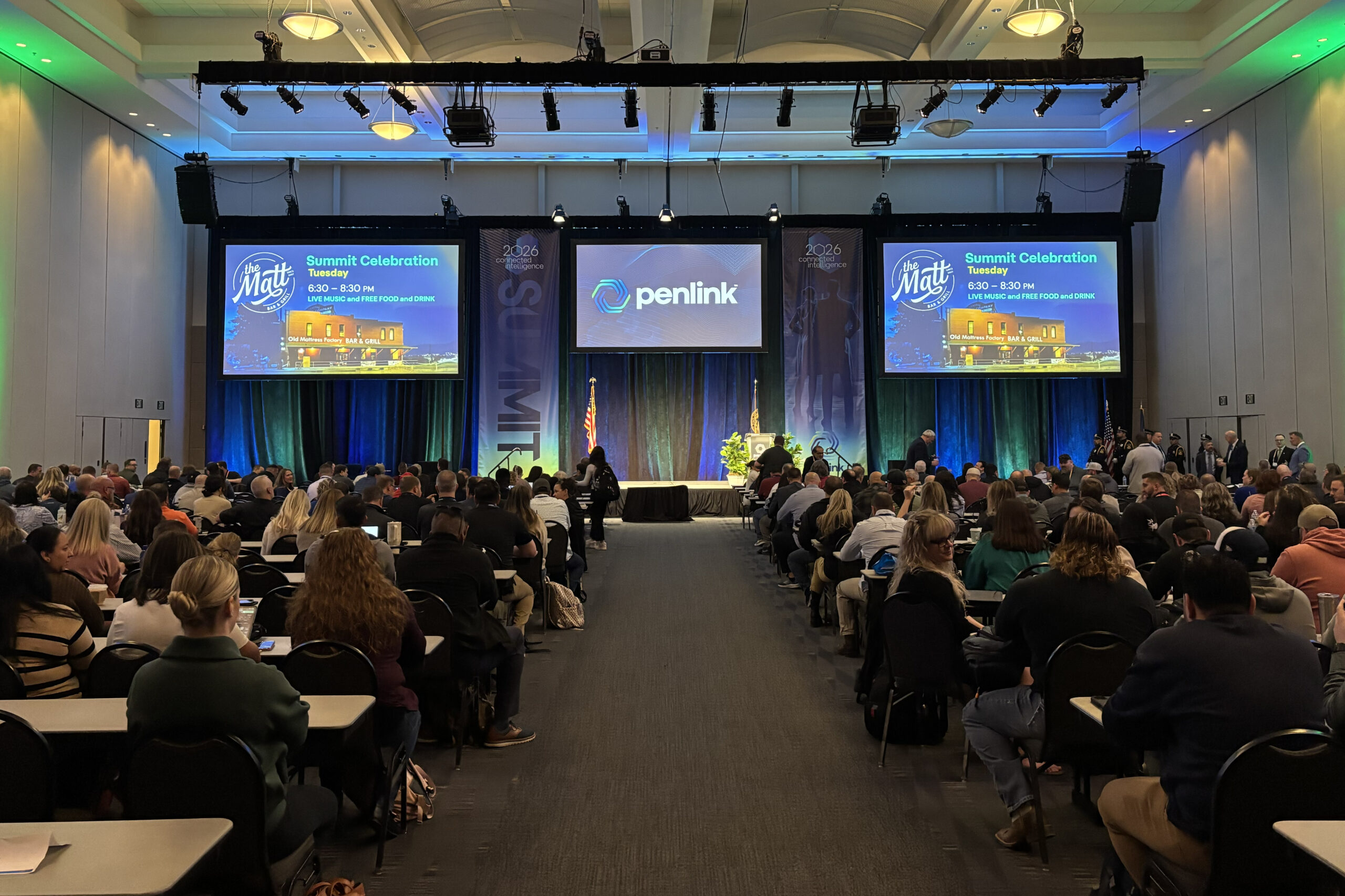
The Penlink Training Summit returns to Omaha, Nebraska, March 8–10, 2027, bringing together investigators, analysts, agency leaders and security professionals for two and a half days of training, learning and collaboration.
Europol brought together investigators, analysts and open-source intelligence specialists from 12 countries for a four-day operation targeting human trafficking networks exploiting Ukrainian nationals online.
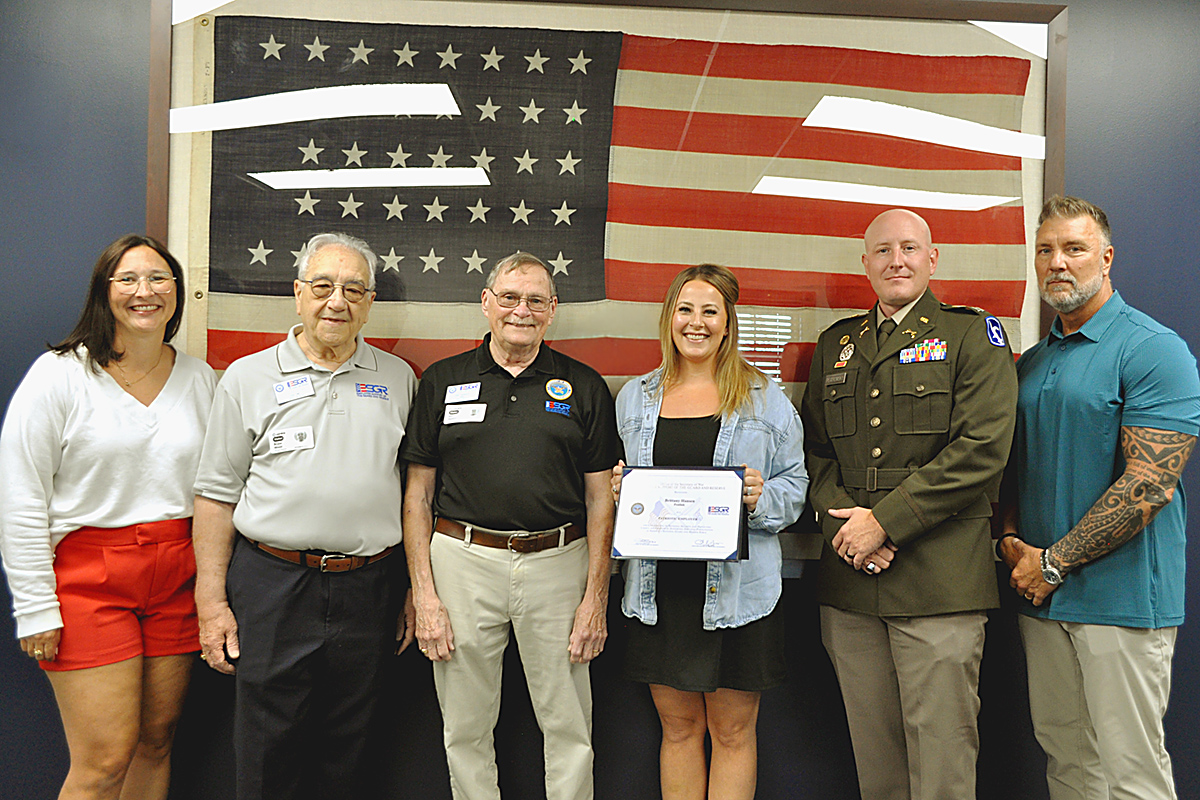
Penlink, a leading provider of digital intelligence solutions for law enforcement, national security, defense and enterprise organizations, announced today that Training Manager Brittany Hansen was presented with the Patriot Award from the Employer Support of the Guard and Reserve (ESGR), a Department of War program.
Chicago police and the U.S. Marshals Service teamed up this spring. Their goal: find missing juveniles fast. Over ten days in May, Operation Safe Return Chicago located 30 missing kids across the city.
A Lake County, Florida jury found two men guilty on drug trafficking and related charges tied to a 2022 investigation into narcotics sales across the Leesburg, Mount Dora, and Fruitland Park area.