







Explore Cases Enterprise Data Breach Detection
Insider Exfiltration: The Night-Shift Backup
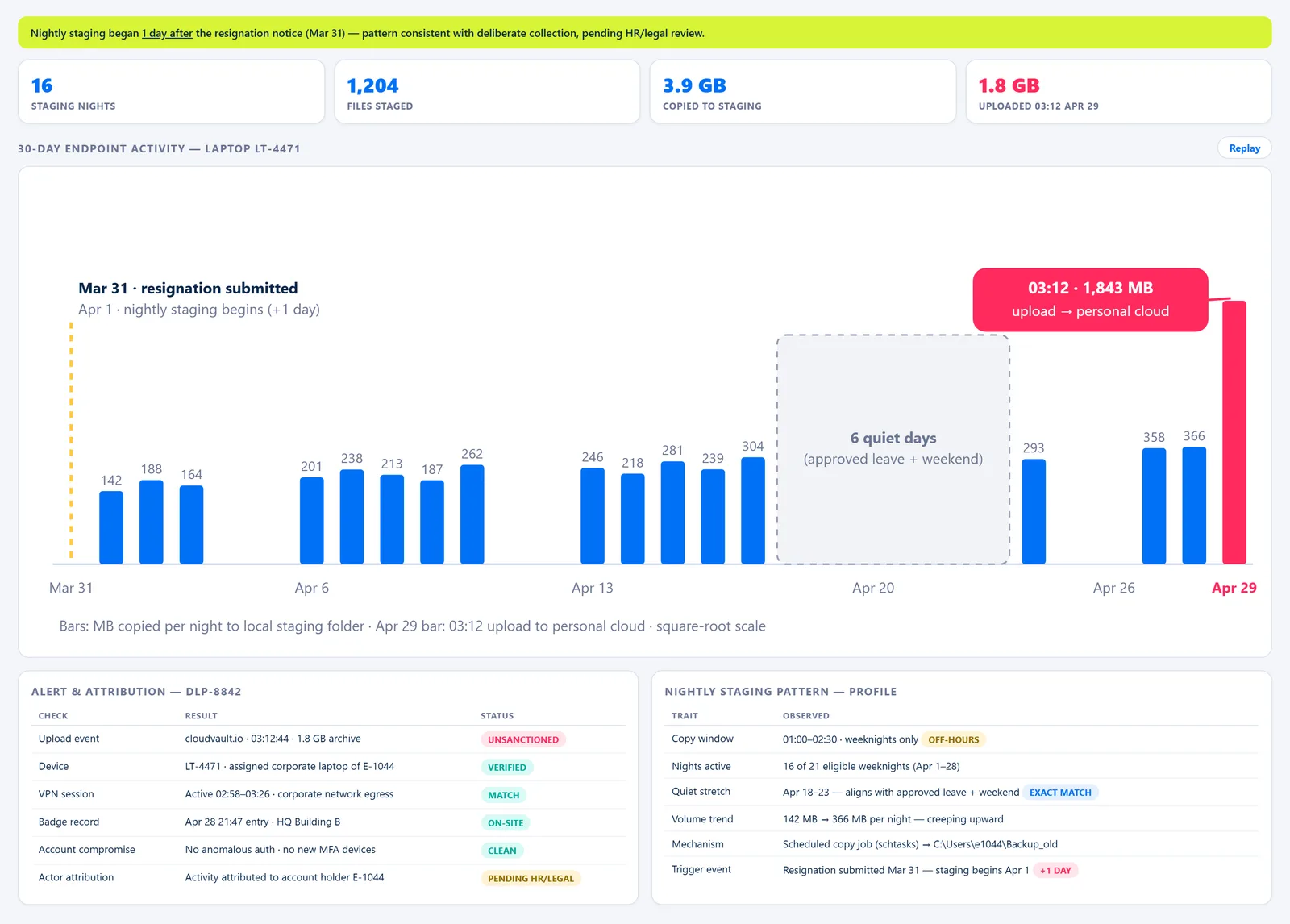
An employee resigns without incident. Days later, a data-loss alert points to an unusual transfer just before departure. The investigation has to determine whether that alert was a one-off event or the visible end of weeks of staging—and exactly what left, where it went and who controls the destination.
Capabilities
Overview
A file-transfer alert is a starting point, not an insider case. Investigators still need to confirm the account and device involved, reconstruct activity before the alert, determine what data was staged versus transferred, and understand the destination. Those answers may span endpoint telemetry, cloud logs, access records, HR context and external registration data.
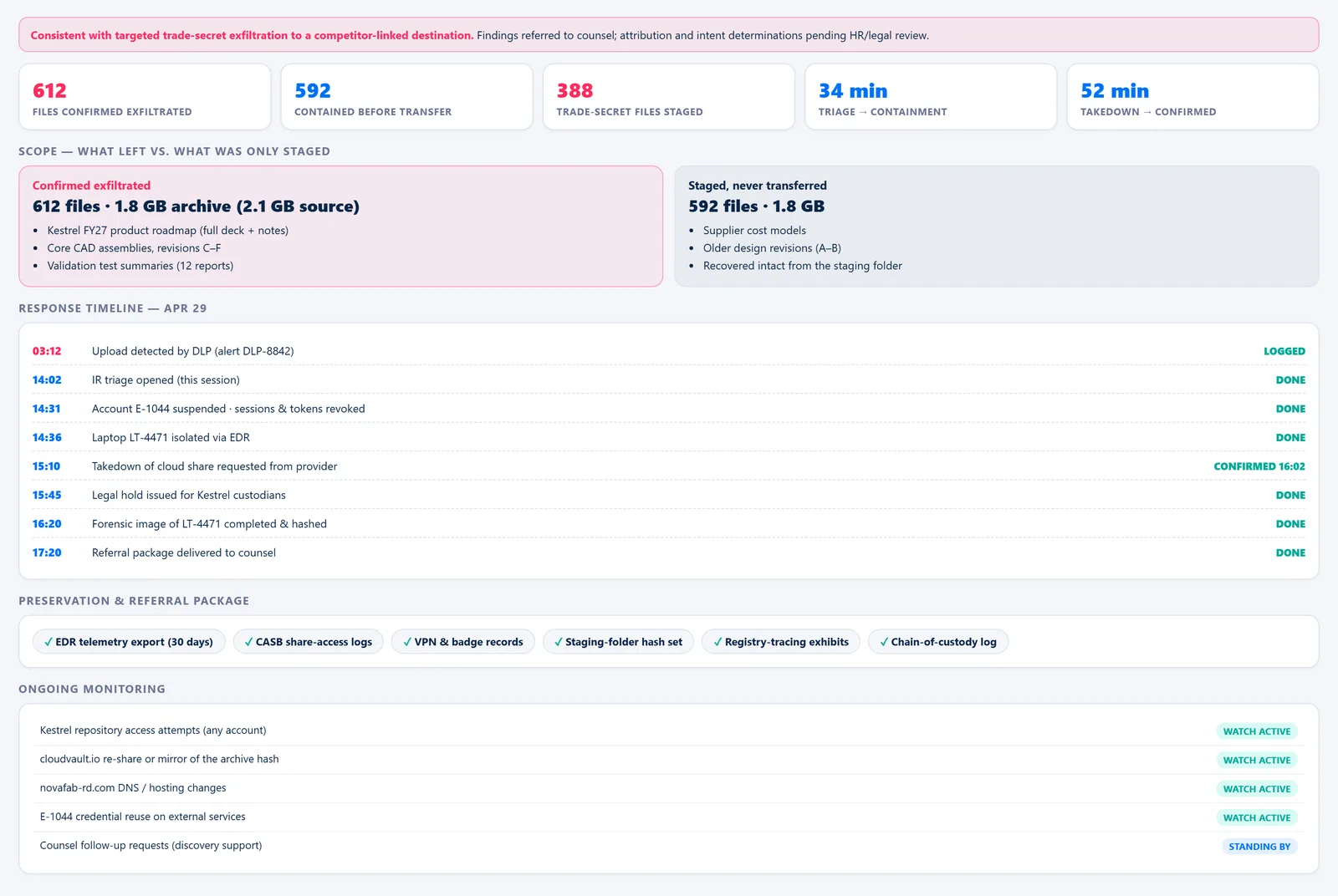
CoAnalyst360 assembles that evidence into a single timeline for review. Earlier file activity can be compared with the triggering event, employment context can be added without treating it as proof of intent, and the receiving infrastructure can be researched for ownership clues. Preservation and forensic steps can be recorded alongside the findings so the final referral is easier to review and reproduce.
Key features
- Alert verification Tie an alert to a confirmed account and device using access, network and physical entry records — before any accusation is framed.
- Staging reconstruction Query endpoint file activity backwards over weeks to establish whether the alert is isolated or the visible end of a long staging pattern.
- Employment-context correlation Correlate the activity timeline against notice dates, leave calendars and access-profile changes — as context for the investigator, not as evidence of intent.
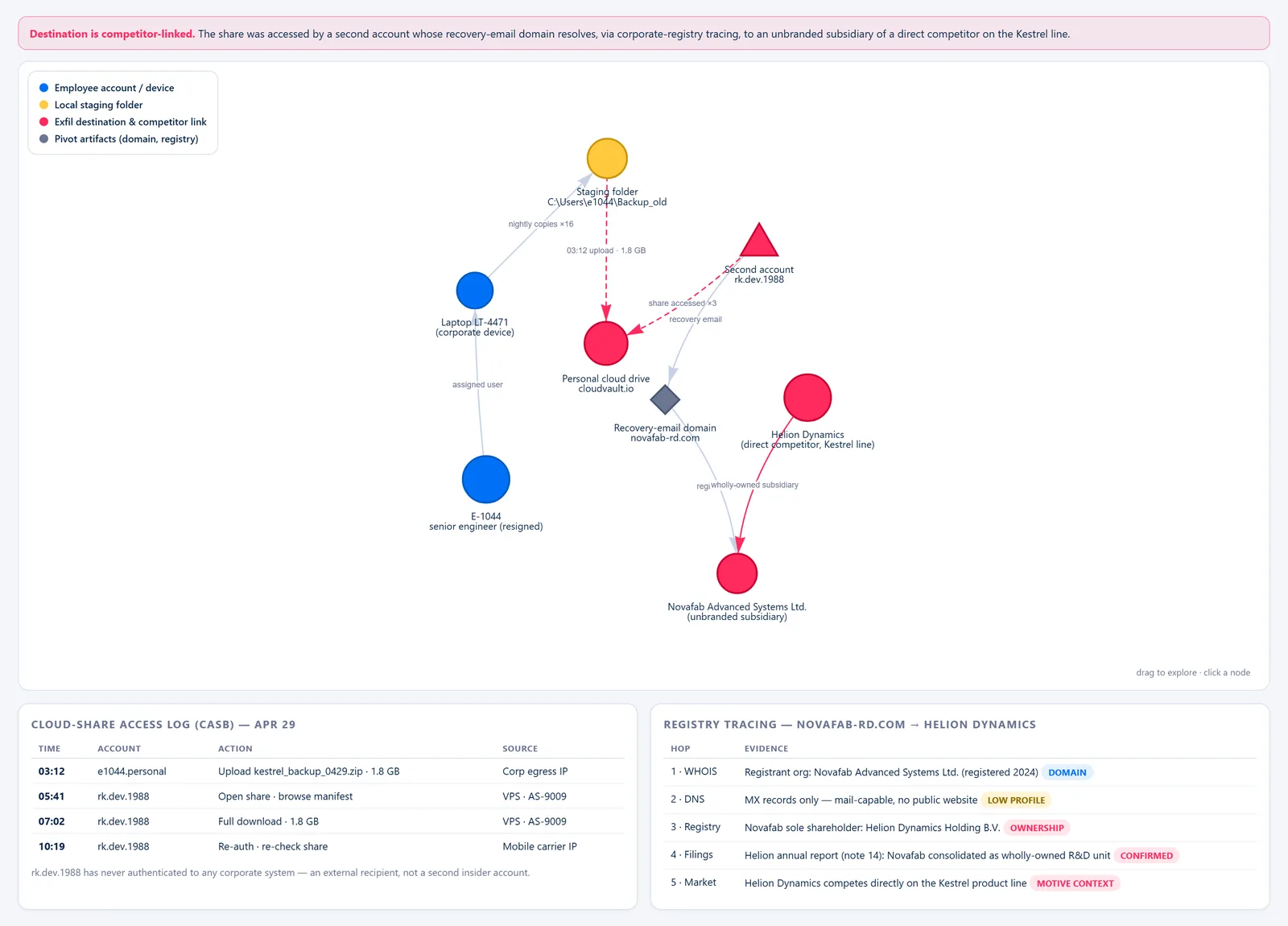
- Destination ownership tracing Trace the receiving domain through registration and hosting data into corporate registries to establish who sits behind the destination.
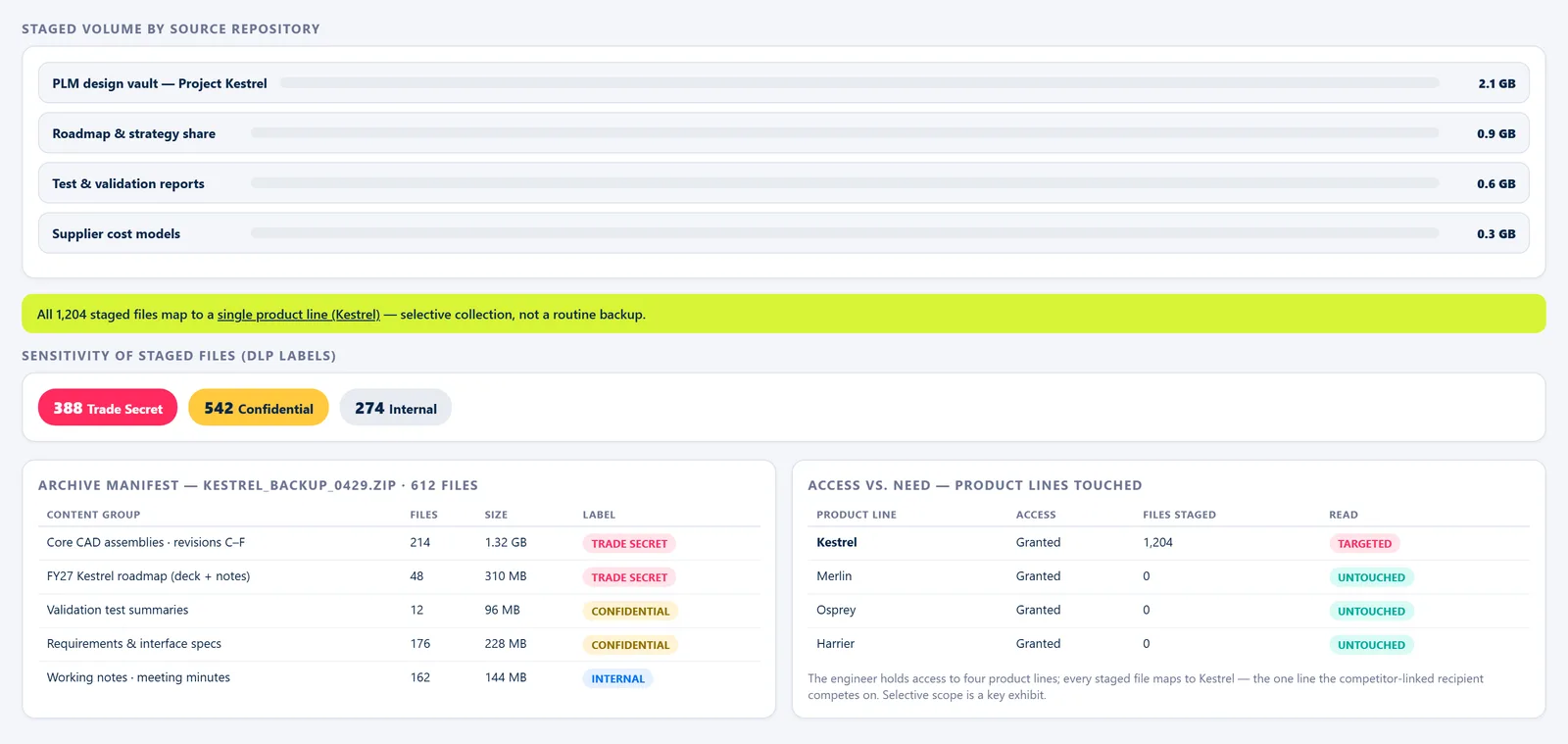
- Staged-versus-transferred comparison Compare the staging set against what telemetry shows demonstrably left, and classify the material by sensitivity so exposure is quantified rather than estimated.
- Preservation and referral Record containment, forensic imaging and hash verification within the same timeline, so the referral reaches counsel or HR with its chain of custody intact.
See CoAnalyst360 on your own data
Bring your existing data sources into a coordinated investigative workflow. See how CoAnalyst360 can help your team move from a question to evidence-backed findings faster.
Illustrative scenario. The incidents, investigations, individuals, organizations, communications, identifiers, and investigative findings depicted here are fictional and created for demonstration purposes. Real-world locations, geographic features, public infrastructure, and other contextual references may be used to make the scenario realistic. Their inclusion does not indicate that the events shown actually occurred or that any real person or organization was involved.