







Explore Cases Law Enforcement Financial Crimes
Crypto Laundering Trace
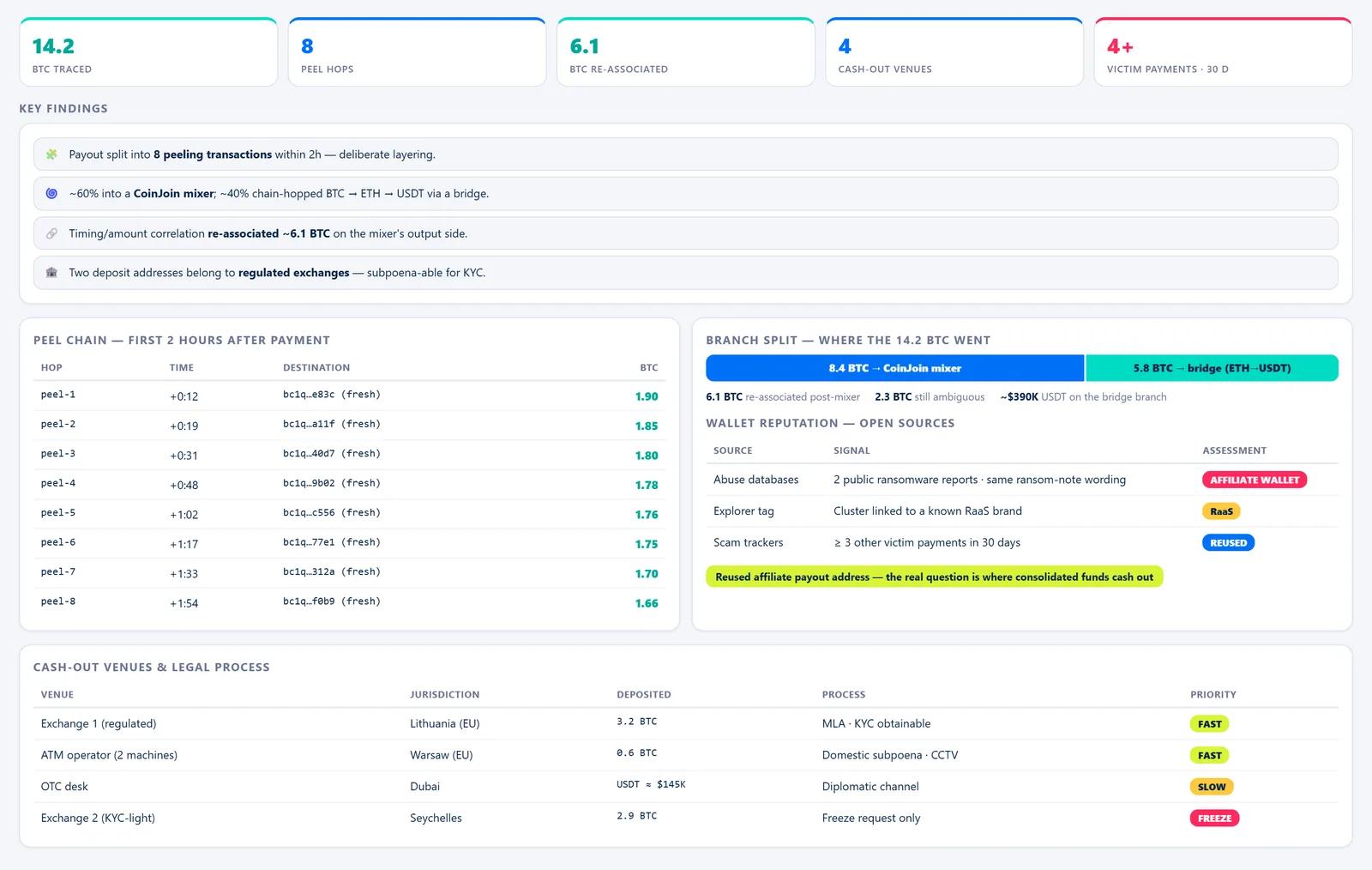
The stolen funds are visible on-chain, but that does not make them actionable. The useful trace is the one that turns thousands of addresses into a smaller set of wallets, services and cash-out points—and shows investigators which organizations and jurisdictions can provide the next piece of evidence.
Capabilities
Overview
Blockchain transactions are public, but addresses are not the same thing as people, services or jurisdictions. A useful laundering investigation has to move from raw transactions to evidence about which addresses may be controlled together, which known services appear in the flow and where legal process may reach an identifiable counterparty.
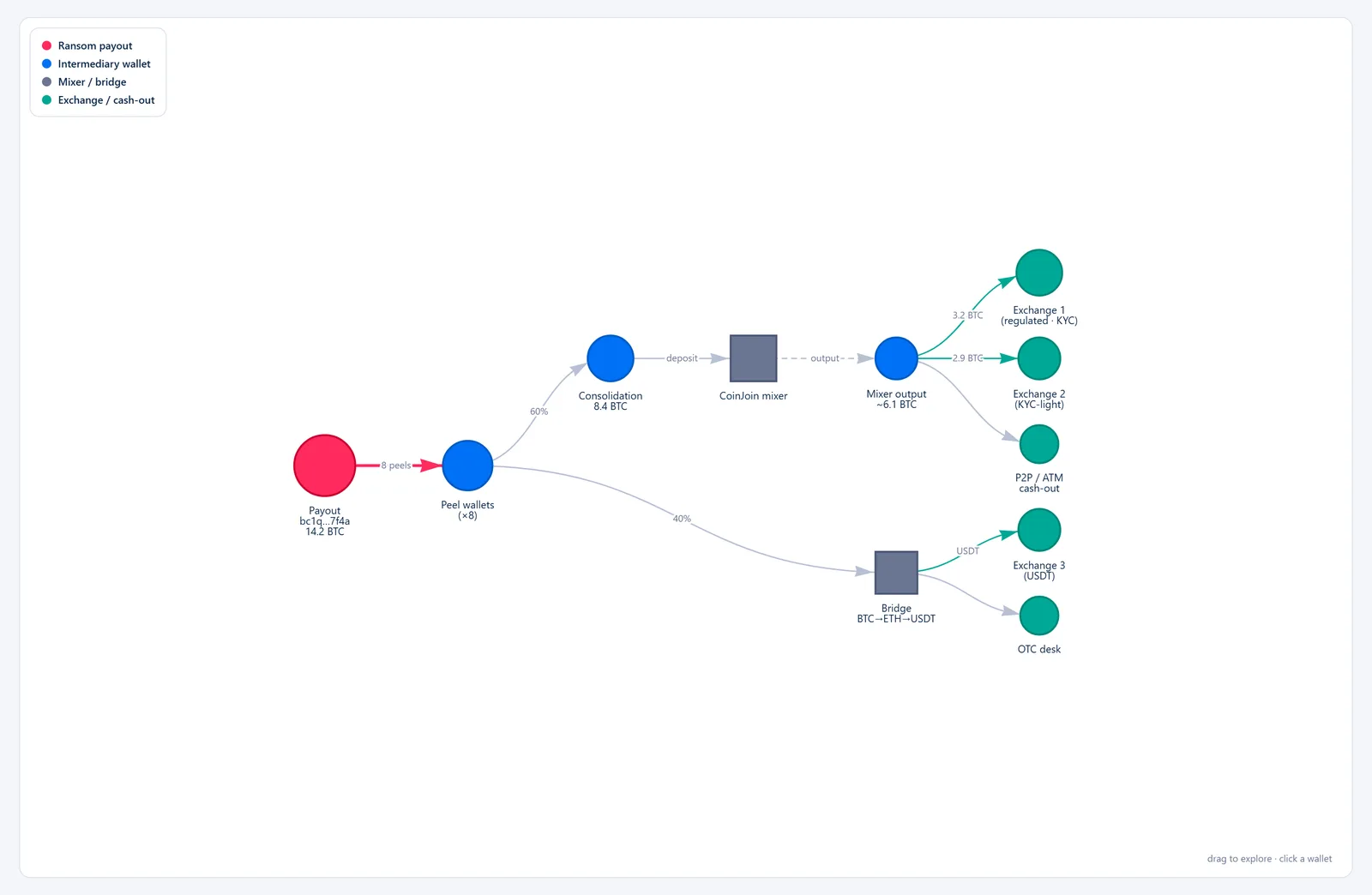
In CoAnalyst360, that context stays attached to the transaction graph. Open-source reputation data, wallet-clustering heuristics and service attribution can narrow the path from payout through mixers, bridges or intermediaries to terminal deposits. The final trace can document both the flow of value and the next investigative steps, without treating probabilistic attribution as certainty.
Key features
- Reputation and open-source enrichment Check an address against abuse databases, scam trackers and forum mentions up front, so known infrastructure is recognized before analyst time goes into a full trace.
- On-chain ingestion and clustering Ingest full transaction history and group addresses into wallets using co-spend and change heuristics, collapsing thousands of addresses into a handful of candidate actors.
- Fund-flow graphing Render the path from payout through mixers, bridges and intermediary hops to terminal deposits as a graph an analyst can navigate and an investigator can present.
- Service attribution Match deposit addresses and contracts against known exchange, mixer and bridge identifiers, so the trace terminates at a named service rather than a hash.
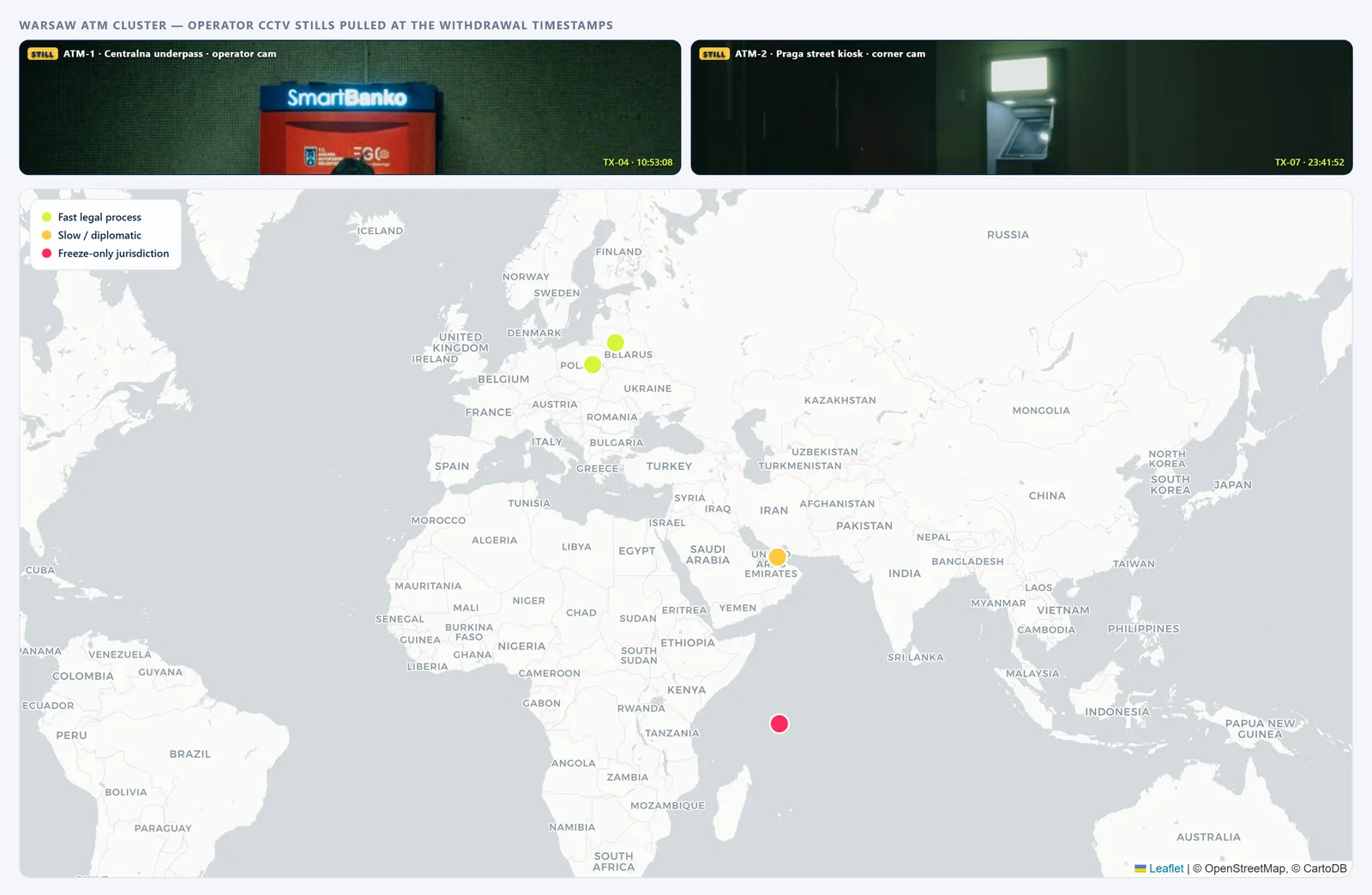
- Cash-out geolocation Place identified exchange entities and ATM operators geographically to show where value leaves the chain and enters the banking system.
- Jurisdiction and process mapping Map each cash-out point to its jurisdiction and the legal-process route available there, turning the trace into a sequence of requests investigators can actually serve.
See CoAnalyst360 on your own data
Bring your existing data sources into a coordinated investigative workflow. See how CoAnalyst360 can help your team move from a question to evidence-backed findings faster.
Illustrative scenario. The incidents, investigations, individuals, organizations, communications, identifiers, and investigative findings depicted here are fictional and created for demonstration purposes. Real-world locations, geographic features, public infrastructure, and other contextual references may be used to make the scenario realistic. Their inclusion does not indicate that the events shown actually occurred or that any real person or organization was involved.