






Explore Cases Enterprise Data Breach Detection
Data Breach Source Tracing
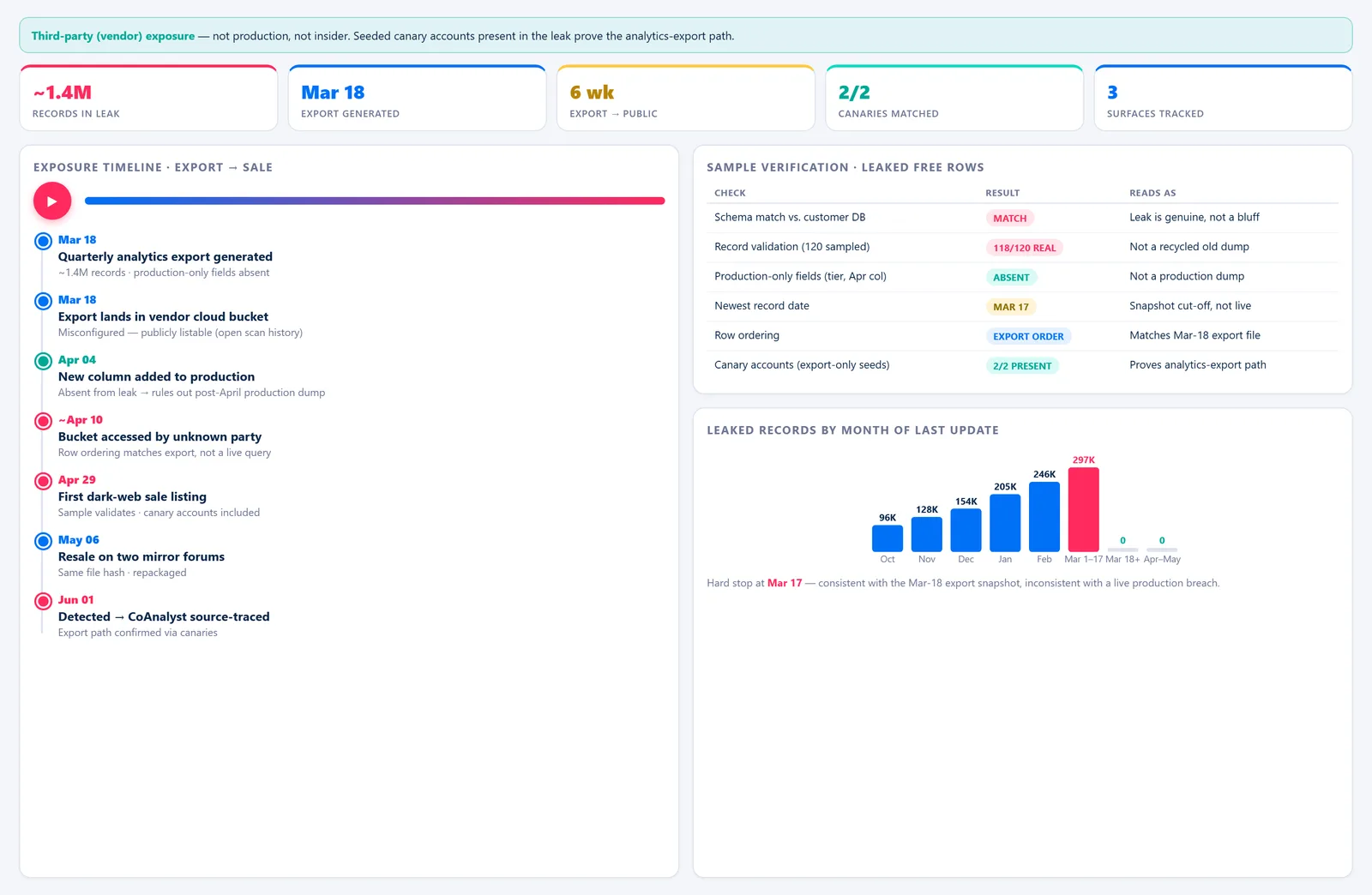
A dataset appears for sale and the sample checks out. The next question is the expensive one: where did it come from? Schema details, row order, seeded records and export history can distinguish a compromised production system from a vendor copy, a backup or an insider-held extract.
Capabilities
Overview
Once leaked data is confirmed as genuine, response teams need to identify its source before they can scope containment, notification and third-party exposure. A sample may resemble several legitimate exports, and the date it appears for sale may be far later than the date the data actually left the organization.
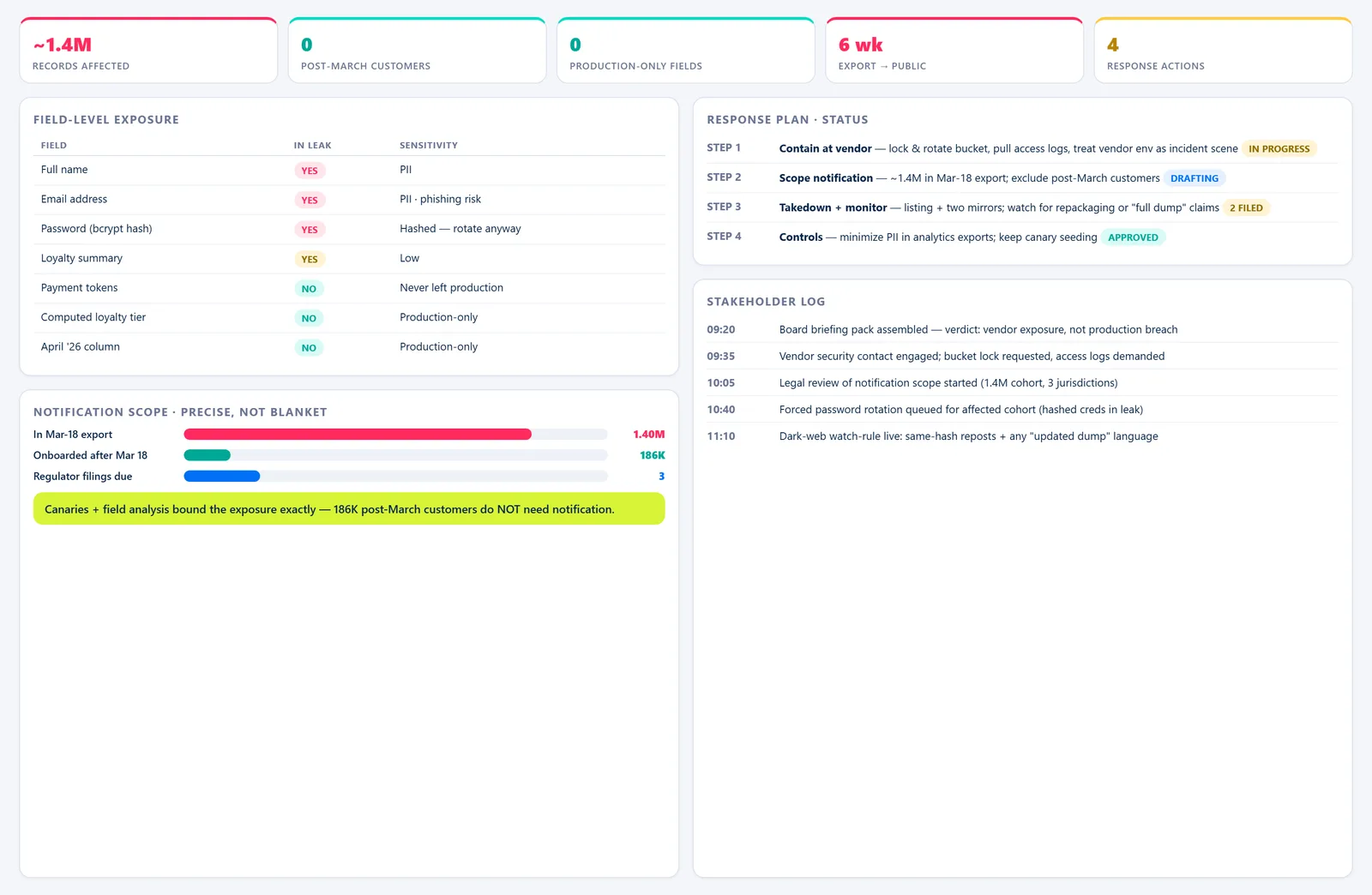
With CoAnalyst360, the dataset itself becomes part of the evidence. It can compare the sample with schemas, snapshots, exports and seeded records; reconstruct the likely path from source to disclosure; and place access evidence alongside that lineage. The result is a clearer exposure window and a better-supported assessment of how the data left the environment.
Key features
- Sample verification Match sample rows against schema and live records to confirm a listing is genuine before a full response is triggered.
- Data-lineage reconstruction Compare the leaked structure against snapshots, exports and backups to identify which extract it most closely matches.
- Row-order and canary analysis Use record ordering and seeded canary records to fingerprint the source export precisely, rather than narrowing it by inference.
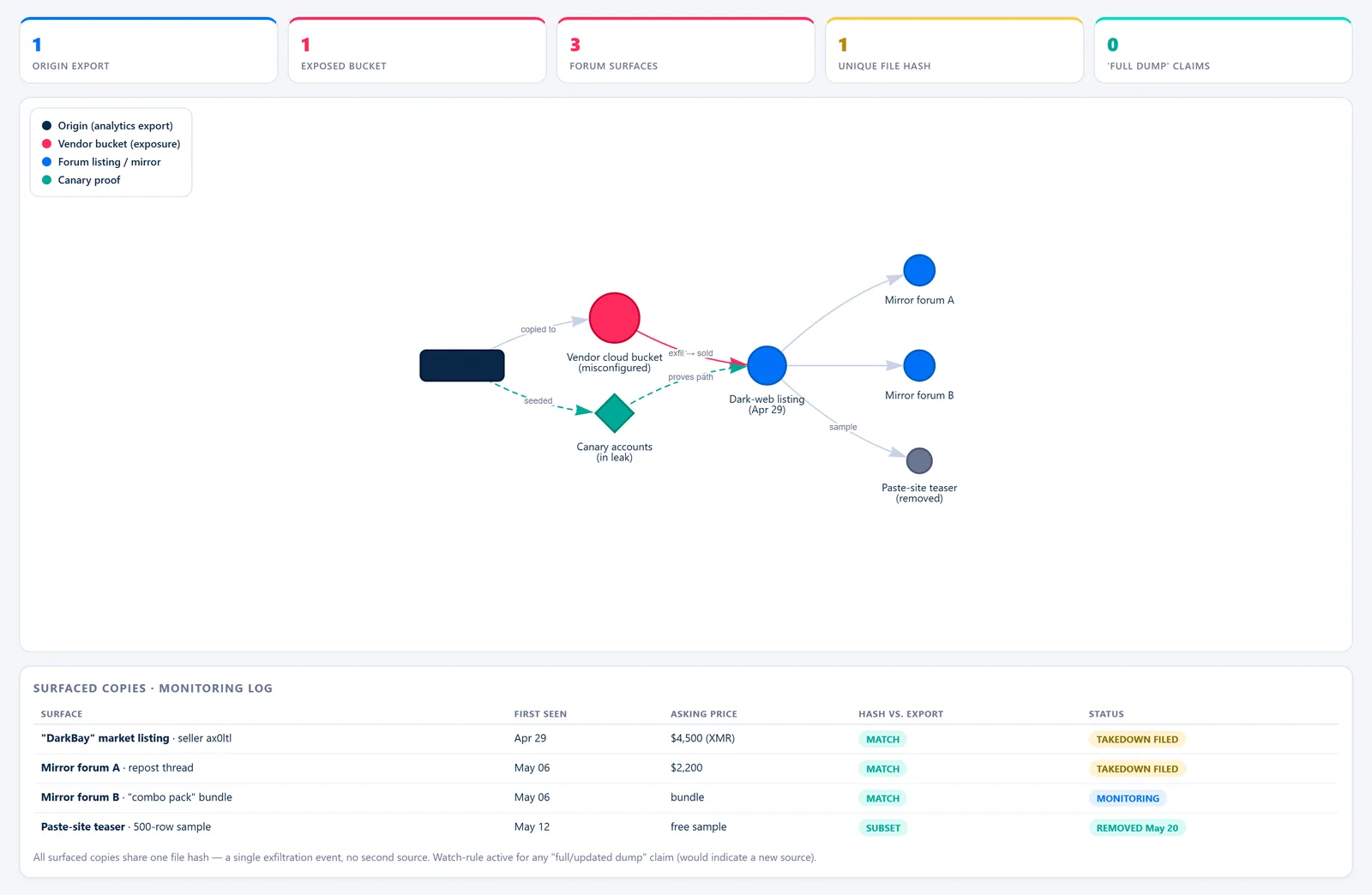
- Exposure-timeline reconstruction Reconstruct the path from export through storage to listing and resale, so the exposure window reflects when the data actually left — not when it was noticed.
- Propagation mapping Map where copies and references to the dataset have already appeared, so notification scope reflects actual spread rather than the original listing alone.
- Insider-versus-external assessment Weigh lineage against access evidence to support a reasoned finding on whether the source was internal, external or third-party — and scope containment and notification from it.
See CoAnalyst360 on your own data
Bring your existing data sources into a coordinated investigative workflow. See how CoAnalyst360 can help your team move from a question to evidence-backed findings faster.
Illustrative scenario. The incidents, investigations, individuals, organizations, communications, identifiers, and investigative findings depicted here are fictional and created for demonstration purposes. Real-world locations, geographic features, public infrastructure, and other contextual references may be used to make the scenario realistic. Their inclusion does not indicate that the events shown actually occurred or that any real person or organization was involved.