







Explore Cases Defense Cyber Threat Intelligence
APT Campaign Attribution
A single lure leads to a familiar malware family—but not yet to an actor. By following reused certificates, registration patterns, loader configuration, victim targeting and tradecraft across separate intrusions, analysts can test whether the evidence points to one coordinated espionage campaign.
Capabilities
Overview
Identifying malware is often the easy part. Attribution requires showing why activity observed across different victims, sectors and infrastructure belongs to the same campaign—and why a particular actor is the best-supported explanation. No single certificate, domain, code artifact or tactic is enough on its own.
In CoAnalyst360, analysts can build that assessment from converging evidence. It enriches a starting indicator, connects related infrastructure and malware artifacts, and places tradecraft alongside victim and geographic context. The result is a reviewable campaign picture that analysts can use to support attribution, communicate confidence and prepare indicators or hunt guidance for defenders.
Key features
- Indicator enrichment Enrich a starting indicator across passive DNS, certificate and registration history to establish what else it touches before any conclusion is drawn.
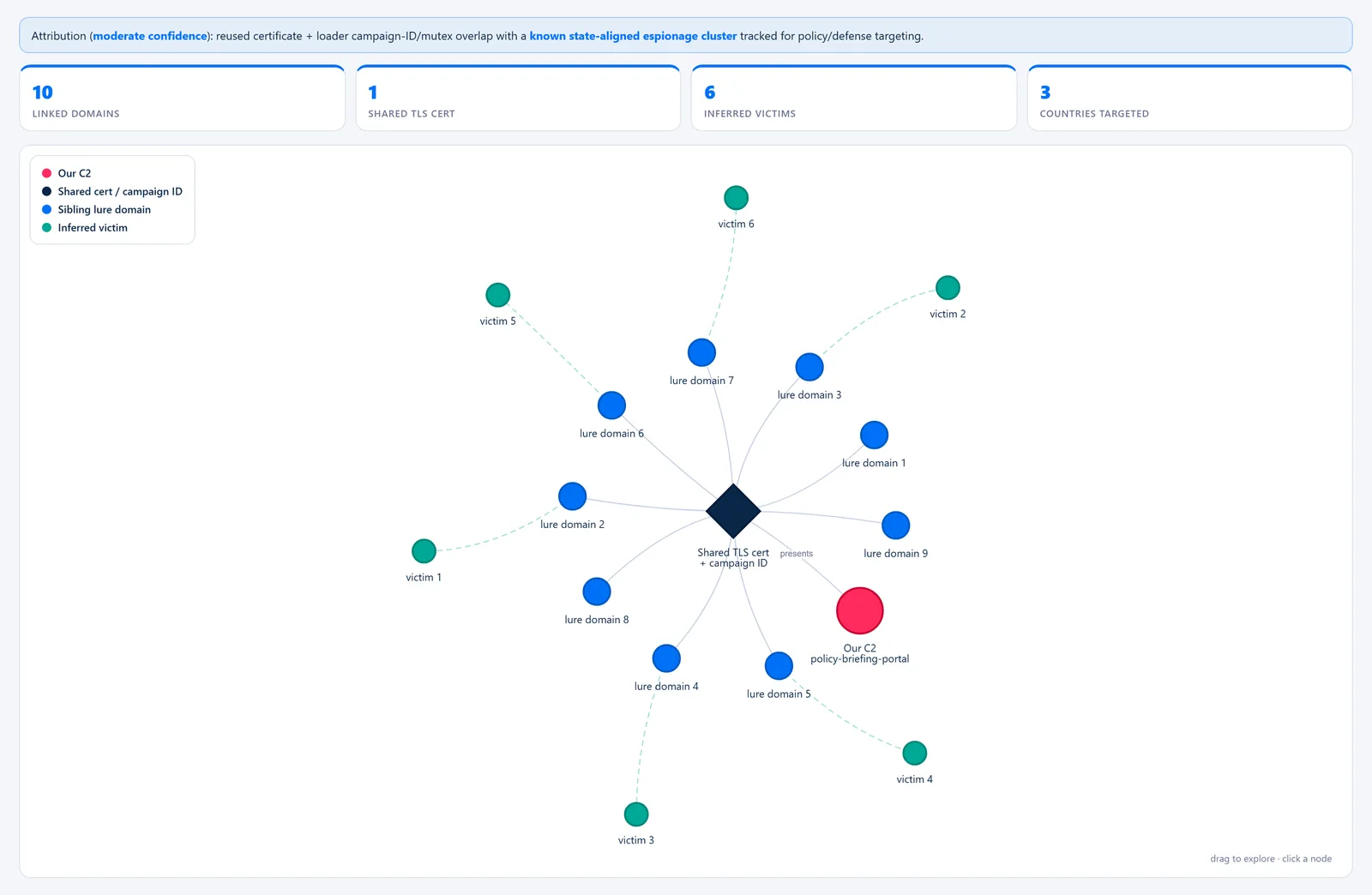
- Certificate and host pivoting Pivot on shared certificates, co-hosted domains and registrant reuse to expand a single lure into the wider infrastructure estate behind it.
- Malware configuration extraction Extract loader configuration, mutexes and campaign identifiers to link samples by operation rather than by malware family.
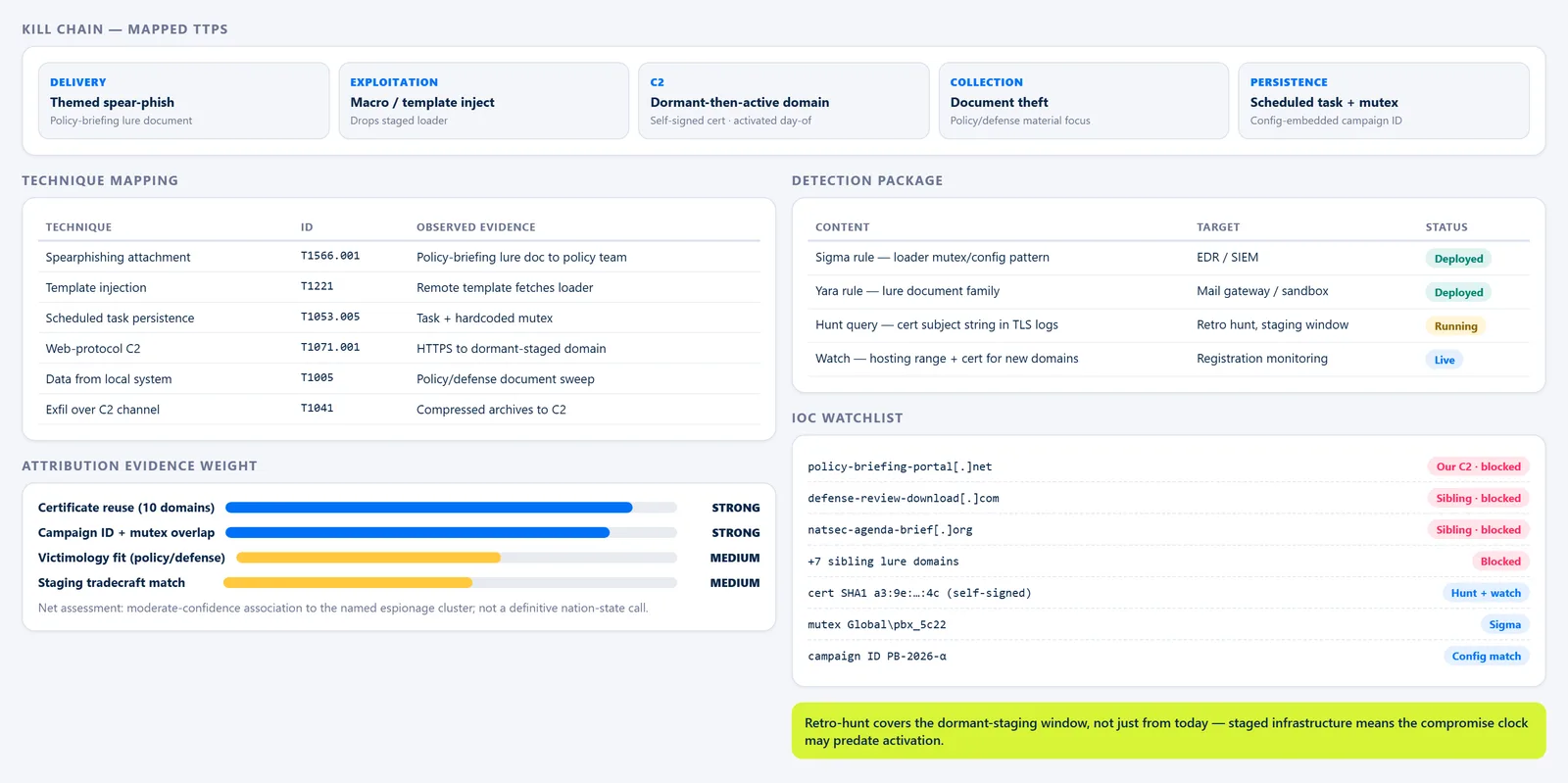
- Tradecraft clustering Cluster kill-chain behavior, tooling and tradecraft across victims to test whether separate intrusions are part of one campaign.
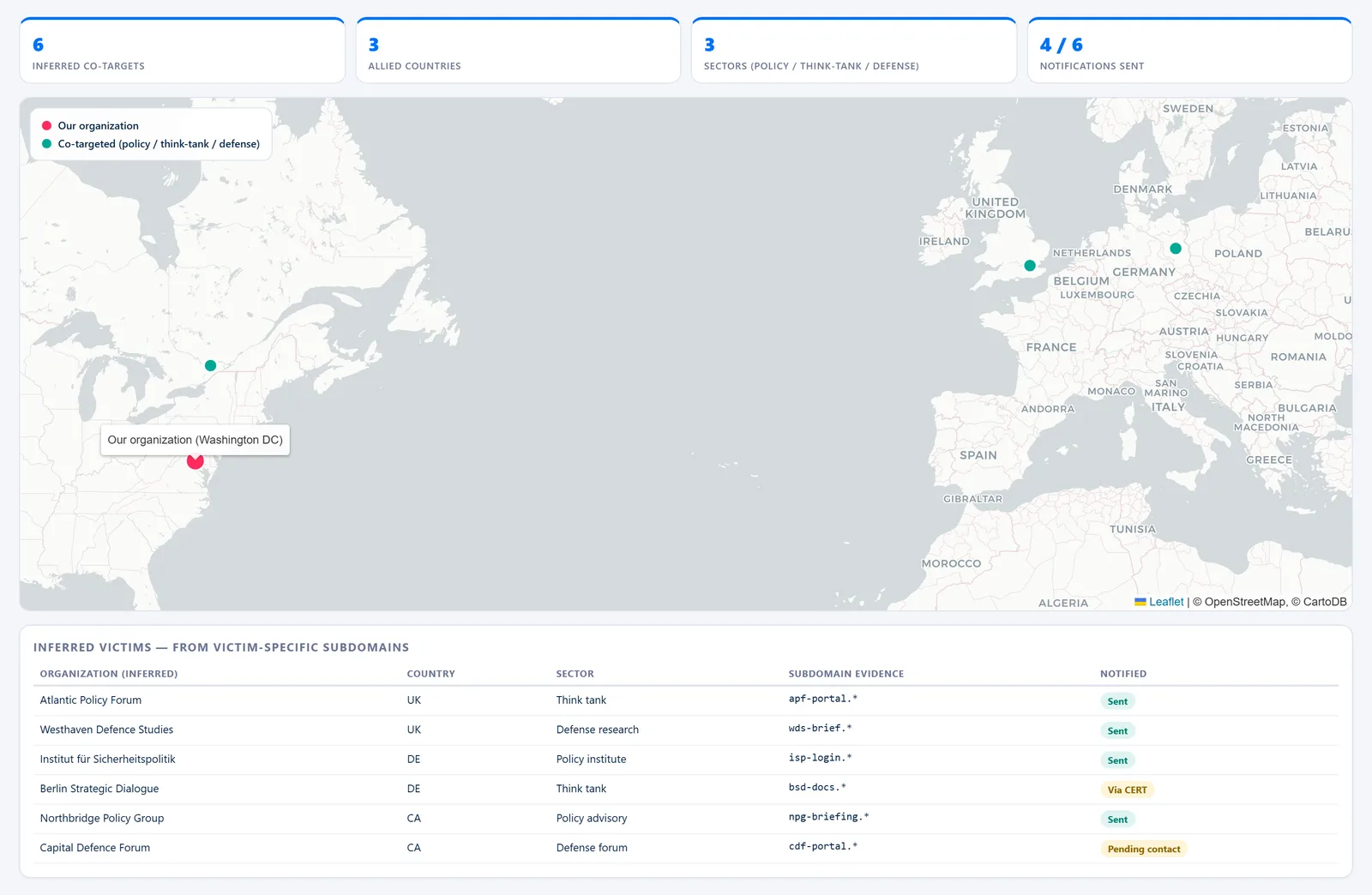
- Victim and geographic context Hold victim sector and geography alongside the infrastructure graph, so targeting patterns inform the assessment rather than sitting in a separate report.
- Detection packaging Compile indicators, detection rules and hunt queries into a package defenders can deploy directly, alongside the written actor assessment.
See CoAnalyst360 on your own data
Bring your existing data sources into a coordinated investigative workflow. See how CoAnalyst360 can help your team move from a question to evidence-backed findings faster.
Illustrative scenario. The incidents, investigations, individuals, organizations, communications, identifiers, and investigative findings depicted here are fictional and created for demonstration purposes. Real-world locations, geographic features, public infrastructure, and other contextual references may be used to make the scenario realistic. Their inclusion does not indicate that the events shown actually occurred or that any real person or organization was involved.