Your complete destination for Penlink training, with live sessions, on-demand modules, and certifications designed to give professionals the tools and confidence to succeed in real investigations.
Google has recently changed the way they deliver target data on legal requests for live intercepts. This change affects content from live intercepts such as Gmail pen registers, Google Voice, and other google services. Instead of sending data in email, Google is now using the ETSI 102 232 CALEA standard-based intercept, which affects how the data is stored and accessed.
PenLink’s PLX Intercept system has already accommodated this change and is available for those agencies that need a tool to analyze and view pen register and live intercept data from Google in the new format.
What the shift to the CALEA standard means for agency IT teams:
– Agencies that collect live telephonic data are likely already familiar with CALEA standards.
– To receive live intercept data from Google, agencies now need a TLS connection to Google instead of the previous site-to-site VPN.
– Free tools such as REBEX are available to facilitate the secure socket TLS connection.
– A self-signed certificate is needed for the collection server.
– Technical support is available from PenLink to set up the new connection.
How this change affects investigators and analysts:
– It is no longer possible to manually view pen register and intercept data from Google in .msg or .eml files.
– Agencies can use PenLink’s PLX Intercept System to analyze and view data delivered in the new format.
– Historical records are not affected by this change.
How this change affects investigators and analysts:
– PLX PRO can still be used to analyze historical Google data.
– PLX Intercept is available for agencies that are running Gmail and Google Voice pen registers and live intercepts.
For more information about capturing and processing live Google data, you can watch the on-demand webinar at www.penlink.com/GoogleData or contact [email protected].
For more information about PenLink’s intercept capabilities, or for technical assistance setting up your agency’s TLS connection, contact [email protected].
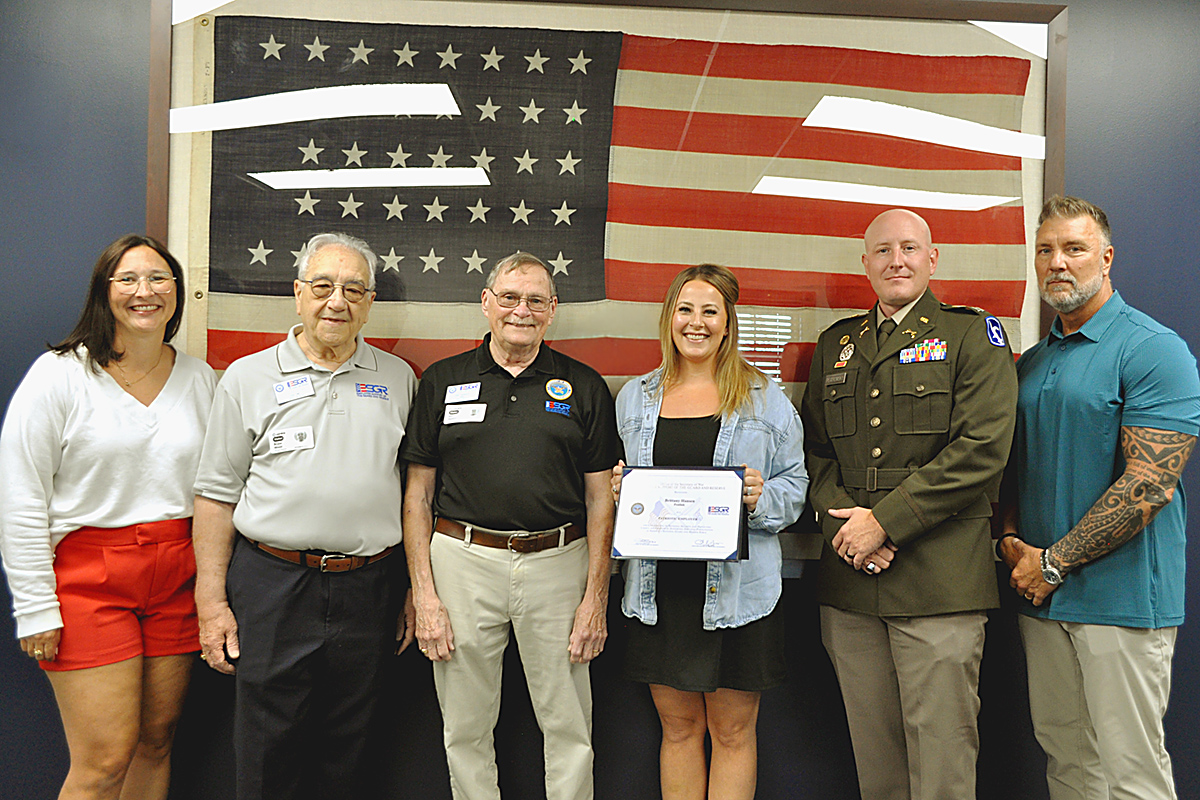
Penlink, a leading provider of digital intelligence solutions for law enforcement, national security, defense and enterprise organizations, announced today that Training Manager Brittany Hansen was presented with the Patriot Award from the Employer Support of the Guard and Reserve (ESGR), a Department of War program.
The Department of Homeland Security announced the results of a nationwide crackdown on human trafficking coordinated around the 2026 FIFA World Cup. Homeland Security Investigations (HSI), the DHS Center for Countering Human Trafficking, and federal, state, and local partners arrested 905 suspects and rescued 180 victims — 150 adults and 30 juveniles — across World Cup host cities.
The U.S. Marshals Service announced the conclusion of Operation Meridian, a month-long, multi-agency effort that located and recovered 79 reported missing and endangered children across Ohio, ranging in age from 6 to 17. Officials described it as the largest missing child operation in the state’s history.
A multi-agency investigation in Volusia County, Florida, has led to the dismantling of a major fentanyl and methamphetamine trafficking network, with 49 people arrested and hundreds of grams of narcotics seized.
The Nebraska State Patrol says a routine traffic stop earlier this month led to what investigators believe is the largest drug seizure in the agency’s history. Governor Jim Pillen joined NSP to detail the case, along with a second, unrelated stop that turned up stolen commercial equipment.
Foreign influence campaigns increasingly pair disinformation with cyber intrusion. This post looks at what that convergence means for investigators tracking coordinated state-linked activity.