Your complete destination for Penlink training, with live sessions, on-demand modules, and certifications designed to give professionals the tools and confidence to succeed in real investigations.
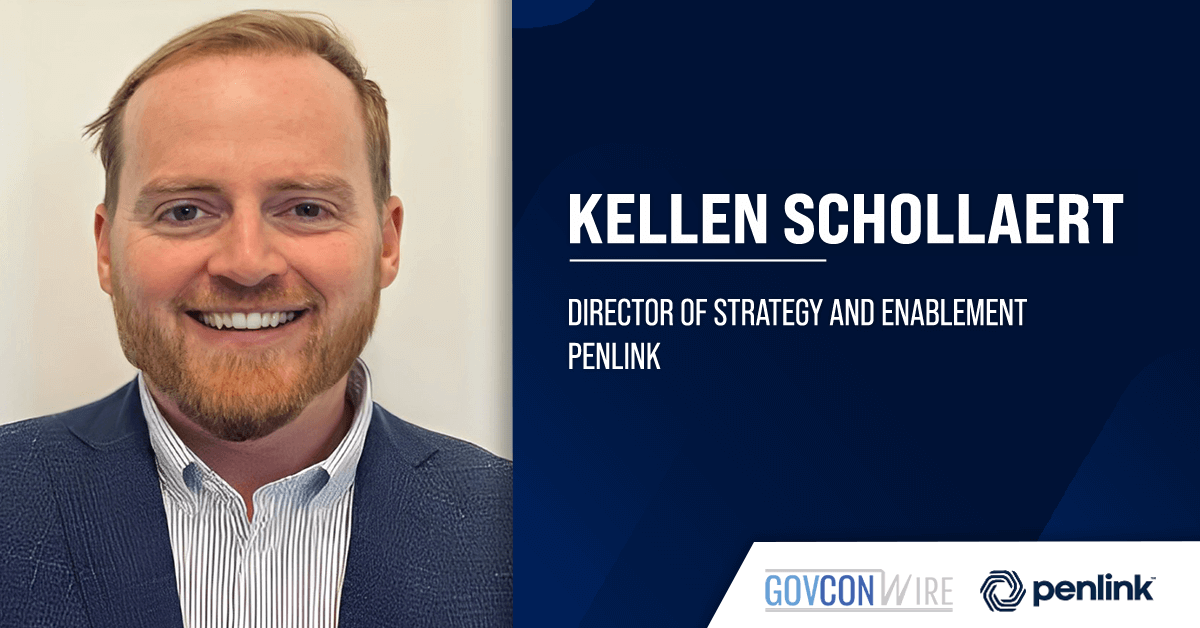
Penlink's Kellen Schollaert Featured in GovCon Wire: Unpacking the Future of AI-Powered OSINT
Date Posted: November 13th, 2024
In a recent GovCon Wire feature, Penlink’s Kellen Schollaert offers expert insights on the transformative power of AI in open-source intelligence (OSINT) operations. As organizations across government, defense, and the private sector face increasingly complex threats, the integration of AI into intelligence processes is becoming crucial. Schollaert discusses how AI-driven tools are reshaping the way analysts collect, analyze, and act on publicly available data, enabling them to extract actionable intelligence more efficiently.
One of the key challenges today, according to Schollaert, is the overwhelming volume of data available from diverse sources. This influx of information, while rich with potential insights, can be paralyzing if approached manually. AI technologies, particularly generative AI, address this issue by automating the collection and analysis of data, allowing analysts to focus on strategic decision-making instead of being bogged down by routine data gathering.
Schollaert highlights Penlink’s approach to leveraging AI in their solutions, emphasizing the importance of streamlining workflows for intelligence professionals. By using AI to automate repetitive tasks, Penlink’s tools allow users to efficiently turn complex data into coherent, actionable insights. This shift not only accelerates the speed of investigations but also minimizes the risk of human error, leading to more accurate results in high-stakes scenarios.
One of the most significant benefits of AI in OSINT is its ability to continuously learn and improve over time. As Schollaert explains, AI systems can recognize patterns, identify anomalies, and even predict potential threats in real-time, providing analysts with a proactive edge. This capability is especially valuable in fields like national security, where timely intelligence can make a critical difference.
Beyond operational efficiency, Schollaert also touches on the ethical considerations of using AI in intelligence. As AI tools become more integrated into investigative processes, maintaining transparency and safeguarding privacy rights is essential. Schollaert stresses the need for robust governance frameworks to ensure that AI technologies are used responsibly, especially when applied in sensitive investigations involving personal data.
The full GovCon Wire article provides a deeper look into how AI-powered OSINT is revolutionizing the way agencies and organizations tackle intelligence challenges. Schollaert’s expertise sheds light on the potential for AI to transform not just how analysts work, but also how organizations can stay ahead of evolving threats in an increasingly digital world.
Generative AI can take on the volume that slows intelligence analysis, but UK and European standards are clear: the analyst stays accountable. Here’s where AI helps and where human judgement must still rule.
Analysts no longer struggle to find information. They struggle to find the right information fast enough to matter, and that is where human-machine teaming changes the work.
A bomb threat texted to 911 during a World Cup match at MetLife Stadium led to a rapid multi-agency response and an arrest. The case shows how quickly event security teams must move from threat to answer.
Las amenazas contra los centros de datos van desde amenazas de bomba hasta ataques con drones. La mayoría aparece primero en fuentes abiertas, para los equipos que saben dónde buscar.
Penlink analysts walk through a real investigation into a suspected Albanian organised crime group, using open-source data in Tangles and CoAnalyst360 and evidence-based analysis in PLX to surface poly-criminal connections.