






Explore Cases Enterprise Cyber Threat Intelligence
Supply-Chain Implant Watch: Signed Client Beaconing
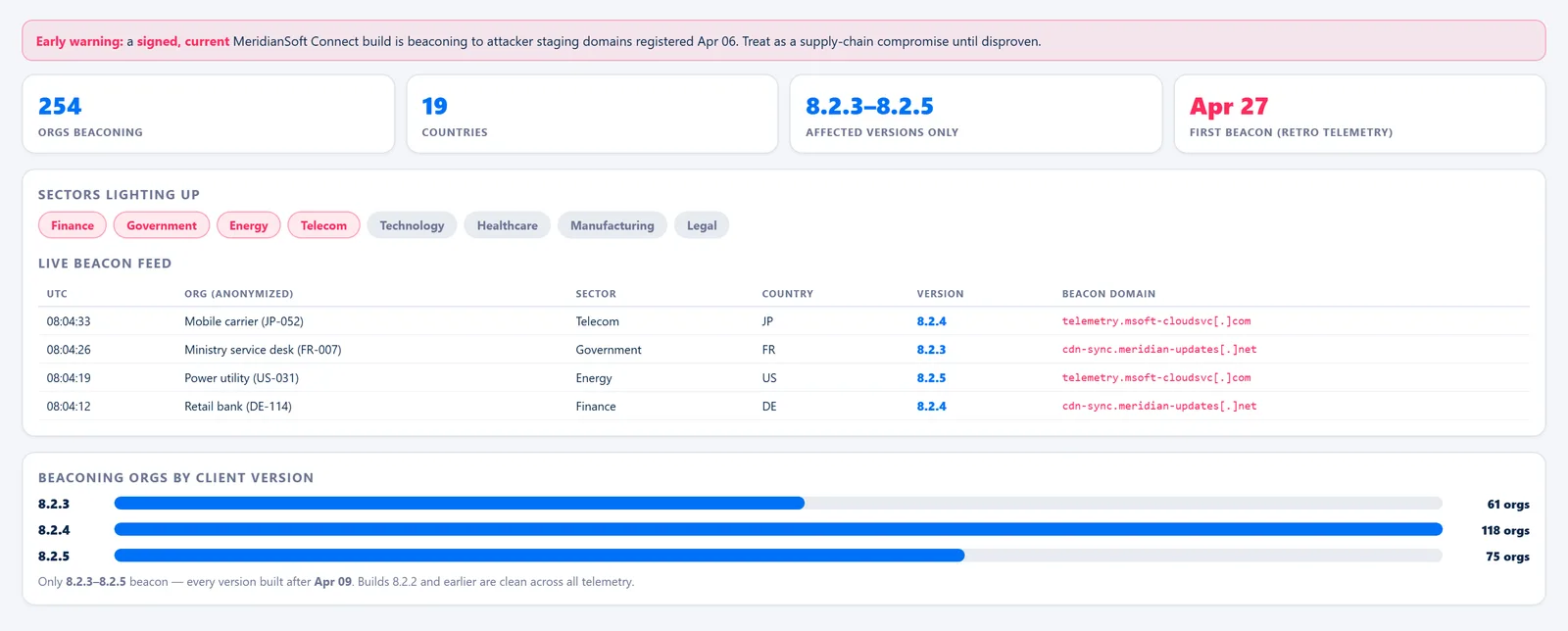
The software is signed, the certificate is valid and the update came through the vendor’s normal channel. Yet a subset of clients begins beaconing to unfamiliar infrastructure. To understand whether the problem entered through the supply chain, analysts have to compare behavior, build versions and telemetry across organizations.
Capabilities
Overview
A compromised software update can evade controls precisely because it looks legitimate. The anomaly may appear only in runtime behavior, and one organization’s telemetry may be too narrow to distinguish an isolated endpoint issue from a compromised build distributed across many customers or partners.
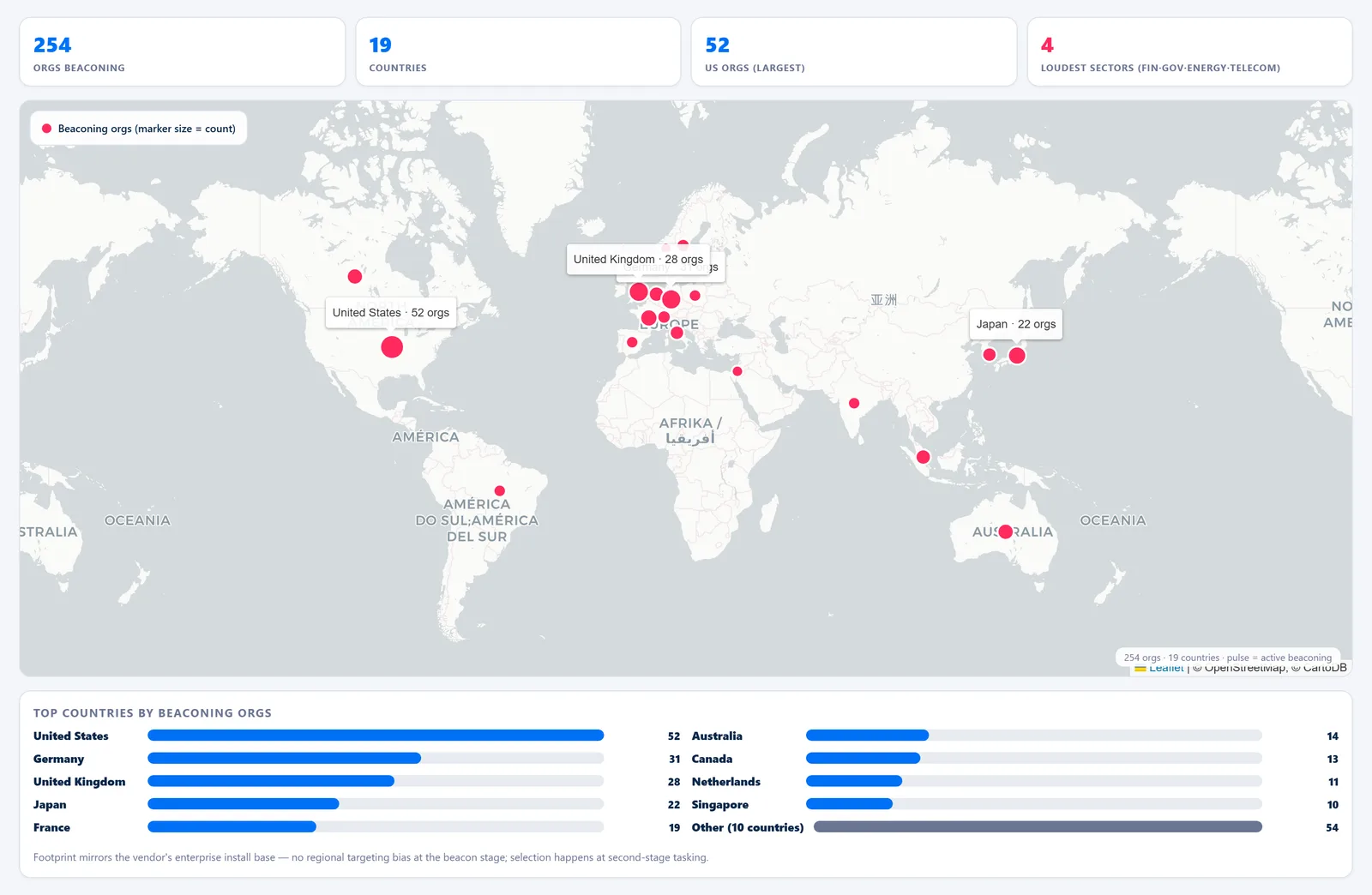
Across authorized partner data, CoAnalyst360 can compare those signals at a broader scale. Beaconing hosts can be correlated with software versions, signed packages can be compared release by release, and staging infrastructure can be researched against historical activity. The resulting scope and indicators can be packaged for coordinated hunting and remediation while analysts continue to test the attribution hypothesis.
Key features
- Signature and update-channel verification Verify binary hashes against the vendor catalog and test certificate chain and revocation state, so a signed build is confirmed rather than assumed.
- Partner telemetry sweep Sweep authorized DNS and endpoint telemetry across the partner network with a historical lookback, to establish the real scope of a beacon wave rather than the locally visible one.
- Version correlation Correlate beaconing hosts against the vendor build manifest to isolate which releases carry the implant and which are clean.
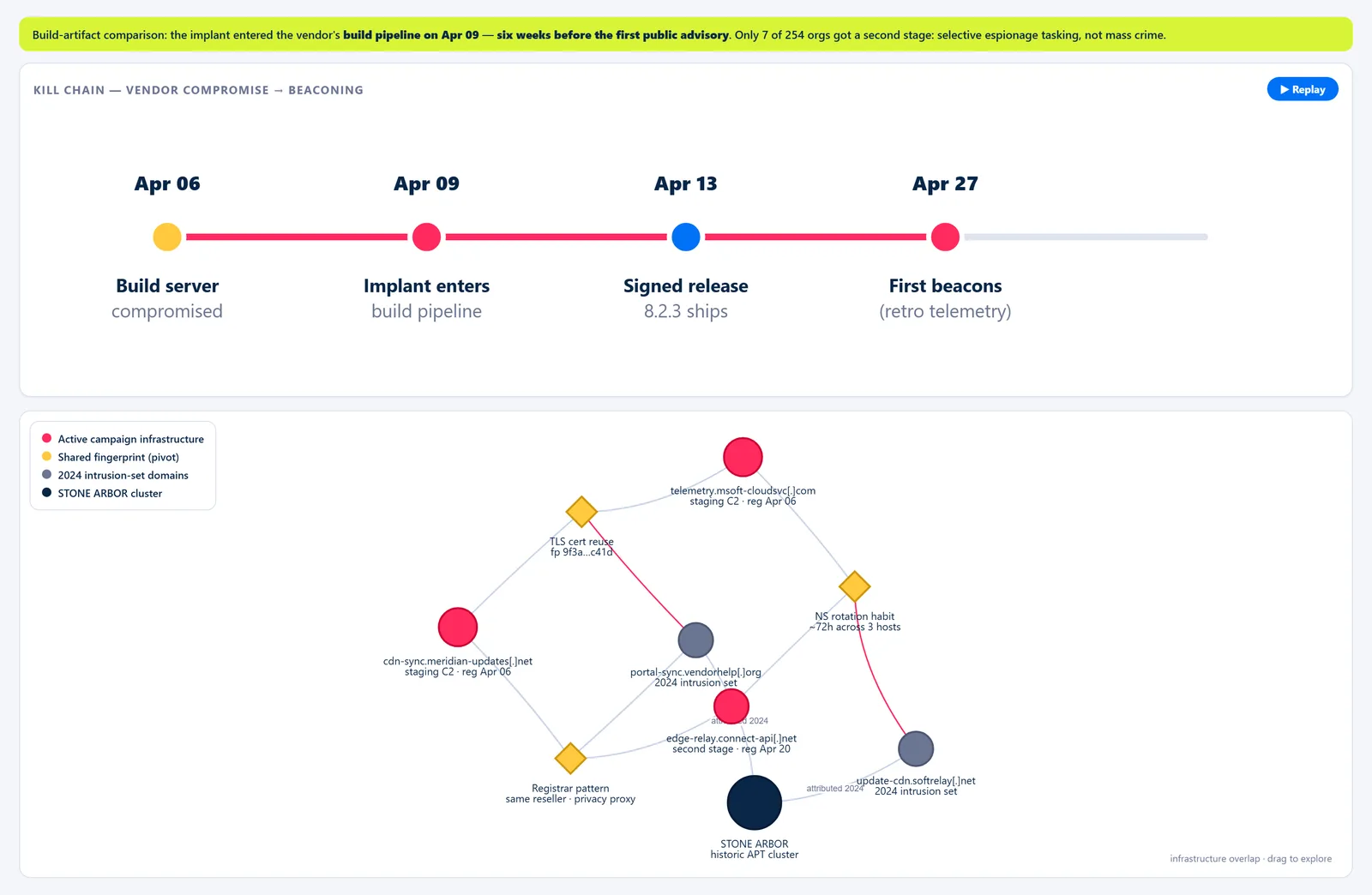
- Build artifact comparison Compare signed release packages version against version to locate where in the build pipeline the implant was introduced.
- Staging infrastructure pivoting Pivot registrar patterns, nameserver rotation and certificate reuse to connect current staging infrastructure to historic activity clusters.
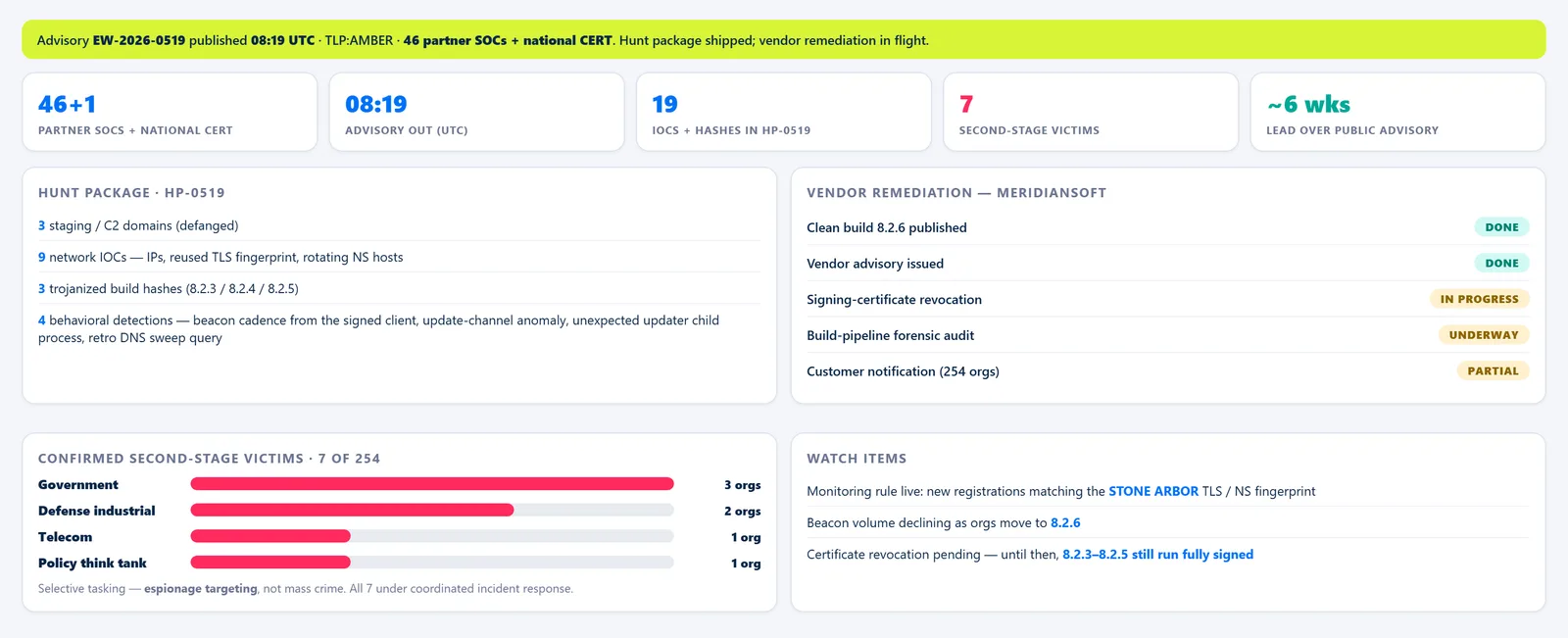
- Early-warning and hunt distribution Compile the advisory and hunt package, distribute it across partner networks and national response teams, and track vendor remediation as it lands.
See CoAnalyst360 on your own data
Bring your existing data sources into a coordinated investigative workflow. See how CoAnalyst360 can help your team move from a question to evidence-backed findings faster.
Illustrative scenario. The incidents, investigations, individuals, organizations, communications, identifiers, and investigative findings depicted here are fictional and created for demonstration purposes. Real-world locations, geographic features, public infrastructure, and other contextual references may be used to make the scenario realistic. Their inclusion does not indicate that the events shown actually occurred or that any real person or organization was involved.