








Explore Cases Law Enforcement Internet Crimes
Booter-for-Hire Takedown: Operation QUIET TERM
A denial-of-service attack looks like a wall of traffic. The investigation begins when analysts ask who sold it. Matching the attack pattern to a commercial “stresser” service can open a path from storefronts and reseller panels to hosting, payment infrastructure and the people operating the business.
Capabilities
Overview
Booter and stresser services turn denial-of-service attacks into a commodity. A victim sees traffic, not the buyer or seller, while the service can move among storefronts, mirrors, hosting providers and payment methods. Taking down one domain may accomplish little if the rest of the operation remains intact.
The CoAnalyst360 workspace brings those layers together. Attack telemetry can be compared with known service patterns, public-facing infrastructure can be mapped as a related estate, and archived registrations or reused identifiers can support operator attribution. Analysts can then assemble a coordinated disruption package that shows how the storefront, infrastructure and payment rails relate to one another.
Key features
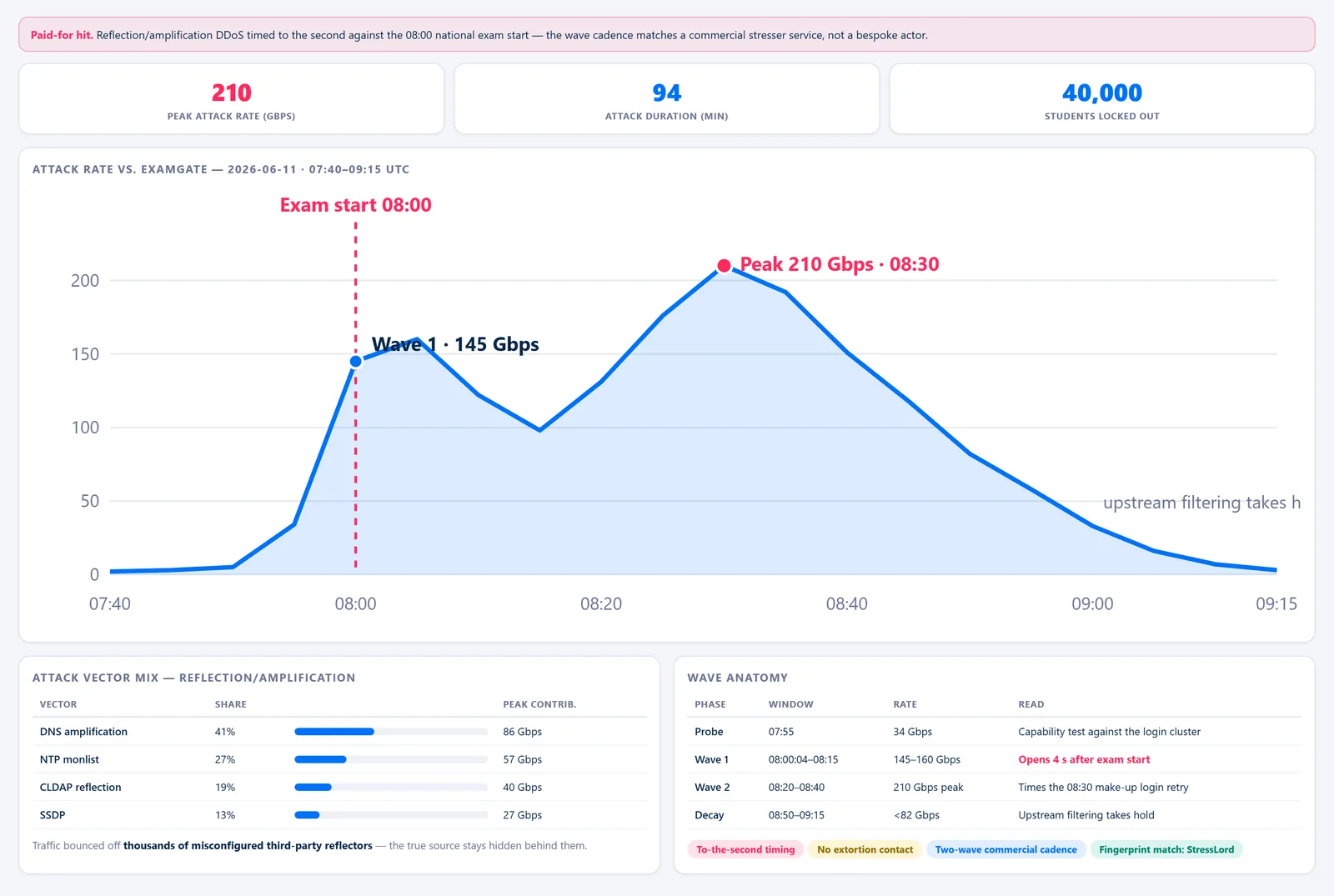
- Attack telemetry fingerprinting Classify vector mix, source distribution and wave cadence, then match the resulting signature against known stresser service profiles.
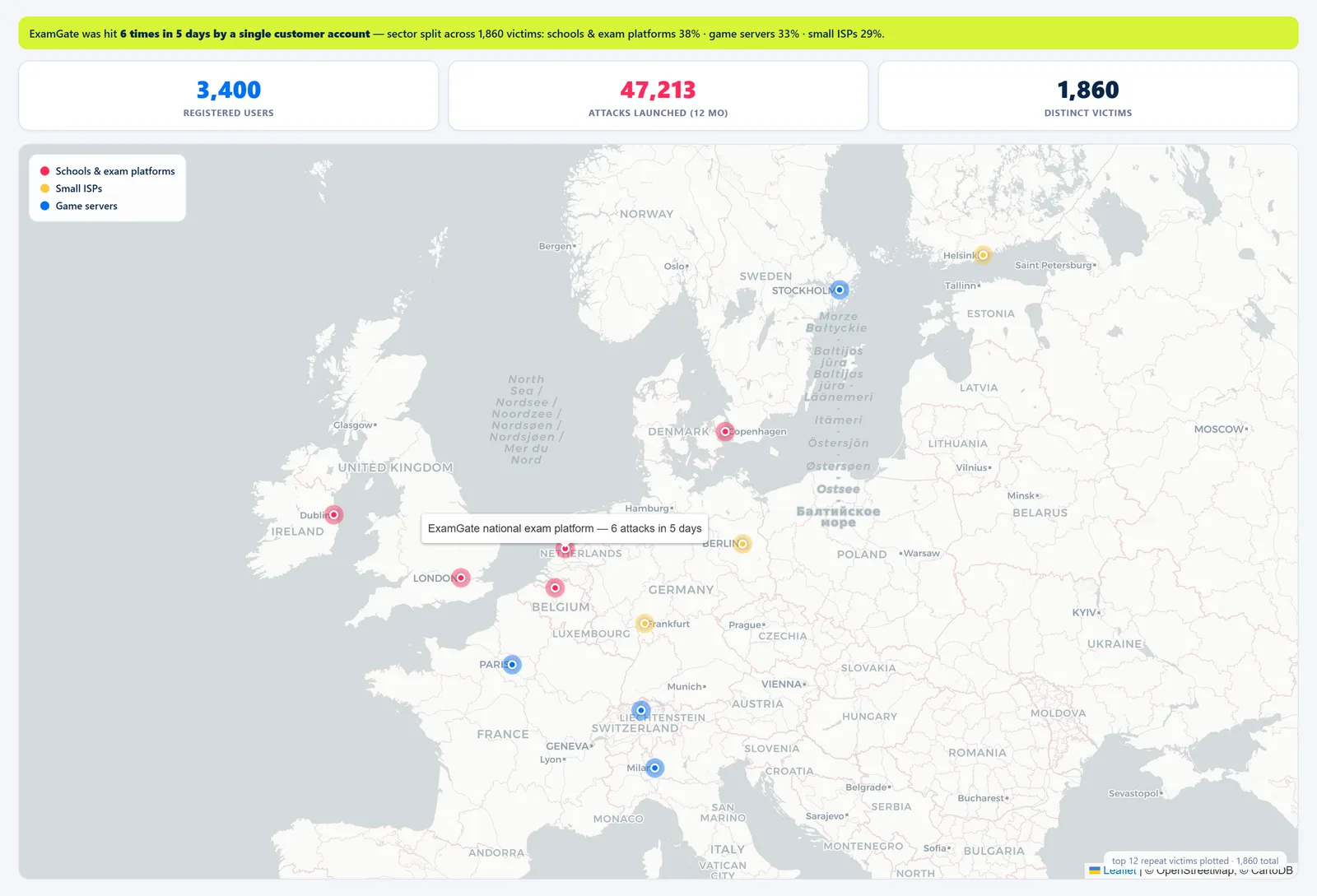
- Open-source service mapping Sweep forums and sales channels to connect an attack profile to the storefront, pricing tiers and reseller network behind it.
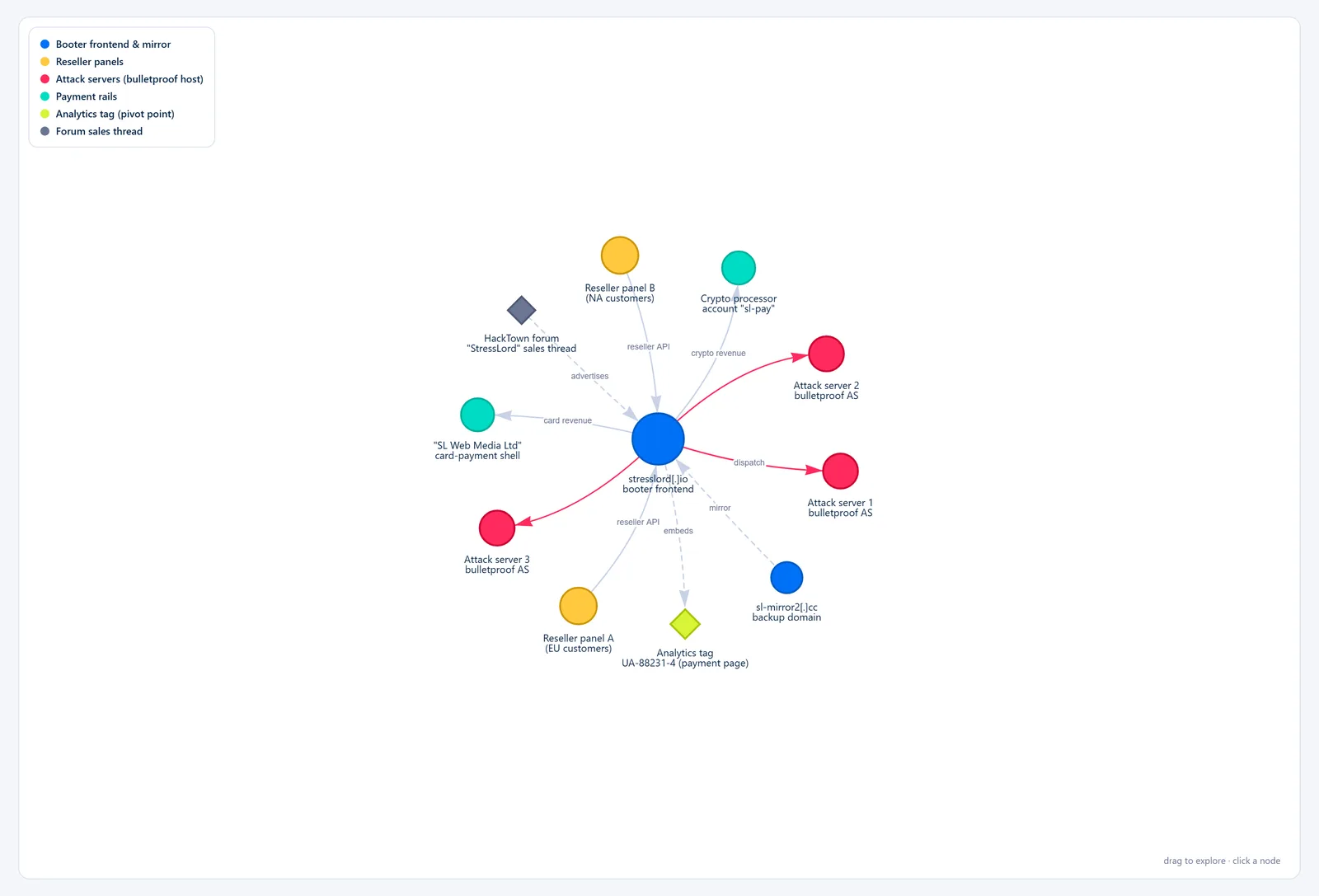
- Infrastructure mapping Map frontends, mirrors, reseller panels, hosting and payment infrastructure as one connected estate rather than a list of unrelated hosts.
- Operator attribution pivots Pivot on shared analytics identifiers, archived registration records and marketplace history to build the evidence that connects an anonymous business to a named operator.
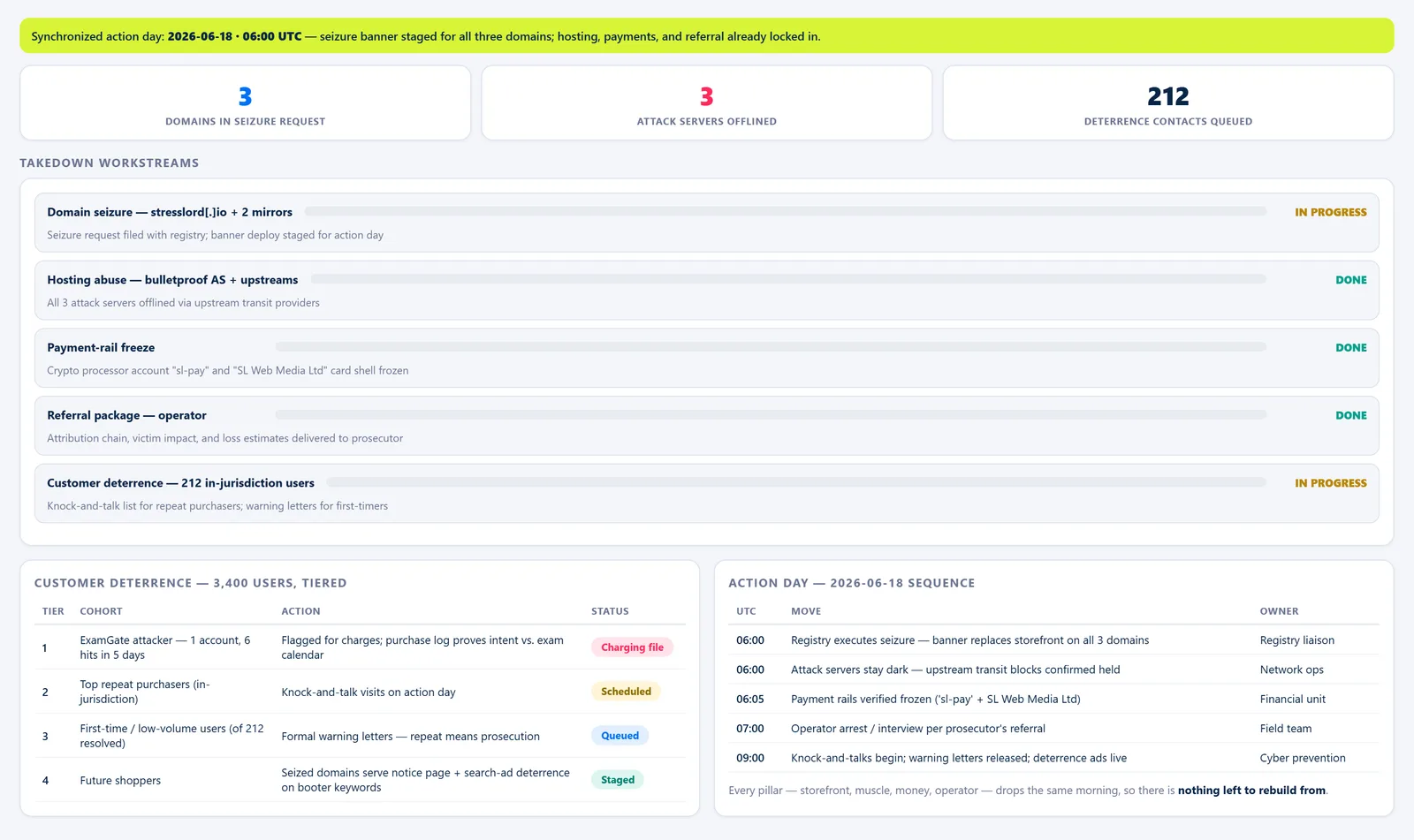
- Multi-layer disruption packaging Draft domain, hosting and payment-rail requests from one evidence set, so action can land across every layer at once instead of moving the service one hop.
- Referral and deterrence packaging Assemble the attribution chain, victim impact and loss estimates into one referral package, and rank the customer base for deterrence follow-up.
See CoAnalyst360 on your own data
Bring your existing data sources into a coordinated investigative workflow. See how CoAnalyst360 can help your team move from a question to evidence-backed findings faster.
Illustrative scenario. The incidents, investigations, individuals, organizations, communications, identifiers, and investigative findings depicted here are fictional and created for demonstration purposes. Real-world locations, geographic features, public infrastructure, and other contextual references may be used to make the scenario realistic. Their inclusion does not indicate that the events shown actually occurred or that any real person or organization was involved.