Your complete destination for Penlink training, with live sessions, on-demand modules, and certifications designed to give professionals the tools and confidence to succeed in real investigations.
Protecting Mission-Critical Capabilities Amid Federal Spending Cuts
Date Posted: March 11th, 2025
As the federal government tightens its belt, agencies across the board are feeling the pressure of discretionary spending reductions. This is more than a short-term initiative—it’s a long-haul effort that will gain momentum as the fiscal year progresses. In many cases, cost has been the dominant factor in these determinations, often favoring the lowest-priced option. However, agencies are not without influence in this process.
The Driving Forces Behind Budget Reductions
The Administration’s commitment to reducing federal discretionary spending is led by the Department of Government Oversight and Efficiency (DOGE). DOGE evaluations have identified redundancies across multiple contracts and vendors, prompting federal agencies to consolidate resources.
While cost reduction is a priority, agencies must remain mindful of the broader impact these cuts may have on operational efficiency. Simply choosing the cheapest option may not be the most effective long-term strategy. Instead, agencies can take proactive steps to influence decision-making and ensure their missions are not compromised.
Working with DOGE to Maximize Success
Agencies can use DOGE as a catalyst for smarter, more strategic resource management. By aligning with efficiency-driven initiatives, agencies can make a compelling case for retaining mission-critical capabilities while demonstrating fiscal responsibility.
To do this, agencies should:
Engage Early: Proactively communicate with DOGE to highlight essential capabilities that must be preserved and provide data-driven justifications for their necessity.
Streamline Reporting: Develop clear, standardized reports that showcase operational efficiencies gained through consolidated solutions, reducing redundancy without compromising effectiveness.
Leverage Strategic Partnerships: Work with technology providers that align with efficiency goals, ensuring solutions offer both cost savings and comprehensive functionality.
By working in collaboration with DOGE rather than reacting to budget cuts, agencies can take control of their operational future, ensuring continuity while demonstrating a commitment to cost-conscious efficiency.
Reclaiming Control Through Strategic Prioritization
Federal organizations can affect these decisions by identifying and prioritizing their spending before external mandates force a reduction. This means assessing where duplicate services exist across multiple contracts and vendors and making strategic choices which support long-term operational efficiency, not just short-term cost savings.
A key approach to secure funding for essential capabilities is to frame budget considerations around efficiency rather than just cost. When consolidating contracts and vendors, agencies should identify the most comprehensive service provider within each discipline. This ensures that reductions in spending do not lead to operational inefficiencies which could hinder mission success.
When forced to consolidate vendors, selecting the most comprehensive solution within each overlapping domain ensures that agencies can reduce costs without sacrificing mission-critical capabilities. A holistic approach to contract consolidation minimizes disruptions, streamlines workflows, and enhances overall effectiveness.
A Smart Approach for Digital Investigations and OSINT
For federal agencies operating in the space of digital investigations and open-source intelligence (OSINT), Penlink stands out as a prime example of this strategy in action.
As a comprehensive intelligence platform, Penlink consolidates critical capabilities across the full intelligence cycle, serving as the singular resource for criminal and intelligence analysts, and, more importantly, reducing the need for multiple tools and contracts. By integrating essential functionalities into one solution, agencies can eliminate the inefficiencies of fragmented tools while maintaining operational superiority.
Preparing for the Future
With budget reductions continuing throughout the year, federal organizations whichthat take a strategic approach to spending will be in the best position to navigate the shifting landscape. Agencies should act now by:
Conducting internal assessments to identify and eliminate redundancies
Prioritizing efficiency over cost-cutting when consolidating vendors
Selecting solutions that provide the most comprehensive functionality within key operational areas
By staying ahead of budgetary constraints and making informed decisions, agencies can preserve mission-critical capabilities while meeting fiscal mandates. Choosing a unified, robust platform like Penlink ensures that operational integrity remains intact amid federal spending reductions.
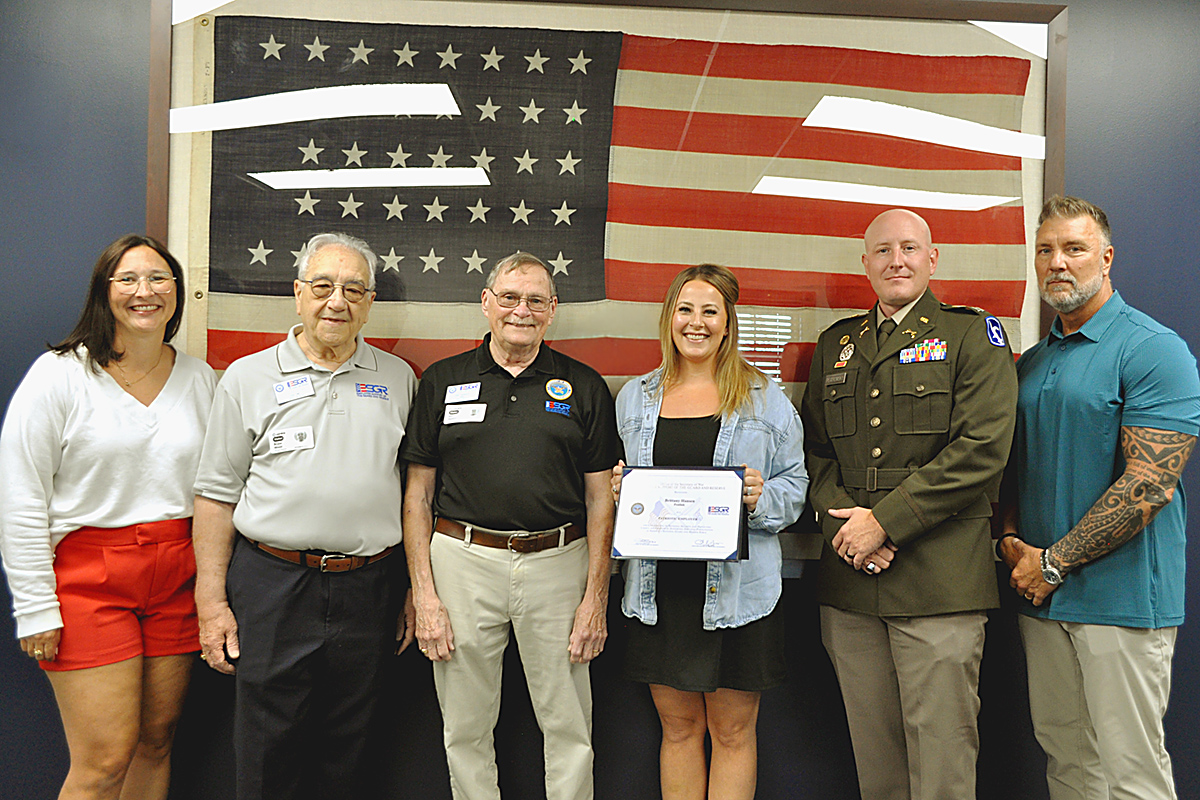
Penlink, a leading provider of digital intelligence solutions for law enforcement, national security, defense and enterprise organizations, announced today that Training Manager Brittany Hansen was presented with the Patriot Award from the Employer Support of the Guard and Reserve (ESGR), a Department of War program.
The Department of Homeland Security announced the results of a nationwide crackdown on human trafficking coordinated around the 2026 FIFA World Cup. Homeland Security Investigations (HSI), the DHS Center for Countering Human Trafficking, and federal, state, and local partners arrested 905 suspects and rescued 180 victims — 150 adults and 30 juveniles — across World Cup host cities.
The U.S. Marshals Service announced the conclusion of Operation Meridian, a month-long, multi-agency effort that located and recovered 79 reported missing and endangered children across Ohio, ranging in age from 6 to 17. Officials described it as the largest missing child operation in the state’s history.
A multi-agency investigation in Volusia County, Florida, has led to the dismantling of a major fentanyl and methamphetamine trafficking network, with 49 people arrested and hundreds of grams of narcotics seized.
The Nebraska State Patrol says a routine traffic stop earlier this month led to what investigators believe is the largest drug seizure in the agency’s history. Governor Jim Pillen joined NSP to detail the case, along with a second, unrelated stop that turned up stolen commercial equipment.
Foreign influence campaigns increasingly pair disinformation with cyber intrusion. This post looks at what that convergence means for investigators tracking coordinated state-linked activity.