Your complete destination for Penlink training, with live sessions, on-demand modules, and certifications designed to give professionals the tools and confidence to succeed in real investigations.
Deepening the Bond Between OSINT and Digital Forensics
Date Posted: May 18th, 2023
May 18, 2023
Digital forensic investigative solutions and AI-powered open-source intelligence (OSINT) platforms are playing crucial roles in modernizing police investigations, helping to save lives and closing cases faster by developing solid leads.
Working together, these powerful technologies can increase the ability to locate missing persons, find victims of human trafficking, identify criminals in fraud and extortion cases, as well as assist in solving violent and property crimes.
This is the message PenLink conveyed to law enforcement and investigators at the recent Magnet User Conference 2023 Summit, held last month in Nashville, TN. At the conference, we showed how agencies can marry digital forensic evidence with web intelligence research to provide a more comprehensive and complete investigation process. A strategic partnership with Magnet Forensics aligns our OSINT platform with Magnet Forensics’ digital investigations solutions, providing end-to-end investigation capabilities.
Today, the big challenge is that OSINT analysts and forensic digital investigators are siloed. In fact, the two functions do not cross streams in 95 percent of the law enforcement agencies we work with. That must change. There must be synergy between the two types of tools and greater collaboration between OSINT analysts and digital forensic investigators.
Law enforcement agencies are not combining resources to create a more comprehensive investigative process because investigators often do not know they are operating in siloes. Analysts are primarily deriving tactical intelligence from online media, looking to go after gang crimes and other threatening activities. They are often not aware of the possibilities of combining web intelligence with information from the forensics side.
When I was the project developer for the City of Hartford’s Capital City Command Center (C4), a Real Time Crime Center (RTCC), I made sure all my intelligence analysts were forensically certified. The RTCC provides real-time and investigative back support for local, state, and federal law enforcement partners utilizing multiple layers of forensic tools, coupled with data resources, and real-time intelligence. This kept our investigators and analysts from being siloed in their approach to investigations.
Investigations Can Start Anywhere
Law enforcement analysts can start investigations anywhere when web intelligence and forensics come together. An investigator can start with a name, location, or cell phone. They can start with whatever information they have from initial reports. With Magnet, they can extract information from a device, cell phone, or computer. That information is important to intelligence analysts because it contains unique identifiers—names, emails, phone numbers with no identities attached to them, or even information about cryptocurrencies and wallets. We can take that information and send it to the PenLink platform to see if it matches up with account information or other attributable information from publicly available sources on the web.
On the other hand, information on the web might lead investigators to certain devices. For example, someone could be posting information on dark web channels that could aid law enforcement in forensic investigations. For instance, they might list different levels of encryption on certain devices. Magnet’s solutions can then find hidden pieces inside the actual physical device. The two technologies overlay each other and reinforce the investigative story. If an investigator has tower data and geolocation data from inside a cell phone and it matches up with an online media post or other information on a website, then the investigator can tie these attributions to a case.
Moving the OSINT Needle
Attributions are all the identifiable details that websites collect each time a person visits. These details are passed to websites via different sources such as internet addresses and connections, browsers and device types, and/or online behavior that includes online media connections or other account activity.
OSINT isn’t used for attributions like it could be. If an investigator pulls email information out of a phone, where has it been posted and under what username? Is it the same username associated with a Twitter account? If so, it might be the target of your investigation. At the Magnet User Summit, OSINT analysts and forensics investigators experienced the power of two separate tools coming together – one for recovery, analysis, and reporting of digital evidence from smartphones, computers, and other connected devices, and the other for extracting critical, intelligent insights from surface and deep web data sources.
Many attendees did not know they were operating in siloed environments. They now realize that they are working on two separate pieces in the same case. This calls for synergy between the two disciplines and the need to collaborate instead of just passing information along to the next phase of the investigation. Both OSINT analysts and digital forensic investigators need to be cross-trained so they know the right questions to ask as they extract information.
We need to keep moving the needle forward, educating agencies about the value of bringing all this information together.
Johnmichael O’Hare, Director, Business Developtment, PenLink
Lieutenant Johnmichael O’Hare retired from the Hartford Police (CT) in 2018. His career elevated investigative units that specifically attacked narcotics and firearms violence. In 2013, he was tasked with creating a Real-Time Intelligence Center that could support critical functions & provide analytical and forensic back support. He currently serves as a Director of Business Development at PenLink with a focus on Threat Network Identification & Interdiction in the Web Intelligence Realm.
Law enforcement and security teams face growing pressure at high-profile events. This webinar covers how OSINT supports pre-event planning, real-time awareness, and post-event investigations.
EXCERPT:
Penlink CEO Peter Weber shares the company’s commitment to responsible technology, lawful data use, and the mission that has guided nearly 40 years of work alongside law enforcement.
Intelligence teams face an overwhelming volume of data at large-scale events. This webinar covers the full intelligence cycle, from pre-event risk assessment to real-time monitoring and post-event investigation.
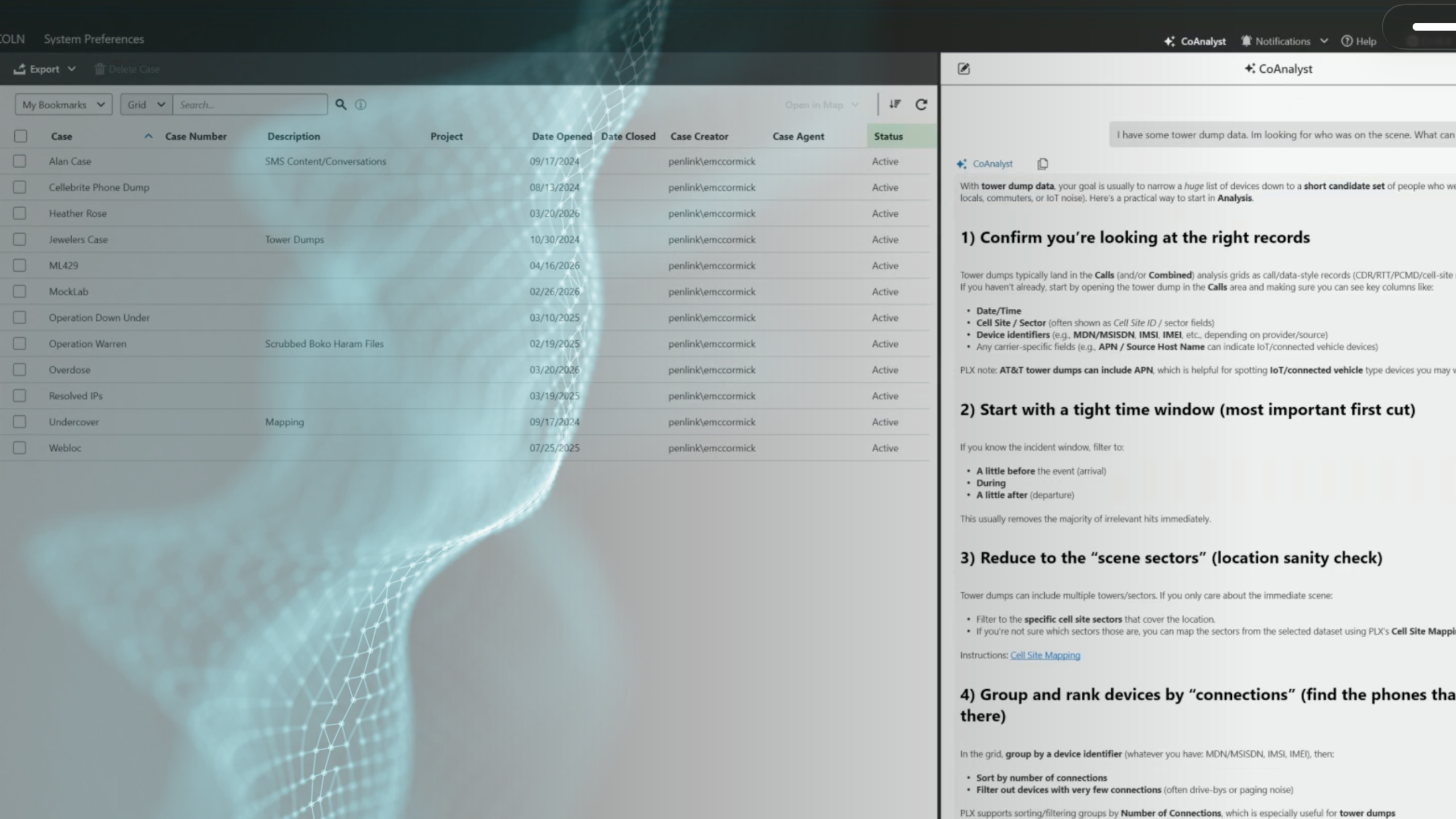
Investigators face more data than ever. CoAnalyst for PLX brings generative AI directly into PLX, helping agencies move faster from raw data to actionable insight.
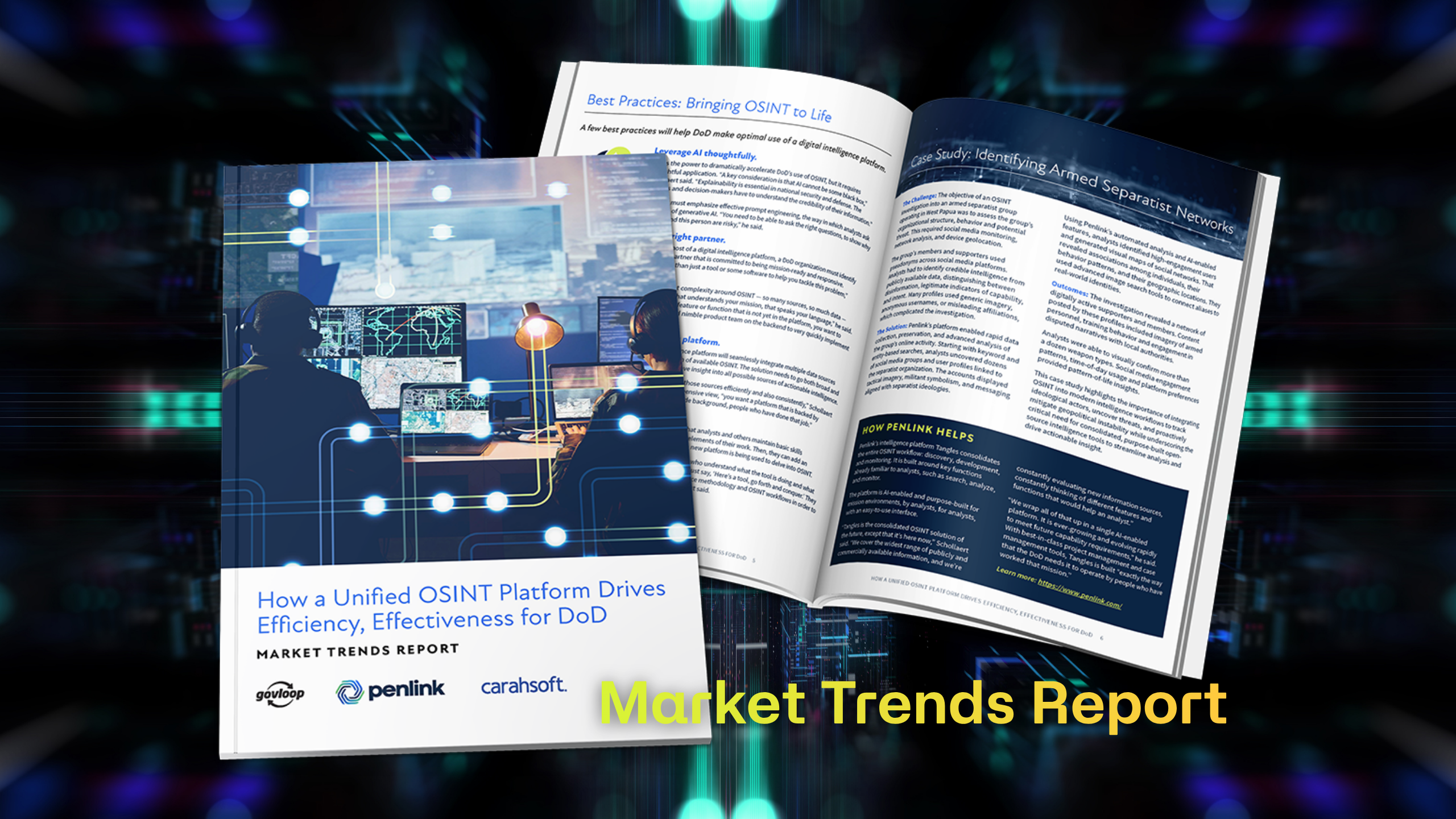
The Department of Defense is facing more data, more tools, and more complexity. This report shows how a unified OSINT platform delivers faster, smarter defense intelligence.
Penlink was recently featured on Fed Gov Today’s The OSINT Edge to discuss how open source intelligence is changing the way agencies detect and respond to cyber threats. Here is what that conversation covered.